A 2018 mixtape: some of the best songs of the year so far


Mount Eerie ‘Tintin in Tibet’: At a memorably harrowing Sydney Festival show, Phil Elverum introduced his new suite of songs with an apologetic air, noting they were all still focused on the tragic death of his late wife Genevieve. ‘Tintin…’ turns the lens back to the magical and mundane moments of her life with a disarming honesty and vulnerability that makes his forlorn project unlike anything else in contemporary music. He has referred to these songs as “barely music”;  in their stark clarity and almost unbearable emotional heft, they may be something better.

Low Cut Connie ‘Hey, Little Child’: If the members of Low Cut Connie moved in next door, you’d probably flee the neighbourhood. That general air of disrepute that their music conveys so viscerally is never more apparent than on this stomper: Adam Weiner sneers with an Iggy-like malice, the drums pound with intent and a positively nasty riff ties the whole thing together.

Brian Fallon ‘Etta James’: The Gaslight Anthem are taking a well-deserved victory lap for the ten-year anniversary of The ’59 Sound but don’t sleep on the singer’s latest solo stuff. ‘Etta James’ isn’t the first time Fallon has written about a jazz icon as a youthful beacon of hope, but it may be the best of his musical homages and also functions as something deeply personal, a rousing, raw-throated thing of pure yearning.

The Beach Boys with The Royal Philharmonic Orchestra: ‘Don’t Worry Baby’: I’m invoking the list-maker’s prerogative here and ruling that old songs can be counted if they’re given a new coat. This version of the weepily beautiful 1964 evergreen gets the full symphonic treatment but is wise enough not to swallow the song up in bombast and treacle.

Alela Diane ‘Ether & Wood’: Like a beach stone eventually worn down to a perfect smoothness by crashing waves, ‘Ether & Wood’ feels like the product of a long and natural process. Warm, stately and gently haunting, it’s the high watermark of a record rich in beautifully empathetic songwriting.  

Beach House ‘Drunk in LA’: Finding new nuances in their luxurious, slow motion brand of dream pop some thirteen years into a remarkable career, they hit a sweet spot of nostalgia and empathy on this gauzy portrait of a washed-up film star.

CHVRCHES ‘Wonderland’: Having famously embraced Jimmy Eat World’s Bleed America for its ‘four bangers and then a lot of ballads’ tracklist template on its debut, Love is Dead instead saves the brightest, most spectacular fireworks for last with ‘Wonderland’. A sugary pop confection blown up to epic proportions, it’s over the top in the best possible way.

Mitski, Xiu Xiu ‘Between the Breaths’: Combining the throbbing intensity of Mitski’s work with the clattering electronica of Xiu Xiu, this inspired collaboration also takes in the swirling shoegaze of M83 in a pop song that both whispers and soars. 

The Goon Sax ‘She Knows’: The Go-Betweens comparisons are perhaps inevitable for a band that features the offspring of Australia’s greatest ever group as frontman, but there are also winning echoes of The Feelies and Jonathan Richman in the nervy, chugging ‘She Knows’.

Snail Mail ‘Heat Wave’: The anachronistic name is something of a fake out here; there’s something very of the moment about the uncertainty sketched out across 19-year-old Lindsey Jordan’s debut record. An acutely observed and confidently realised snapshot of vulnerability and boredom. 

Jeff Rosenstock ‘USA’: The centerpiece of a record which shows all the urgency of its eight-day recording, the sprawling ‘USA’ is an anxious yet invigorating beast and the best punk mini-epic since Titus Andronicus’ ‘A More Perfect Union’.

Header photo: Man Alive!

Recommended reading: Paul Shirley’s ‘Stories I Tell On Dates’

For a certain type of sports fan, a constant frustration is the apparent inability of those caught up in amazing sporting moments to describe said moments. Far too often, athletes writing their memoirs fall back on clichés or throw their hands up and recount the feelings of soaring highs and outrageous, public lows as indescribable. In a way, it’s understandable – it’s hard to imagine two things more removed from each other than, say, crafting sentences and guarding Lebron James.

Paul Shirley, a journeyman NBA and international league player, is something of an outlier then, part of a small portion of the Venn diagram combining ‘entertaining writer’ and ‘actual professional athlete’ and his first collection, ‘Can I Keep My Jersey?’, was a memorably sardonic look at life on the fringes of the big time, including stints with the D’Antoni/Nash Phoenix Suns and several other less game-changing outfits.

Stories I Tell On Dates sets the lens wider, using the title as a loose device, but stretching back through unfailingly entertaining diversions like a childhood squabble about school points cards, a tear-streaked first night at a sleepaway camp and a nightclub mix-up involving MC Hammer, amongst other misadventures. Those who loved Jersey and Short Corner, the caustically hilarious podcast he co-hosted (guilty on both counts) will find a warmer, more bittersweet tone here, though thankfully the penchant for self-deprecating humour remains a feature of his work.

Through relationships gone astray, some truly agonizing injuries, the fallout of a controversial, soul-crushing NCAA tournament loss and an improbable chance at revenge against a college teammate, it emerges as not just a collection of individually strong tales but an ultimately satisfying reflection on why certain stories become part of our repertoire and the choices we make in retelling them.

The Evening Game’s Modern Classics: Colum McCann’s ‘Transatlanticism’

Spanning three centuries and two continents, Transatlantic is a dazzling meditation on the links across time and place, a series of interwoven stories on how people influence and inspire strangers they only meet fleetingly, the enduring pull of his homeland Ireland and the ongoing fallout of the Northern Ireland peace process.

The first and most action-packed vignette is a vivid imagining of the first non-stop Transatlantic flight in 1919. With the lyricism and economy of a poet, McCann sketches out the personalities of the two men: Alcock a dashing, fearless figure who craves anonymity and the more reserved Brown, who enjoys quantifying things and sees the world in scientific terms. Alcock was a prisoner of war and Brown walks with a stick and already seemed old at thirty-two. Both are aching for a new start and find it in the flight to Ireland.

In faultless, rhythmic prose, the bracing cold, physical exertion and white knuckle fear of the journey are conjured up, as well as the vertiginous possibility and raw excitement their journey generated. Watching the preparations for the flight with interest are Emily, a reporter who asks nothing but writes insightfully about the pair and Lottie, her daughter, who gives Brown a letter to take with him.

In the story’s second narrative, the great social reformer Frederick Douglass arrives in Ireland where he is to give a series of lectures denouncing slavery. His oratory is warmly received, but he initially feels ill at ease with his surrounds and has a tense relationship with Mr. Webb, his publisher and the organiser of his speaking tour. He senses an energy of doom amongst the Irish as the potato famine descends, but nonetheless finds himself fascinated by the country. His speeches have a particularly profound effect on maid Lily, who is so inspired she leaves for a new life in America.

Later, the senator George Mitchell arrives in Northern Ireland to take part in peace talks. This is another remarkable piece of literary ventriloquism, imagining the emotional tumult beneath a seemingly endless shuffle of meetings, hotels, airports and late-night phone calls as the American’s work becomes a whir of formality and politeness. McCann’s focus here is not on the details of the negotiations, but rather Mitchell’s motivation for getting involved in them. Having given up his quiet, semi-retired life with his young child and risked his impeccable reputation, Mitchell found himself drawn into the internecine feud by his “fascination with the impossible” and in quieter moments, finds himself reflecting on the mysteries of Belfast, a place where “all their lovesongs are sad and their warsongs happy”.

In book two, we find Lily now living in America and running a business selling ice. She and her daughter again cross paths with the aging Douglass, now an advocate for womens’ suffrage. The lives of Emily and Lottie also circle back to the past as they travel England on the tenth anniversary of Brown and Alcock’s historic flight, determined to track down the unsent letter. Finally, Hannah finds herself reflecting on her life in Dublin, 2011, as the city readies itself for a visit from Barack Obama.

Those won over by the critical and popular hit Let the Great World Spin will again find much to admire here. McCann displays a finely tuned antenna for the subtle details of life: the mist of morning fog, the lilt of Irish voices, the way New York cabs become a blur of colour in the rain. Collectively, these small details build into something quite overwhelming: a sweeping, symphonic marvel full of life and charm.

The Evening Game’s Modern Classics: ‘Us’ by David Nicholls

At an ungodly hour one morning, Connie tells Douglas the thought of the two of them alone in the house together without their son Albie is “like a Beckett play”. Douglas hasn’t seen any Beckett plays, but senses this is not a good thing.

The pair have been married for 21 years and have planned one last family trip to Europe before Albie leaves to study photography, but Connie’s decision to leave Douglas once the trip is done turns their holiday into an increasingly desperate one.


David Nicholls on the book tour for his previous hit, 'One Day'. The European travel formed the backdrop for 'Us'. (Photo: putnik)David Nicholls on the book tour for his previous hit, 'One Day'. The European travel formed the backdrop for 'Us'. (Photo: putnik)

David Nicholls on the book tour for his previous hit, ‘One Day’. The European travel formed the backdrop for ‘Us’. (Photo: putnik)

Nicholls’ previous novel was the 2009 phenomenon One Day, which sold five million copies. Us taps into that same sad/funny vein, though this time there’s a sole narrator, the strait-laced Douglas, an earnest scientist who views dinner parties as “a pitiless form of gladiatorial combat”. When he is corralled into one such event, however, he falls for Connie. She’s completely different from him – cultured, vivacious and charmingly free-spirited, though sometimes intolerant of anyone not charmingly free-spirited in the exact same way she is.

The narrative seamlessly flashes back and forth between the built-up frustrations and petty squabbles of their Grand Tour and the early days of their fumbling, transformative romance. Their beginnings were a heady time, but for Douglas also fraught with a fear he didn’t belong in the exciting new world Connie ushered him into.

Parenthood only exacerbates their divide and Albie grows into an artistically inclined, self-focused character much more comfortable with Connie’s bohemianism than Douglas’ sober approach to life. As Albie communicates with his father mainly through grunts and disdain, Douglas feels Albie and Connie have ganged up on him and have overlooked his better qualities.

The trio’s dynamics form a kind of modern spin on the old odd-couple trope, but the raging insecurity and simmering frustrations wrought by those with vastly different temperaments trying to get along has rarely been so hilarious and so utterly painful.

This is a wildly successful return; barely a page passes without some cringe-inducing flash of humour, some small moment of pathos or a quotable one-liner. All those enraptured by One Day‘s surprising depth, pitch-perfect balance of satire and generosity and its insights into contemporary relationships will find plenty more to love and argue about here.


The Evening Game’s Modern Classics: ‘The Greatest’ by Malcolm Knox

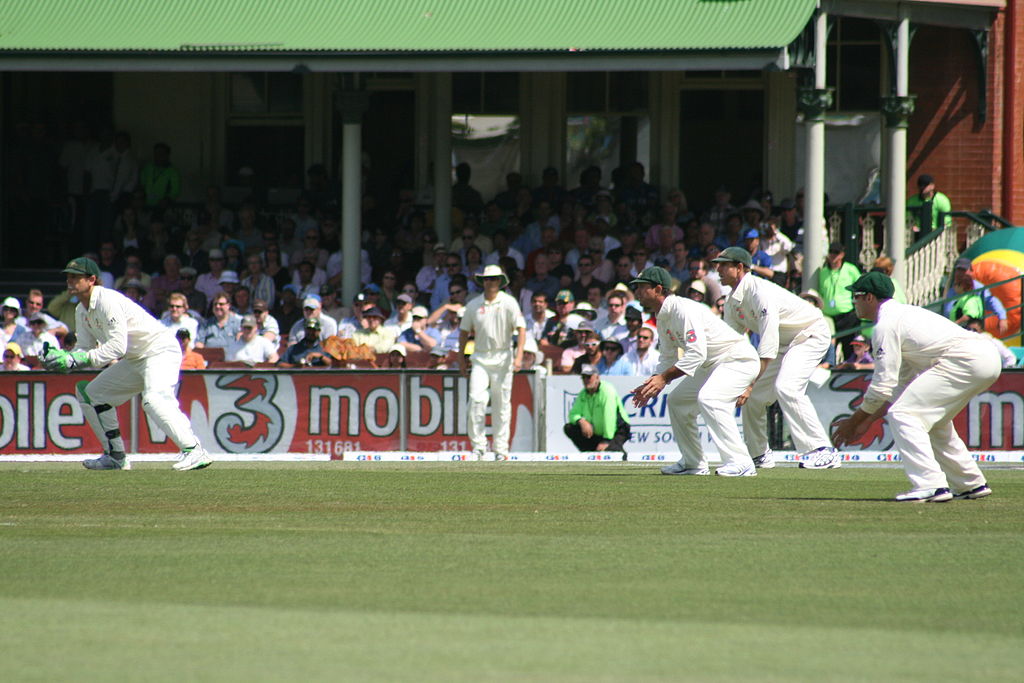
“If miracles didn’t happen” Malcolm Knox suggests, “nobody would watch sport”. In the era ‘The Greatest’ covers, the Australian cricket team didn’t just build up anundefeated record in home Test series and set a new record for most consecutive tests won, they pulled off cricketing miracles on a semi-regular basis. They thought they could beat anyone, from anywhere, and mostly they were right.

          This dominance was not just a result of the team’s unshakable self-belief (“Confidence is God” Knox explains), but some inspired leadership by the respective captains – Border, Taylor, Waugh, Ponting and the oft-maligned new-age approach of coach John Buchanan, who gets a more favourable and thoughtful treatment here than is often the case. Ultimately, each of the teams outgrew their leaders, the group having been moulded in the image of the captain so successfully that eventually their actual presence became almost superfluous.


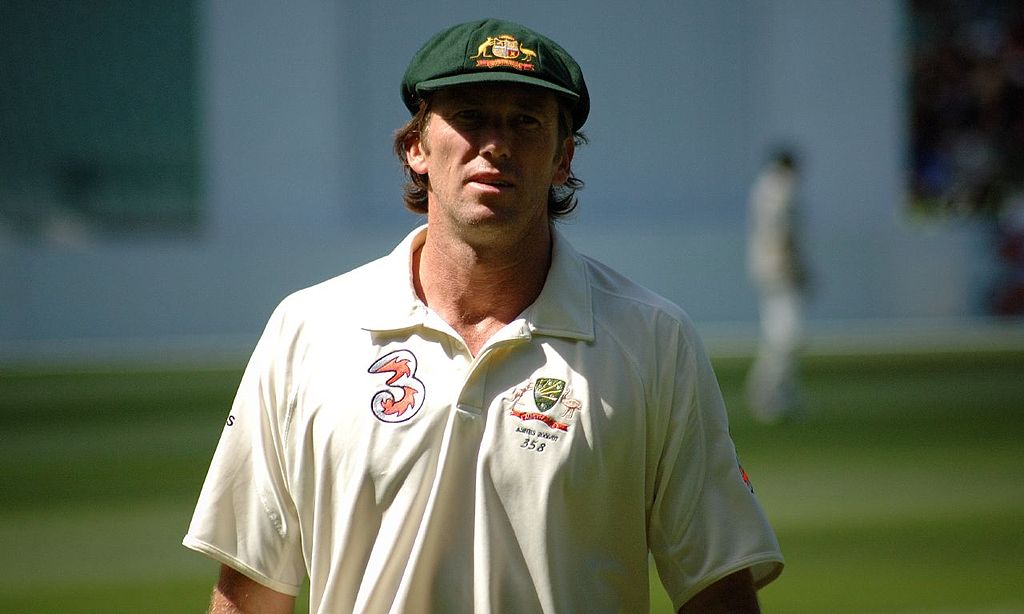
Glenn McGrath was a crucial part of Australia's decade of dominance, taking 944 wickets in Tests and One-Day Internationals. Glenn McGrath was a crucial part of Australia's decade of dominance, taking 944 wickets in Tests and One-Day Internationals. 

Glenn McGrath was a crucial part of Australia’s decade of dominance, taking 944 wickets in Tests and One-Day Internationals. 

          But leadership aside, no team becomes great without champion players and notwithstanding the presence of legendary figures like the Waughs, Hayden and McGrath, Knox is probably on safe ground when asserting “No Warne, no golden era”. Warne stands as the most remarkable character of the period; a frustrating and sometimes disruptive presence off the field but absolutely untouchable on it. He also proved the dictum that opposites attract better than any other cricketer – his favourite captain was the low-key and dour Alan Border, while England’s famously uptight and conservative cricket establishment loved him unconditionally.

          Rather than getting bogged down in the game-by-game grind of the now ludicrously cluttered international cricket schedule, Knox breezily skips over the less memorable series (one-dayers barely get a look in) and only delves into detailed match accounts for the most pivotal encounters. Australia’s victory in Sabina Park, 1995, which shifted the power balance of world cricket is recounted in great detail, as isIndia’s once-in-a-generation comeback at Kolkata, which showed that the Australians at their peak could only be toppled by superhuman efforts from their opposition. 

          Mostly the best thing about these match accounts is the suspense built into them. Every cricket tragic knows that Mark Waugh got Australia out of jail in Port Elizabeth, or that Shane Warne engineered remarkable implosions by the West Indies (Mohali, 1996),  England (Adelaide, 2005) and Daryl Cullinan (pretty much every time he faced Warne), yet reading about them here proves positively nail-biting, Knox extracting maximum drama, cutting back and forth from the action to the larger historical narrative, pacing his accounts like Ricky Ponting paces an innings.


Knox's writing on Adam Gilchrist is strong throughout (Photo: PrivateMusings)Knox's writing on Adam Gilchrist is strong throughout (Photo: PrivateMusings)

Knox’s writing on Adam Gilchrist is strong throughout (Photo: PrivateMusings)

          While clearly a fan and student of the game, and full of admiration for the feats of the Australian team, Knox is also not averse to putting the boot in when he sees the need. His condemnation of Australian sledging as cheating is the most vigorous and well-argued I have read. In contrast, his passionate and perfectly logical defence of Adam Gilchrist’s decision to walk in a World Cup semi-final puts much of what was written about the incident at the time to shame. The writing on Gilchrist is strong throughout, with the emotional turmoil that fuelled his double century against South Africa especially well drawn.

          Shorn of the hysteria and short-sightedness that sports reportage can degenerate into, this is an old-fashioned book in its way, clear-sighted and considered, never shying away from the controversies nor bowing to sensationalism. In a season of first-class cricket books, this ranks with the best, Knox applying the polished phrase-turning skill he showed in his glittering novel ‘Summerland’ to great effect.

          ‘The Greatest’ finishes with the Australian team surrendering to the lionhearted South Africans on home soil, the empire having finally crumbled. The loss to Graham Smith’s men was not the neat punctuation on an era of dominance as was then supposed, however, as Australia pulled off a remarkable series win away to the same opponents just three months later. This triumph was followed by the Ashes loss, another unexpected turn in an utterly compelling, never-ending story. As the next chapters are written, we can only hope to have a chronicler as skilful as this telling the tale.

Food stuff: A Beginner’s Guide to Matching Whiskey and Food

While matching wine with food has long been recognised as something of a fine art, there is a growing recognition that the complexity of whisky can similarly be complemented by the right food. “The taste of whisky can vary depending on what time of day it is and what you have eaten” explains Jane Overeem of Tasmania’s famed Lark Distillery. “People are really starting to notice this – and beginning to use food to bring out the best in whiskies”.

        David Vitale, the founder of Melbourne’s Starward Whisky, recently named the World’s best craft whisky, suggests new world whiskies are particularly amenable to pairing with food. “We’re so far away from the tweed jacket and fireplace” he says of the new breed “and that’s exciting!”. Here’s our guide to getting started:


Start by identifying the key flavours in your whisky: Most distilleries provide tasting notes, but the best approach to try it yourself. Ask yourself: is it spicy? smoky? Are there notes of vanilla, or is it more citrus? Also consider whether it is a light or heavy style. Inhale it deeply, keep it in your mouth for a few seconds and note the aftertaste. Once you’ve identified the key flavours, you’re on your way.


Aim for flavours which are complementary: There are few hard and fast rules in pairing food and whisky, but the general idea is to find foods which complement, rather than exactly match the character of the spirit. Ideally, you’re looking for a pairing that brings out the best in both.

A good example of this is that whiskies with briny notes can often be paired well with seafood; think a dram of Bowmore with freshly shucked oysters or the maritime offerings of Talisker and Ardbeg with sushi. Overeem suggests crispy-skinned salmon can be paired with Lark’s maritime influenced Classic Cask.


Match weights:  Another good rule of thumb is that a lighter whisky goes well with lighter food (try the likes of Jura and Glenkinchie with some goat’s cheese), while a heavier whisky is best complemented by heartier fare. Overeem recommends a steak with Lark’s heavier cask strength single malt. You also can’t go wrong with a Lagavulin here.


Try whisky and chocolate: Vitale points out that the two have more in common than you would initially think, noting they “have a few core similarities; origin, flavour, complexity, process, importance of base ingredients”. Dark chocolate and a smoky whisky work particularly well together.

            Starward have recently collaborated with artisanal chocolatiers Mork, creating a series of whisky-infused pralines. In July, the two like-minded companies are holding a night of experimental whisky and chocolate matching, which also incorporates some amazing sounding whisky gums.


Bear in mind you don’t want to overwhelm the flavours of the whisky: “I would recommend avoiding food with very strong flavours” Overeem says, nominating Indian cuisine as particularly difficult to match. Similarly, very sweet or very bitter foods are challenging to pair with whisky.


Have fun with it: A little experimentation is a good thing. Using your instincts, as you would when cooking, is also a sound approach. “I’m always trying to challenge myself by finding an unlikely pair that just works” says Vitale. “Trial and error is the best way to discover one thing that brings out the most in another”. He recalls being particularly surprised by how well some marinated ribs worked with Starward’s Solera whisky, which is aged in fortified wine casks. “There’s a sweet stickiness to glazed ribs that just really ties in with the subtle spiciness”.


At a recent Sydney whisky club event, an even more unlikely but brilliantly successful pairing was unveiled: Glenlivet’s Nadurra Oloroso, a fruity, spicy whisky aged in sherry casks, with the humble Caramello Koala. This kind of unexpected, inspired match is the heart of pairing whisky with food. You’ll soon be hooked.

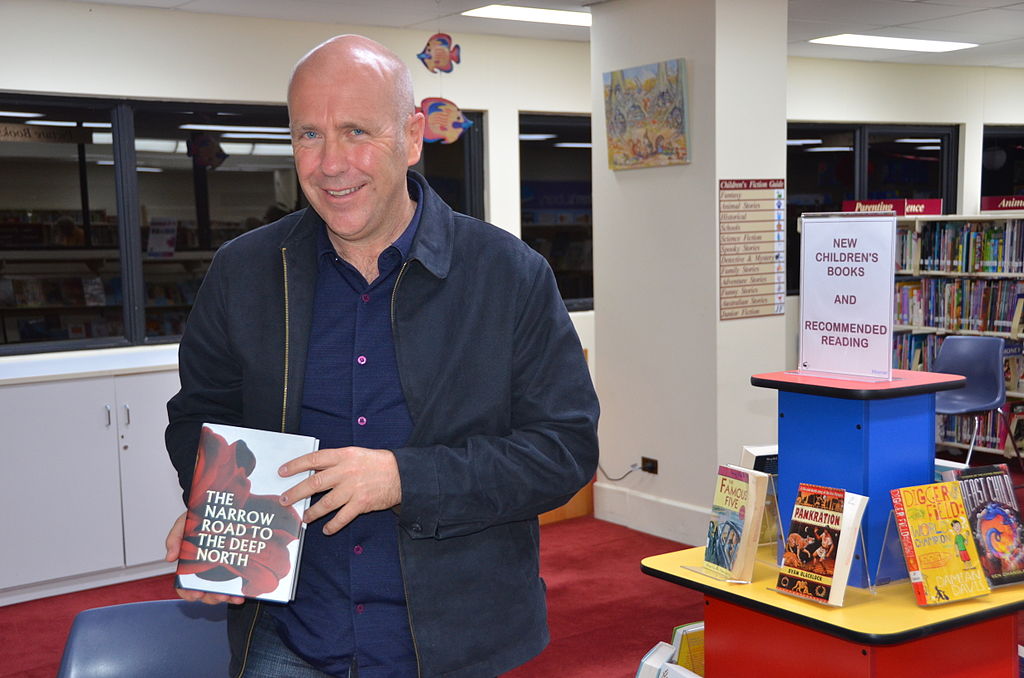
The Evening Game’s Modern Classics: ‘The Narrow Road to the Deep North’ by Richard Flanagan

”A happy man has no past,” Dorrigo Evans thinks, ”while an unhappy man has nothing else.” The Narrow Road to the Deep North moves like liquid back and forth through his past and present, both of which are dominated by his experience as a prisoner of war on the Thai-Burma Death Railway.

A story that is both harrowing and deeply humanist, The Narrow Road to the Deep North has been billed as Flanagan’s most personal work.

In his youth in Tasmania he plays football, and he finds something transcendent in its mixture of toughness and grace: ”All his life had been journeying to this point when he had for a moment flown into the sun.” He also develops an early love of literature and a reverence for the power of the written word that will echo through his story, which turns on a letter he receives.

His fate, however, lies elsewhere and after signing up to the war as a doctor it is his experiences as a colonel that mark him irrevocably. Being thrust into a position of responsibility, he finds he has courage and an instinctive knack for leadership, which he neither sought nor fully understands. He negotiates on behalf of his men, taking responsibility for the ”terrible arithmetic” as their captors demand more and more hard labour from his ailing men.


Before long, disease sets in – ulcers, scabies, starvation, gangrene, ringworm, lice, cholera. Bodies start piling up. The thought of Australia, which once kept them going, begins to feel increasingly distant, an abstraction, a half-forgotten dream. Struggling to maintain the hygiene that will keep them alive, the men lust after scraps of food and hide morsels in their meagre possessions to devour later. Some learn to barter with their tormenters for small favours, while others toy with the thought that death would come as a relief. Meanwhile, their bodies continue to disintegrate, as Dorrigo observes men with ”eyes that already seemed to be little more than black-shadowed sockets waiting for worms”.

A serial womaniser, he feels out of his depth when he meets Amy in the heady atmosphere of an Adelaide bookstore where Max Harris reads his poetry. Mesmerised by her physicality, which ”made him feel almost drunk with its scent and touch and sweep”, and finding someone whose passion for the written word matches his own, he is consumed by thoughts of her.

But a twist owing a debt to Greek tragedy sees her marry Dorrigo’s uncle, Keith, more out of a sense of duty and circumstance than any great passion. Their affair produces some of the book’s most lyrical writing; Dorrigo thinks, ”her body was a poem beyond memorising”.

In later years, Dorrigo has become feted as a national hero, the public clinging to an image detached from his philandering, uncertain self. He throws himself into a string of affairs and maintains a natural magnetism, but comes to realise, ”the more people I am with … the more alone I feel”. The plot quickens as Australia moves into the second half of the century with a more confident bearing, leading to a classic set piece that loops back to a scene at the Death Railway.

A story that is both harrowing and deeply humanist, The Narrow Road to the Deep North has been billed as Flanagan’s most personal work, inspired by his father’s stories of his POW experience. It is also perhaps his most ambitious, a deeply felt attempt to come to terms with the almost unimaginable horror of the Death Railway. In an already sparkling career (few novels get as close to perfection as Wanting), this might be his biggest, best, most moving work yet.

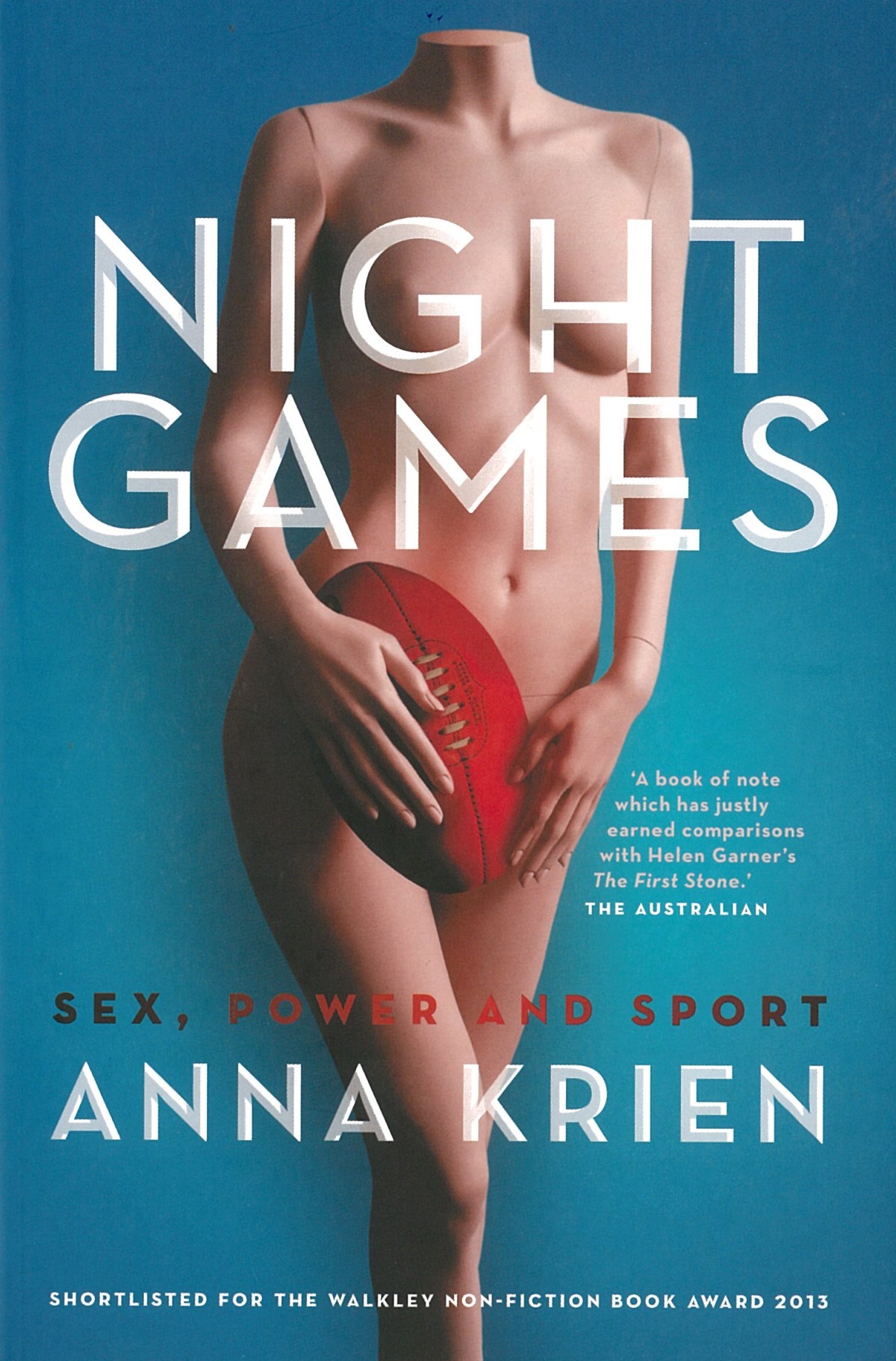
The Evening Game’s Modern Classics: ‘Night Games’ by Anna Krien

In the drunken early hours after Collingwood’s 2011 AFL grand final win, celebrations took a dark turn for Melbourne student Sarah. She had ended up at a house party where she had consensual sex with one man she had recently met at a nightclub, and then “felt compelled” to have sex with Collingwood player Dayne Beams. Another player, John McCarthy, was amongst a group of others also in the room, where Sarah felt “trapped”. After she left the house, she was allegedly raped in the alley next to the townhouse by Justin Dyer, a former VFL player.

By the time the matter went to trial, Dyer (fictitious names are used for both the defendant and complainant in Night Games), already a marginal figure in the Melbourne football world, was further isolated from the players he orbited around. Most of the media scrum materialised when the two Magpies players made fleeting appearances at the directions hearing and then at the trial as witnesses and disappeared when they left.

Krien stays, however, and doggedly follows the story, initially feeling discomfort that the events in the townhouse were not pursued and formed only a peripheral part of the trial. She finds herself surprised by Justin’s “gentle demeanour” and passivity and sees him as an outsider abandoned by the football fraternity. She also worries that she is getting too close to the family of the defendant, that her objectivity is destroyed by the defendant’s grandmother hugs her. As it it becomes clear the story won’t conform to any recognisable narrative about rape, she admits to wishing she had chosen to write about an “easier” rape trial instead.


Also troubling is the absence of Sarah from the trial. Like many jurisdictions, Victoria enables complainants to avoid the trauma of facing the accused in court. This rule, known as the ‘rape shield’, is an important protection for women who lodge complaints but Krien fears her absence means she will project her own experiences onto the complainant.

With skill and borderline cruelty, the defence lawyer has the evidence of a neighbour who possibly heard Sarah’s protests discounted, instead focusing attention on how after the contested incident, Dyer kissed the complainant and sat close with her in a taxi to her house, playing on meaningless but well-entrenched notions of how a rapist would act.

While the trial forms the backbone of Night Games, the story branches off into related tangents like the accusations of gang rape by rugby league players at Coffs Harbour, the St. Kilda schoolgirl scandal and the discrimination and vilification female journalists have faced when venturing into the post-game locker room for their work.

As dark as much of the material is, Night Games is far more complex and probing than a wholesale dismissal of football culture. Krien finds a lot to like in the AFL and there are surprising observations at every turn: “One of the reasons…that so many people watch football is not just for the athleticism and the biffo, but also for the tenderness”.In many ways, the sport is making a concerted effort to turn away from elements once accepted as commonplace, with a stand being taken against unacceptable sledging and racism and education initiatives being put in place to avoid some of the ugly excesses of the recent past.

A darker underside persists however, with a “macho culture of humiliation” regularly raring its head, with ex-player Tony Wilson filling the author in on an alcohol-fuelled culture of pranks, youthful bravado, and forms of humour and acceptance rituals which often seem baffling to an outsider.

The narrative always circles back to the trial though and it speaks volumes of the book’s ability to uncover unexpected nuance that it remains gripping even we know though the result. As the verdict draws near, Krien continues to feel haunted by Dyer’s persistence in following Sarah, instinctively sensing that even in his version of events, there is something “off” and disrespectful about his behaviour that night.

This lingering unease is the enduring feeling from Night Games,which is being promoted as a literary hand-grenade, but often settles into a tone more often thoughtful than incendiary. There are few easy answers here, no redemptive sense of any lesson that has been learned.

Whatever the truth about that party and whatever actually happened in the bedroom crowded with footballers and later in a dark, urine-soaked alley, it seems clear that this incident forms just part of a disturbing broader culture, and that much of what took place probably falls in a large grey area between what is against the law and what should be acceptable behaviour.

Chloe Hooper’s The Tall Man is an obvious antecedent, but this also brings to mind Michelle Schwarz’s undervalued One Split Second, which similarly used a high profile incident (in that case, the death of cricketer David Hookes) as a starting point to explore themes of masculinity, alcohol and violence and the role they play in Australian society.

Krien has a real feel for the tough, scrappy charm of Australian Rules Football, but seems on less certain territory in discussing other codes. Confusing Rugby League and Rugby Union and referring to the NRL as the A-league are simple mistakes that should have been edited out of an otherwise carefully written book.

Minor quibbles aside, the disquieting, fiercely intelligent Night Games instantly feels like an important work, and is certainly a difficult one to shake.

We Went There: Wil Anderson’s ‘Critically Wil’ at the Sydney Opera House

Over the past week, I’ve been interviewing comedians at the Melbourne International Comedy Festival about how the Trump era is affecting their work as comics and the word that keeps coming up as a description of how comedy feels now is ‘cathartic’. In our world of near-daily outrages and shifting norms, it’s not enough to just get up on stage and make a few funnies, these performers  seem to feel, you have to exercise a few demons as well.

‘Critically Wil’ grounds the political in very personal terms and there’s some strong autobiographical personal stuff here, ranging from reflections on his beginnings as the son of a dairy farmer and his early work in journalism to updates on his various medical woes. There is also some short but typically sharp crowd work (the superfluous ‘A’ in the name ‘Aaron’ gets a going over), yet ‘Critically Wil’ is mostly a topical beast, a show responding to, and fuelled by, the vexing headlines of the day.

One particularly well-observed section sees Anderson recount a long flight where the US election results filtered in as the plane was outside the connectivity zone, its passengers adrift in a kind of anxious purgatory. He finds himself shocked by the turn of events, though he’s not just blindly angry, but also genuinely tickled by the absurd comedy of how the unusual situation plays out. It’s a neat encapsulation of how much we need comedy in the darkest of times.

Much of the show tackles the dispiriting trend that having expertise or experience in something has somehow a disadvantage in the public debate and there are some killer analogies to this effect, one about how we should use the same logic we employ selecting a plumber as we do in voting for political leaders.

As a teenager, Anderson says his mother took him to see Billy Connolly and it changed his life forever. That passion for comedy, the unshakable belief in the release of collective laughter clearly remains. This palpable love for his craft gives his show a lot of its rollicking energy, yet the material it never crosses the line into being strident and completely avoids the off-putting shrillness and self-certainty that political commentators of all stripes have been guilty of lately.

There’s one particularly sly piece of trickery late in the show that yanks the comfortable rug out from under your feet and suggests that just as you shouldn’t unthinkingly swallow information that conforms with your worldview from a television talking head or Facebook headline, uncritically absorb what a stand-up comedian says as fact probably isn’t the greatest idea either.

‘Critically Wil’ is a continuation of Anderson’s late-career renaissance, but the stakes feel higher this time. So it’s fitting that this year’s installment is not just funny (though to be clear: it is consistently, uproariously funny), but that it feels necessary and, ultimately, deeply satisfying.

Food stuff: Lessons learned from a world champion pizzaiolo

A veteran of a quarter of a century of pizza cooking, Stefano Cireste’s considerable credentials include leading his team to 1st place in the Overall category at the WorldPizza Championships of 2016. Cireste describes the championships as a rigorous examination of every aspect of the pizza. “Not just the taste, but the technique, the theory, the tomatoes, it goes on and on and on”.

Cireste’s Verace Pizzeria, improbably located in an industrial site at Macquarie Park, also hold certification from the Associazione Verace Pizza Napolitana, an organisation which certifies outlets which meet a number of strict requirements for serving authentic Napolitan pizza. They cook pizza in a giant woodfired oven built by third generation Italian oven makers. The menu also runs to pasta, aperitifs, Italian wines and a classic Tiramisu, but pizza remains their true passion and calling card.


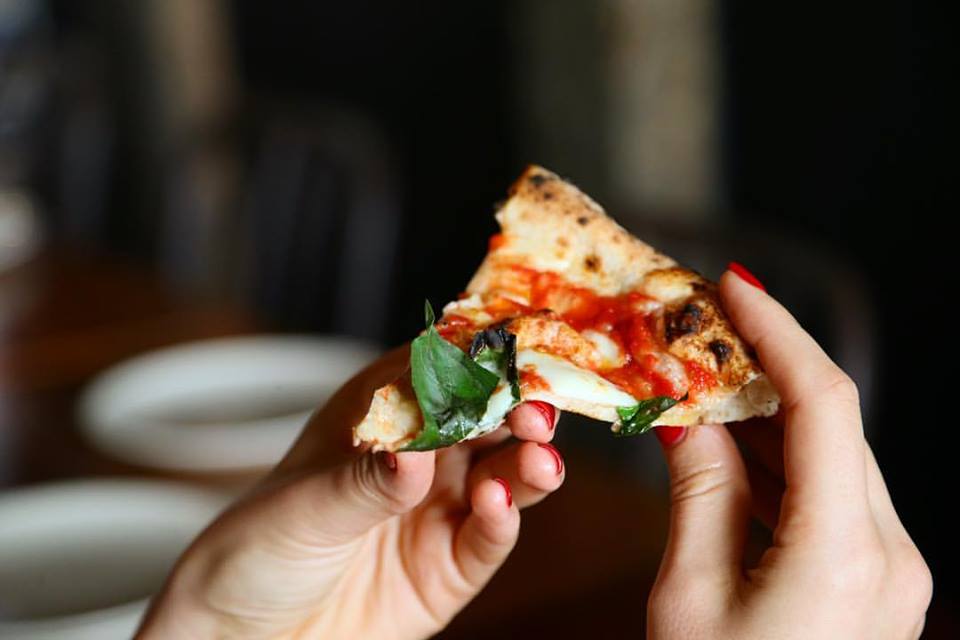
A caprese pizza fresh out of the oven.A caprese pizza fresh out of the oven.

A caprese pizza fresh out of the oven.

Crafting pizza this divine takes years of practice, the freshest produce and an oven capable of immense heat. But there are a few things all budding pizzaiolo can incorporate into their own cooking, and here are a few pointers we picked up from this world champ:   

Hand-knead your dough

Verace Pizzera hand kneads all their dough, a part of the cooking process mandated by the Napolitana Associazione rules. “The main purpose of (hand-kneading) is to keep and reallocate air that’s been produced through the fermentation process” Cireste says, explaining that using mechanical implements or rolling pins may speed up the process, but they get rid of the bubbles of air. The trick is to maintain as many of these pockets of air as possible and collect them in the crust, where they puff up, giving Napolitana pizza its airy, lighter feel.

Every part of the process matters

“The biggest misconception (about cooking pizza) people have is not realising that every single element matters – the timing, the tomatoes you use, how long you knead the dough for…they all affect another part of the product”. Cireste says customers sometimes take home some dough from Verace to cook with, only to return and ask if that’s really the same dough the Verace pizzaiolos use. This shows how different two pizzas can be, even when using the same base ingredient.

Freshness is king

Unusually for a pizza restaurant, Verace doesn’t offer any delivery service. “Napolitana pizza should be enjoyed straight from the oven to give justice to the fresh ingredients” Cireste says. It’s cooked in minutes and served immediately; think of it as the original fast food.

Only the best tomatoes will do

Cireste’s pizzeria only uses San Marzano tomatoes, which are produced in the volcanic soil of Vesuvius. These plum tomatoes are infinitely more flavoursome and sweet than other varieties and with much less juice and seeds.

 Pair your pizza with a good wine for maximum effect

Creating top shelf pizza at home is no mean feat, especially without the extreme heat of a woodfire oven, but Cireste suggests great results are possible with patience and care. One simple thing you can do to up your home pizza game however is to match it with a complementary wine. Cireste is a fan of a sangiovese with his prize-winning Margherita STG “It’s a simple, light wine, it doesn’t take too much away from the acidity of the pizza” he says.