Sydney Comedy Festival: We Talk to the Festival’s Rising Stars

From global politics to autobiographical musings, and from deep space to the shallows of the internet, the next wave of Australian comedy is a diverse and exciting scene. We talked to some of the festival’s rising stars about their new shows and comedy in the age of Trump. Catch them before they’re huge.

ALICE FRASER 

Having enjoyed a rapid rise from the open mic circuit to sold out festival shows, high profile writing gigs and international acclaim, Alice Fraser looks destined for even bigger things in 2017.

Like many of the new breed of Australian comedians, she uses the disarming potential of humour to explore some darker and more serious material, including political upheaval and personal tragedy. “I like to bring my audiences through a whole range of dangerous places,” she says. “They’re not going to come along if they’re not laughing”.

Her new show Empire sees her once again tackling heady terrain; “the trend towards fanaticism and rage on both ends of the political spectrum has been big in my mind of late – people’s willingness to see one another as dangerous idiots rather than as other humans”. Expect intelligence, openness, but also healthy doses of silliness in the form of banjo-driven songs. “This time round I have a few flashier elements” she says. “A space emperor costume, for example”.

Enmore Theatre, 118-132 Enmore Rd, 4-7 May, Tickets

DAMIEN POWER

“I have to admit I have joined far right groups on Facebook, purely for entertainment” Brisbane comedian Damien Power says. Such comic mischief informed his cult satire troupe True Australian Patriots, which won the Director’s award at Melbourne International Comedy Festival. The satire of extremist groups was so deft, at least one such outfit took their videos seriously and shared them to their followers.

His solo shows are different beasts but their mix of brainy, deeply funny outrage and scruffy charm looks set to crossover from critical acclaim to a wider audience. His latest, Utopia in 3D, “will touch on how much politics has become fragmented and how mainstream politics is coming to an end”. If that sounds potentially more chin-stroking than hilarious, Power assures punters the show was forged and road tested in the rough and tumble environment of Brisbane pubs rather than at a TedX conference. Power sees the big picture, philosophical nature of his work in very practical terms. “I like the idea that if come see me, you laugh as much as you would with any other show – that’s the goal anyway. But I may also change your perspective on the world in some way. So, I give you a better bang for your buck, so to speak”.

Giant Dwarf, 199 Cleveland St, Redfern, 12 May, Tickets

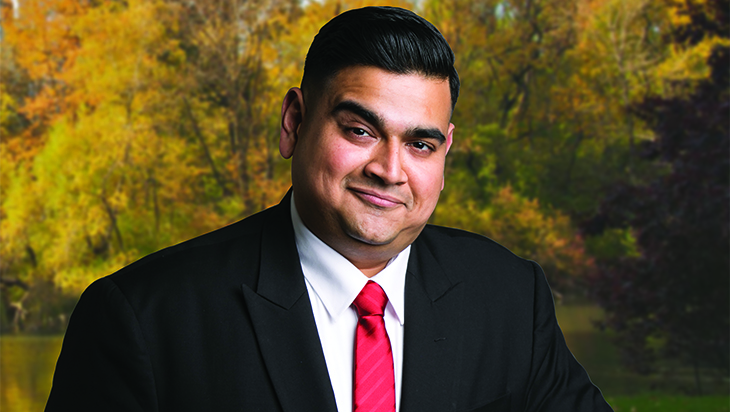
DILRUK JAYASINHA

A relatively new figure on the comedy scene, Sri Lankan born Jayasinha’s big-hearted storytelling and obvious love of the stage have put him on the fast-track to success; last year the ‘SOLD OUT’ sign was up for every one of his festival shows.

He’s a beloved and prolific podcast guest (his self-deprecating tales on The Little Dum Dum Club are the stuff of legend) and has dabbled in TV appearances and acting, but stand-up remains his first love. This year’s work, titled The Art of the Dil, sees him adding to his already considerable bag of tricks. “I’m going deeper into issues that I’ve never been fully comfortable talking about” he says. “I had a very interesting religious background, I grew up with a Buddhist Dad and a Muslim Mum who sent me to a Catholic school, so I had those three religions influencing my life”.

Riffs on institutional homophobia and resurgent islamophobia may be bold new territory for Jayasinha, but it’s likely crowds will be more than willing to follow this naturally funny, hugely likable performer wherever he goes next.

Giant Dwarf, 199 Cleveland St, Redfern, 20 May, Tickets

GILLIAN COSGRIFF

Cosgriff began writing songs as a “14-year-old with so many feelings”, then studied musical theatre at performing arts school. It was only later that she discovered the raucous, subversive joys of cabaret. Her unusual background has honed her expressive voice into an ideal instrument for her jaunty, clever songs, which locate a sweet spot between Rachel Bloom and Stephen Merritt.

This year’s festival sees her reprising To the Moon and Back, a rapturously received concept show of stand-up and music which was initially inspired by a terrifying, hungover viewing of Gravity at an IMAX theatre. It struck an unexpectedly personal chord: “I’ve always been scared of space and maybe scared of marriage, that idea of going into the unknown, so it seemed like there was a parallel there” she explains. The show also covers the inane world of online clickbait; Cosgriff nominates a recent story about the founder of Corona beer apparently leaving his fortune to his tiny hometown as particularly vexing. “It’s an amazing story, but it turned out not to be real at all” she sighs. “The internet is a terrible place full of terrible people”.

Factory Theatre, 105 Victoria Rd, Marrickville, 27-30 April, Tickets
The Stella Prize: Notes on the Longlist with director Aviva Tuffield

This week the shortlist will be announced for the 2017 Stella Prize, marking only the fifth time the prize will be awarded. It’s already a major date on Australia’s literary calendar, however, having grown considerably in profile and prestige. It continues to offer an annual reminder of the strength and breadth of writing by Australian women across a range of genres.

This year’s longlist selection is typically diverse, ranging from personal examinations of Australia’s drinking culture (Elspeth Muir’s Wasted), poignant autobiography (Cory Taylor’s Dying: A Memoir) and a survey of the journalism surrounding the Port Arthur Massacre (The Media and the Massacre by Sonya Voumard).

 The judge’s comments emphasise the extensive research that went into many of the longlisted works and there is little doubt the painstaking task of writing, editing and re-writing can be an isolating activity.

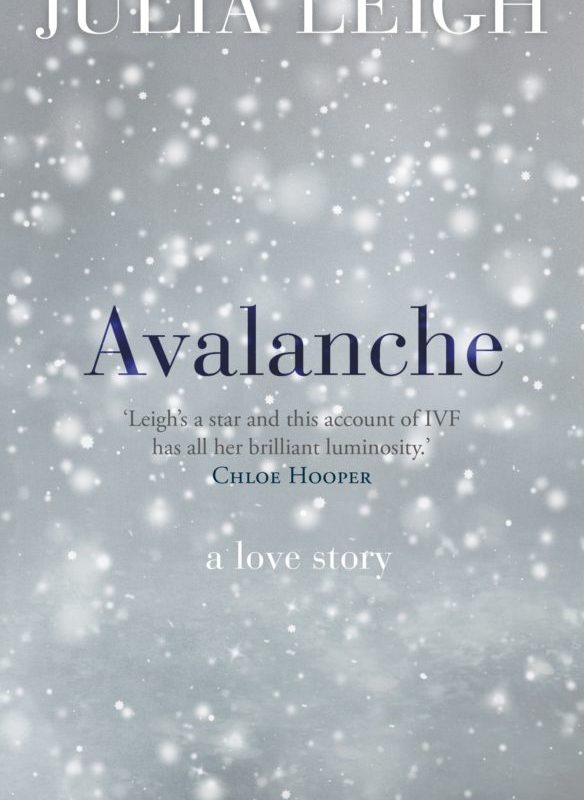
The Stella Prize goes some way towards promoting fraternity between writers. “It’s heartening to feel a part of a literary community” says Julia Leigh, who is nominated for her autobiographical look at the IVF process, Avalanche. “That the prize organisers have managed to build a strong sense of community around women’s writing in a fairly short space of time is a wonderful thing”.

Co-founder and executive director of the Stella Prize, Aviva Tuffield, says the prize has already become a real talking point and a source of inspiration for young women writers. “People say ‘It’s made such a difference to me, people are taking my work more seriously, I feel like a spotlight has been shone on me’”

Unusually for the Stella Prize, this year’s longlist is dominated by non-fiction, with only four novels, by Fiona McFarlane, Georgia Blain, Heather Rose and Emily Maguire, included. “It’s a reflection of the times we live in” Tuffield says. “There’s writing (in the longlist) about refugees, asylum seekers, racism in Australian life. People want serious writing on these issues”.

The judges’ comments on the longlist stressed the topicality of the works chosen. “Many of them address urgent national issues with particular relevance to women” it reads. “Women are fighting to be politically seen and heard, and to secure their positions in the public sphere”.

Julia Leigh agrees the current political and media climate has given a heightened sense of importance to work which is rigorously reported. “Non-fiction literary forms have long been incredibly important” she says. “Today we really need writers who can outflank the mendacious”.

Leigh, also a noted screenwriter and director (her Sleeping Beauty was a festival hit in 2011), says she felt a need to tell her story while it was still raw. “Avalanche felt necessary to me” she says. “I wrote it shortly after I stopped (IVF) treatment because I wanted to capture my strong feelings before they were blanketed by time”.

The $50,000 prizemoney represents a huge boost to the winner. Tuffield says, however, that there are other hugely important if less tangible effects on the nominated authors in terms of validation and renewed self-belief. She says last year’s prize recipient, Charlotte Wood, gained a whole new level of confidence from her win. “She felt like it gave her a real licence to speak out”. 

Other winners also experienced massive upticks in their career courtesy of the prize. Emily Bitto (author of The Strays, the 2015 winner) saw her sales double in the month after she won and signed a USA/Canada deal with a six-figure advance shortly after. Carrie Tiffany (Mateship with Birds, 2013) was another recipient who experienced a marked upsurge in exposure and publicity, becoming a mainstay of the festival circuit.

The ongoing effects of the prize are fitting for an award which encompasses school programs, podcasts, monitoring of the gender balance of book reviewers and impassioned advocacy for women writers on a year-round basis. The process of drawing up the longlist is also a lengthy one, with some 180 entries vying for inclusion on the longlist this year.

Tuffield explains that as well as a deep knowledge of literature, it is important Stella prize judges represent the diversity the award champions. The panel will usually include representatives from around the country, as well as academia, the bookselling industry, a literary critic and a ‘Stella fella’, who this year is screenwriter and journalist Benjamin Law.

Tuffield says the inclusion of a ‘fella’ on the judging panel is an important component of the Stella ethos. “It’s a misconception that books by women are somehow just for women” she explains and the prize encourages men to examine and broaden their reading habits.

The shortlisted books will be announced in March and the winner a month later, but the cultural change brought about by the Stella Prize will continue to be felt long beyond that.

The longlist in full:

Victoria: The Queen by Julia Baird

Between a Wolf and a Dog by Georgia Blain

The Hate Race by Maxine Beneba Clarke

Poum and Alexandre: A Paris Memoir by Catherine de Saint Phalle

Offshore: Behind the Wire on Manus and Nauru by Madeline Gleeson

An Isolated Incident by Emily Maguire

The High Places by Fiona McFarlane

Avalanche by Julia Leigh

Wasted: A Story of Alcohol, Grief and a Death in Brisbane by Elspeth Muir

The Museum of Modern Love by Heather Rose

Dying: A Memoir by Cory Taylor

The Media and the Massacre: Port Arthur 1966-2016 by Sonya Voumard

We Went There: Big Thief play Wombarra Bowling Club

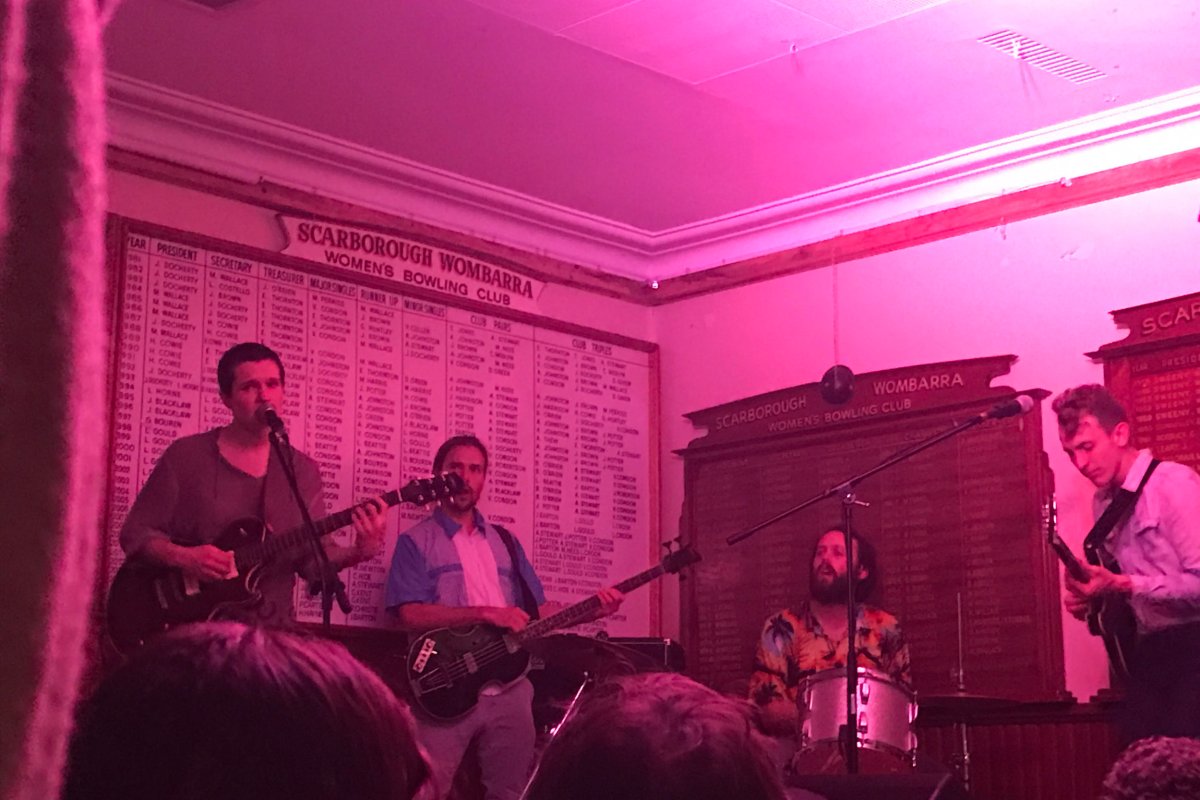
“This is already one of the most beautiful shows we’ve played” Big Thief singer/songwriter Adrianne Lenker tells an enthusiastic crowd as they occupy one corner of the Wombarra bowls club. Behind them, a wooden board neatly collates the names of past champions. Outside, misty rain falls and across the road, the sea rages. It’s a venue as unlikely as it is ideal.

The setlist includes a mellow, unnamed song which is only a couple of days old, as well as the gentle ache of ‘Paul’. These are songs that tread gently, but are compellingly intimate and emotionally bruising. ‘Real Love’ builds from embers of sound into something explosive and kind of shocking, with lyrics taking an abrupt turn into the details of an abusive relationship.

Darren Hanlon plays an oddball set of deep cuts (the dense, winding narrative of ‘Letter from a Mining Town’) and feelgood old favourites (‘Punk’s Not Dead). Throughout the mood is buoyant, not least when he plays new song ‘Lapsed Catholic’, which balances energetic vitriol with campfire singalong warmth.

At one point a dog makes his way through the assembled punters to conduct a brief check of the amps at the front of the stage. It’s that kind of show. They’re apparently going to knock this club down soon, but this is some way to go out. “My mum thinks I play stadiums” Hanlon laughs at one point. Give us a bowling club any day.

Books we’re Looking Forward to in 2017

Universal Harvester – John Darnielle

New fiction from the mastermind behind The Mountain Goats is set in a video store and If it’s anything like his masterful Black Sabbath-themed fiction, first novel proper or his music, it promises to be pitch black and deftly perceptive.

Anything is Possible – Elizabeth Stroud

The Pulitizer Prize winner’s My Name is Lucy Barton was one of the critical hits of last year, a meditation on family ties, pain reverberating through generations and the impossibility of ever escaping the past. This new novel (not, we’re informed, inspired by Kevin Garnett’s famous exclamation) explores similar themes in a small town setting.

Roots, Radicals and Rockers – Billy Bragg

A long overdue history of skiffle, a DIY musical movement which saw a surge in the popularity of guitars stateside. Anyone who has seen one of Bragg’s shows, which lean heavily on his funny, chatty, outraged persona, will be hoping he brings that same approach to his writing.

Men Without Women – Haruki Murakami

A collection of seven short stories based around the familiar Murakami theme of loneliness. Expect weirdness.

South and West (from a notebook) – Joan Didion

Plucked from her archives, this new release from the incomparable essayist is drawn from a 1970s road trip with her then-husband and her work for Rolling Stone covering the Patty Hearst trial.

View fullsize


Mohsin Hamid's 'Exit West'Mohsin Hamid's 'Exit West'

Mohsin Hamid’s ‘Exit West’


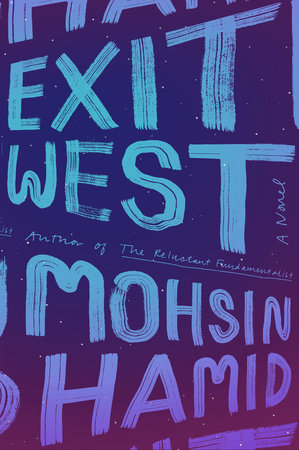
Exit West – Mohsin Hamid

From the author of The Reluctant Fundamentalist, comes a new work billed as a “timely love story that brilliantly imagines the forces that transform ordinary people into refugees”. One of the most perceptive observers of the here and now, Hamid also has a flair for combining innovation with genuinely moving narratives.

The Passenger – Cormac McCarthy

There’s only one Cormac McCarthy and he can (and does) release books as infrequently as he likes. This is his first novel since the indelible, grey skies beauty of The Road, which was released a decade ago. Little is known, other than it’s science fiction.

Hunger – Roxane Gay

Following up on the popular essay collection Bad Feminist, the prominent commentator, writer (and competitive scrabble player) will bring her punchy but nuanced approach to body image and eating, issues she covered in a memorable appearance on This American Life.

Best albums of 2016: A (belated) roundup

1. Mitski — Puberty 2

A record full of life and haunted by death, that fizzes and rages and feels fresh and surprising on every listen.

2. Angel Olsen — My Woman

A shape-shifting statement of vulnerability and resilience.

3. Brian Fallon — Painkillers

An album made to be played on repeat as you’re driving at night, the only car on the road and no destination in mind.

4. Leonard Cohen — You Want it Darker

A supremely graceful final act

5. Beach Slang — A Loud Bash of Teenage Feelings

“Your arms are a car crash / I want to die in”

6. Frank Ocean — Blonde

The platonic ideal of the pop record as public diary entry.

7. David Bowie — Blackstar

“Look up here, I’m in heaven / I’ve got scars that can’t be seen”

8. Teenage Fanclub — Here

Songs which instantly feel familiar in the best way, classic, timeless, warm.

9. Beyonce — Lemonade

One of the most zeitgeisty pop culture artefacts of the year, but even more satisfying as a record than thinkpiece fodder. Human, angry, tuneful, beautiful, vital. Both timely and timeless.

10. Julia Jacklin — Don’t Let the Kids Win

Prematurely world weary, like a twentysomething Neil Young likening to his life to an old man’s or Patsy Cline sighing into a golden microphone.

11.Car Seat Headrest — Teens of Denial

The album about growing up bored and and disillusioned that feels so homespun and relatable that we’d all like to think we could have written it .

12. Maxwell — BlackSUMMERS’night

The second part of an immaculately produced song suite where all the sharp edges have been sanded down to a smooth, shapely whole. A balm for strange times and a collection of songs to luxuriate in.

13. Bon Iver — 22, A Million

The year’s most enigmatic record. Pure gibberish or visionary genius? I’m willing to spend a lot of time figuring it out.

14. Bat For Lashes — The Bride

Underrated concept record with that brand of stylish, lush darkness only Natasha Khan can do.

15. Japanese Breakfast — Psychopomp

A record which explodes with sunshine and life and then reveals hidden depths. Bittersweet like all the best pop music.

16. The Radio Dept. — Running Out of Love

Pop symphonies for introverts.

17. Drive-By Truckers — American Band

At first glance, the title sounds blandly descriptive. A few listens later, it sounds like a mission statement of admirable clarity, something to strive towards.

18. The Handsome Family — Unseen

Dark, deeply funny, empathetic: a classic Handsome Family record.

19. Frankie Cosmos — Next Thing

The best collection yet from a prolific talent. Fragile earworms and intimate song sketches.

20. Solange — A Seat at the Table

The second entry of the Knowles family in this list #proudparents

21. Nada Surf — You Know Who You Are

Unfashionably melodic and improbably consistent, Nada Surf have had maybe the best career of any band ever written off as a one (novelty) hit wonder.

22. Pinegrove — Cardinal

Sturdy songs which feel lived in, formed of experience and wisdom.

23. Summer Flake — Hello Friends

A sleeper record built to both soothe and thrill. Melodies buried under a heat haze and guitar noise.

24. Hamilton Leithauser & Rostam — I Had a Dream That You Were Mine

A pop genius and a cult crooner team up. You’ll never believe what happens next…

25. Let’s Eat Grandma — I, Gemini

Almost single-handedly made recorders cool. Pop songs written by people who had never heard pop songs before.

Honourable mentions: Eleanor Friedberger, Hiss Golden Messenger, The Goon Sax