
“If miracles didn’t happen” Malcolm Knox suggests, “nobody would watch sport”. In the era ‘The Greatest’ covers, the Australian cricket team didn’t just build up anundefeated record in home Test series and set a new record for most consecutive tests won, they pulled off cricketing miracles on a semi-regular basis. They thought they could beat anyone, from anywhere, and mostly they were right.
This dominance was not just a result of the team’s unshakable self-belief (“Confidence is God” Knox explains), but some inspired leadership by the respective captains – Border, Taylor, Waugh, Ponting and the oft-maligned new-age approach of coach John Buchanan, who gets a more favourable and thoughtful treatment here than is often the case. Ultimately, each of the teams outgrew their leaders, the group having been moulded in the image of the captain so successfully that eventually their actual presence became almost superfluous.
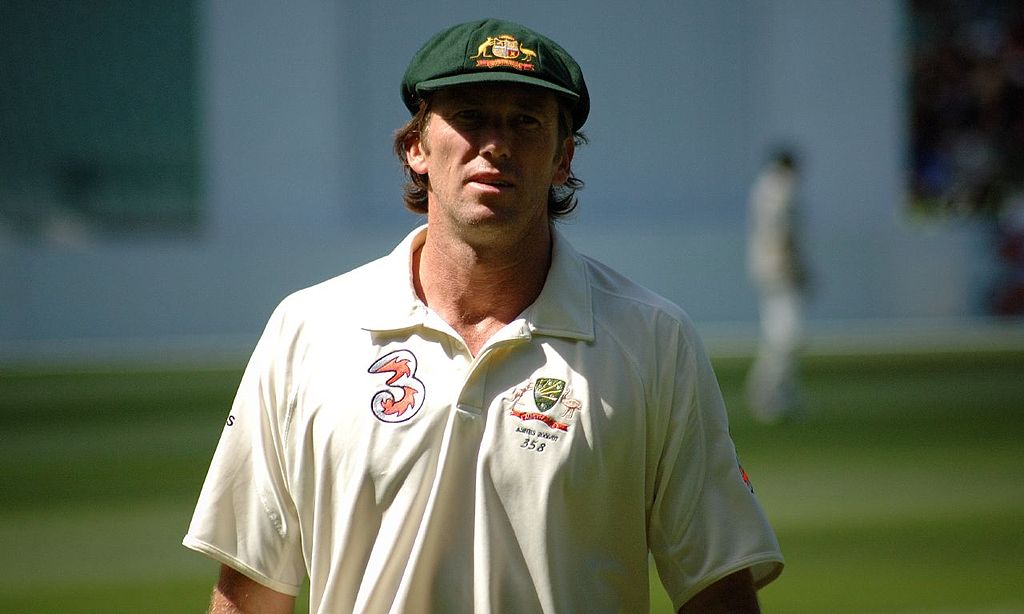
Glenn McGrath was a crucial part of Australia’s decade of dominance, taking 944 wickets in Tests and One-Day Internationals.
But leadership aside, no team becomes great without champion players and notwithstanding the presence of legendary figures like the Waughs, Hayden and McGrath, Knox is probably on safe ground when asserting “No Warne, no golden era”. Warne stands as the most remarkable character of the period; a frustrating and sometimes disruptive presence off the field but absolutely untouchable on it. He also proved the dictum that opposites attract better than any other cricketer – his favourite captain was the low-key and dour Alan Border, while England’s famously uptight and conservative cricket establishment loved him unconditionally.
Rather than getting bogged down in the game-by-game grind of the now ludicrously cluttered international cricket schedule, Knox breezily skips over the less memorable series (one-dayers barely get a look in) and only delves into detailed match accounts for the most pivotal encounters. Australia’s victory in Sabina Park, 1995, which shifted the power balance of world cricket is recounted in great detail, as isIndia’s once-in-a-generation comeback at Kolkata, which showed that the Australians at their peak could only be toppled by superhuman efforts from their opposition.
Mostly the best thing about these match accounts is the suspense built into them. Every cricket tragic knows that Mark Waugh got Australia out of jail in Port Elizabeth, or that Shane Warne engineered remarkable implosions by the West Indies (Mohali, 1996), England (Adelaide, 2005) and Daryl Cullinan (pretty much every time he faced Warne), yet reading about them here proves positively nail-biting, Knox extracting maximum drama, cutting back and forth from the action to the larger historical narrative, pacing his accounts like Ricky Ponting paces an innings.
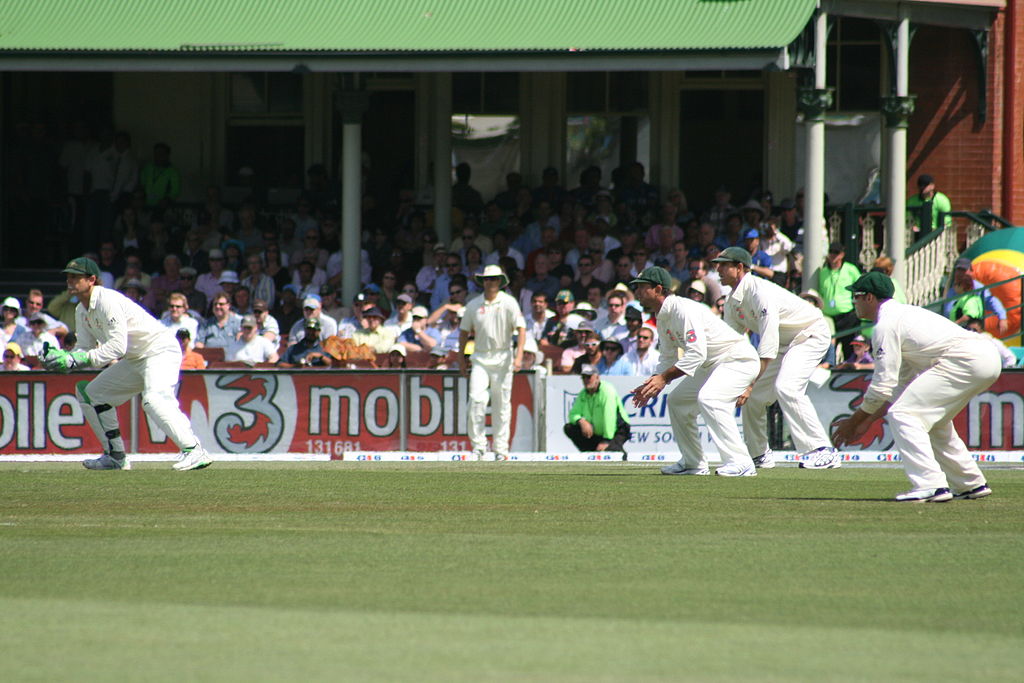
Knox’s writing on Adam Gilchrist is strong throughout (Photo: PrivateMusings)
 The Evening Game