For a certain type of sports fan, a constant frustration is the apparent inability of those caught up in amazing sporting moments to describe said moments. Far too often, athletes writing their memoirs fall back on clichés or throw their hands up and recount the feelings of soaring highs and outrageous, public lows as indescribable. In a way, it’s understandable – it’s hard to imagine two things more removed from each other than, say, crafting sentences and guarding Lebron James.
Paul Shirley, a journeyman NBA and international league player, is something of an outlier then, part of a small portion of the Venn diagram combining ‘entertaining writer’ and ‘actual professional athlete’ and his first collection, ‘Can I Keep My Jersey?’, was a memorably sardonic look at life on the fringes of the big time, including stints with the D’Antoni/Nash Phoenix Suns and several other less game-changing outfits.
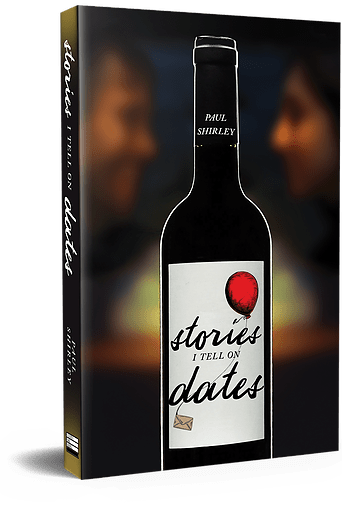
Stories I Tell On Dates sets the lens wider, using the title as a loose device, but stretching back through unfailingly entertaining diversions like a childhood squabble about school points cards, a tear-streaked first night at a sleepaway camp and a nightclub mix-up involving MC Hammer, amongst other misadventures. Those who loved Jersey and Short Corner, the caustically hilarious podcast he co-hosted (guilty on both counts) will find a warmer, more bittersweet tone here, though thankfully the penchant for self-deprecating humour remains a feature of his work.
Through relationships gone astray, some truly agonizing injuries, the fallout of a controversial, soul-crushing NCAA tournament loss and an improbable chance at revenge against a college teammate, it emerges as not just a collection of individually strong tales but an ultimately satisfying reflection on why certain stories become part of our repertoire and the choices we make in retelling them.
At an ungodly hour one morning, Connie tells Douglas the thought of the two of them alone in the house together without their son Albie is “like a Beckett play”. Douglas hasn’t seen any Beckett plays, but senses this is not a good thing.
The pair have been married for 21 years and have planned one last family trip to Europe before Albie leaves to study photography, but Connie’s decision to leave Douglas once the trip is done turns their holiday into an increasingly desperate one.
David Nicholls on the book tour for his previous hit, ‘One Day’. The European travel formed the backdrop for ‘Us’. (Photo: putnik)
Nicholls’ previous novel was the 2009 phenomenon One Day, which sold five million copies. Us taps into that same sad/funny vein, though this time there’s a sole narrator, the strait-laced Douglas, an earnest scientist who views dinner parties as “a pitiless form of gladiatorial combat”. When he is corralled into one such event, however, he falls for Connie. She’s completely different from him – cultured, vivacious and charmingly free-spirited, though sometimes intolerant of anyone not charmingly free-spirited in the exact same way she is.
The narrative seamlessly flashes back and forth between the built-up frustrations and petty squabbles of their Grand Tour and the early days of their fumbling, transformative romance. Their beginnings were a heady time, but for Douglas also fraught with a fear he didn’t belong in the exciting new world Connie ushered him into.
Parenthood only exacerbates their divide and Albie grows into an artistically inclined, self-focused character much more comfortable with Connie’s bohemianism than Douglas’ sober approach to life. As Albie communicates with his father mainly through grunts and disdain, Douglas feels Albie and Connie have ganged up on him and have overlooked his better qualities.
The trio’s dynamics form a kind of modern spin on the old odd-couple trope, but the raging insecurity and simmering frustrations wrought by those with vastly different temperaments trying to get along has rarely been so hilarious and so utterly painful.
This is a wildly successful return; barely a page passes without some cringe-inducing flash of humour, some small moment of pathos or a quotable one-liner. All those enraptured by One Day‘s surprising depth, pitch-perfect balance of satire and generosity and its insights into contemporary relationships will find plenty more to love and argue about here.


 The Evening Game