While matching wine with food has long been recognised as something of a fine art, there is a growing recognition that the complexity of whisky can similarly be complemented by the right food. “The taste of whisky can vary depending on what time of day it is and what you have eaten” explains Jane Overeem of Tasmania’s famed Lark Distillery. “People are really starting to notice this – and beginning to use food to bring out the best in whiskies”.
David Vitale, the founder of Melbourne’s Starward Whisky, recently named the World’s best craft whisky, suggests new world whiskies are particularly amenable to pairing with food. “We’re so far away from the tweed jacket and fireplace” he says of the new breed “and that’s exciting!”. Here’s our guide to getting started:
Start by identifying the key flavours in your whisky: Most distilleries provide tasting notes, but the best approach to try it yourself. Ask yourself: is it spicy? smoky? Are there notes of vanilla, or is it more citrus? Also consider whether it is a light or heavy style. Inhale it deeply, keep it in your mouth for a few seconds and note the aftertaste. Once you’ve identified the key flavours, you’re on your way.
Aim for flavours which are complementary: There are few hard and fast rules in pairing food and whisky, but the general idea is to find foods which complement, rather than exactly match the character of the spirit. Ideally, you’re looking for a pairing that brings out the best in both.
A good example of this is that whiskies with briny notes can often be paired well with seafood; think a dram of Bowmore with freshly shucked oysters or the maritime offerings of Talisker and Ardbeg with sushi. Overeem suggests crispy-skinned salmon can be paired with Lark’s maritime influenced Classic Cask.
Match weights: Another good rule of thumb is that a lighter whisky goes well with lighter food (try the likes of Jura and Glenkinchie with some goat’s cheese), while a heavier whisky is best complemented by heartier fare. Overeem recommends a steak with Lark’s heavier cask strength single malt. You also can’t go wrong with a Lagavulin here.
Try whisky and chocolate: Vitale points out that the two have more in common than you would initially think, noting they “have a few core similarities; origin, flavour, complexity, process, importance of base ingredients”. Dark chocolate and a smoky whisky work particularly well together.
Starward have recently collaborated with artisanal chocolatiers Mork, creating a series of whisky-infused pralines. In July, the two like-minded companies are holding a night of experimental whisky and chocolate matching, which also incorporates some amazing sounding whisky gums.
Bear in mind you don’t want to overwhelm the flavours of the whisky: “I would recommend avoiding food with very strong flavours” Overeem says, nominating Indian cuisine as particularly difficult to match. Similarly, very sweet or very bitter foods are challenging to pair with whisky.
Have fun with it: A little experimentation is a good thing. Using your instincts, as you would when cooking, is also a sound approach. “I’m always trying to challenge myself by finding an unlikely pair that just works” says Vitale. “Trial and error is the best way to discover one thing that brings out the most in another”. He recalls being particularly surprised by how well some marinated ribs worked with Starward’s Solera whisky, which is aged in fortified wine casks. “There’s a sweet stickiness to glazed ribs that just really ties in with the subtle spiciness”.
At a recent Sydney whisky club event, an even more unlikely but brilliantly successful pairing was unveiled: Glenlivet’s Nadurra Oloroso, a fruity, spicy whisky aged in sherry casks, with the humble Caramello Koala. This kind of unexpected, inspired match is the heart of pairing whisky with food. You’ll soon be hooked.
A veteran of a quarter of a century of pizza cooking, Stefano Cireste’s considerable credentials include leading his team to 1st place in the Overall category at the WorldPizza Championships of 2016. Cireste describes the championships as a rigorous examination of every aspect of the pizza. “Not just the taste, but the technique, the theory, the tomatoes, it goes on and on and on”.
Cireste’s Verace Pizzeria, improbably located in an industrial site at Macquarie Park, also hold certification from the Associazione Verace Pizza Napolitana, an organisation which certifies outlets which meet a number of strict requirements for serving authentic Napolitan pizza. They cook pizza in a giant woodfired oven built by third generation Italian oven makers. The menu also runs to pasta, aperitifs, Italian wines and a classic Tiramisu, but pizza remains their true passion and calling card.
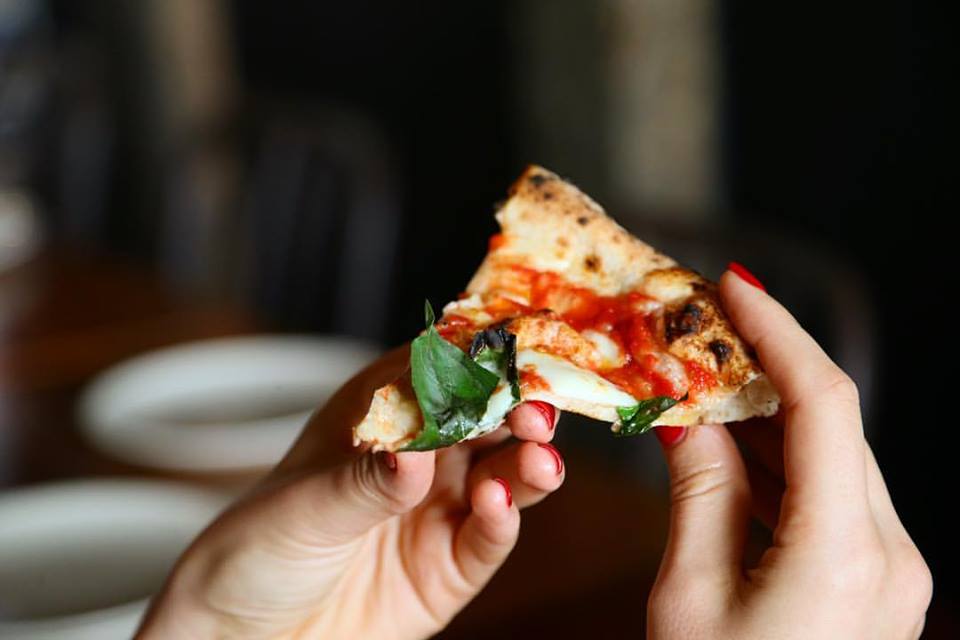
A caprese pizza fresh out of the oven.
Crafting pizza this divine takes years of practice, the freshest produce and an oven capable of immense heat. But there are a few things all budding pizzaiolo can incorporate into their own cooking, and here are a few pointers we picked up from this world champ:
Hand-knead your dough
Verace Pizzera hand kneads all their dough, a part of the cooking process mandated by the Napolitana Associazione rules. “The main purpose of (hand-kneading) is to keep and reallocate air that’s been produced through the fermentation process” Cireste says, explaining that using mechanical implements or rolling pins may speed up the process, but they get rid of the bubbles of air. The trick is to maintain as many of these pockets of air as possible and collect them in the crust, where they puff up, giving Napolitana pizza its airy, lighter feel.
Every part of the process matters
“The biggest misconception (about cooking pizza) people have is not realising that every single element matters – the timing, the tomatoes you use, how long you knead the dough for…they all affect another part of the product”. Cireste says customers sometimes take home some dough from Verace to cook with, only to return and ask if that’s really the same dough the Verace pizzaiolos use. This shows how different two pizzas can be, even when using the same base ingredient.
Freshness is king
Unusually for a pizza restaurant, Verace doesn’t offer any delivery service. “Napolitana pizza should be enjoyed straight from the oven to give justice to the fresh ingredients” Cireste says. It’s cooked in minutes and served immediately; think of it as the original fast food.
Only the best tomatoes will do
Cireste’s pizzeria only uses San Marzano tomatoes, which are produced in the volcanic soil of Vesuvius. These plum tomatoes are infinitely more flavoursome and sweet than other varieties and with much less juice and seeds.
Pair your pizza with a good wine for maximum effect
Creating top shelf pizza at home is no mean feat, especially without the extreme heat of a woodfire oven, but Cireste suggests great results are possible with patience and care. One simple thing you can do to up your home pizza game however is to match it with a complementary wine. Cireste is a fan of a sangiovese with his prize-winning Margherita STG “It’s a simple, light wine, it doesn’t take too much away from the acidity of the pizza” he says.


 The Evening Game