This week the shortlist will be announced for the 2017 Stella Prize, marking only the fifth time the prize will be awarded. It’s already a major date on Australia’s literary calendar, however, having grown considerably in profile and prestige. It continues to offer an annual reminder of the strength and breadth of writing by Australian women across a range of genres.
This year’s longlist selection is typically diverse, ranging from personal examinations of Australia’s drinking culture (Elspeth Muir’s Wasted), poignant autobiography (Cory Taylor’s Dying: A Memoir) and a survey of the journalism surrounding the Port Arthur Massacre (The Media and the Massacre by Sonya Voumard).
The judge’s comments emphasise the extensive research that went into many of the longlisted works and there is little doubt the painstaking task of writing, editing and re-writing can be an isolating activity.
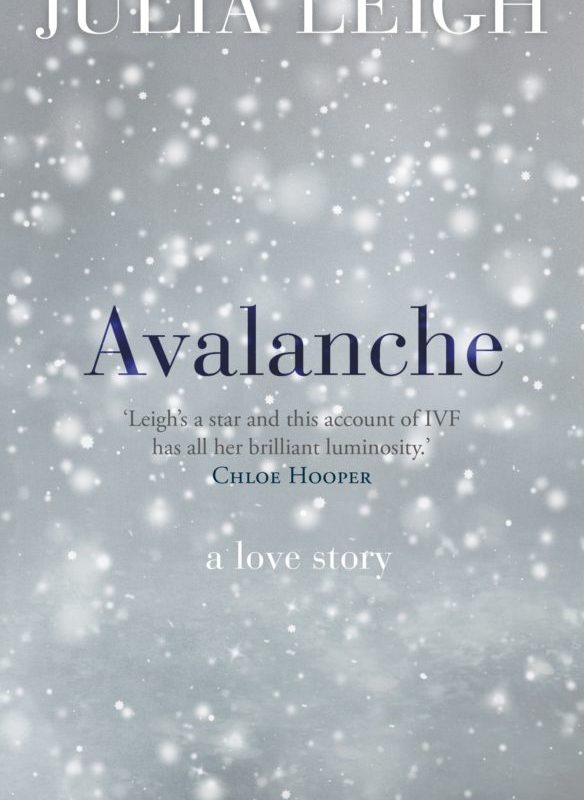
The Stella Prize goes some way towards promoting fraternity between writers. “It’s heartening to feel a part of a literary community” says Julia Leigh, who is nominated for her autobiographical look at the IVF process, Avalanche. “That the prize organisers have managed to build a strong sense of community around women’s writing in a fairly short space of time is a wonderful thing”.
Co-founder and executive director of the Stella Prize, Aviva Tuffield, says the prize has already become a real talking point and a source of inspiration for young women writers. “People say ‘It’s made such a difference to me, people are taking my work more seriously, I feel like a spotlight has been shone on me’”
Unusually for the Stella Prize, this year’s longlist is dominated by non-fiction, with only four novels, by Fiona McFarlane, Georgia Blain, Heather Rose and Emily Maguire, included. “It’s a reflection of the times we live in” Tuffield says. “There’s writing (in the longlist) about refugees, asylum seekers, racism in Australian life. People want serious writing on these issues”.
The judges’ comments on the longlist stressed the topicality of the works chosen. “Many of them address urgent national issues with particular relevance to women” it reads. “Women are fighting to be politically seen and heard, and to secure their positions in the public sphere”.
Julia Leigh agrees the current political and media climate has given a heightened sense of importance to work which is rigorously reported. “Non-fiction literary forms have long been incredibly important” she says. “Today we really need writers who can outflank the mendacious”.
Leigh, also a noted screenwriter and director (her Sleeping Beauty was a festival hit in 2011), says she felt a need to tell her story while it was still raw. “Avalanche felt necessary to me” she says. “I wrote it shortly after I stopped (IVF) treatment because I wanted to capture my strong feelings before they were blanketed by time”.
The $50,000 prizemoney represents a huge boost to the winner. Tuffield says, however, that there are other hugely important if less tangible effects on the nominated authors in terms of validation and renewed self-belief. She says last year’s prize recipient, Charlotte Wood, gained a whole new level of confidence from her win. “She felt like it gave her a real licence to speak out”.
Other winners also experienced massive upticks in their career courtesy of the prize. Emily Bitto (author of The Strays, the 2015 winner) saw her sales double in the month after she won and signed a USA/Canada deal with a six-figure advance shortly after. Carrie Tiffany (Mateship with Birds, 2013) was another recipient who experienced a marked upsurge in exposure and publicity, becoming a mainstay of the festival circuit.
The ongoing effects of the prize are fitting for an award which encompasses school programs, podcasts, monitoring of the gender balance of book reviewers and impassioned advocacy for women writers on a year-round basis. The process of drawing up the longlist is also a lengthy one, with some 180 entries vying for inclusion on the longlist this year.
Tuffield explains that as well as a deep knowledge of literature, it is important Stella prize judges represent the diversity the award champions. The panel will usually include representatives from around the country, as well as academia, the bookselling industry, a literary critic and a ‘Stella fella’, who this year is screenwriter and journalist Benjamin Law.
Tuffield says the inclusion of a ‘fella’ on the judging panel is an important component of the Stella ethos. “It’s a misconception that books by women are somehow just for women” she explains and the prize encourages men to examine and broaden their reading habits.
The shortlisted books will be announced in March and the winner a month later, but the cultural change brought about by the Stella Prize will continue to be felt long beyond that.
The longlist in full:
Victoria: The Queen by Julia Baird
Between a Wolf and a Dog by Georgia Blain
The Hate Race by Maxine Beneba Clarke
Poum and Alexandre: A Paris Memoir by Catherine de Saint Phalle
Offshore: Behind the Wire on Manus and Nauru by Madeline Gleeson
An Isolated Incident by Emily Maguire
The High Places by Fiona McFarlane
Avalanche by Julia Leigh
Wasted: A Story of Alcohol, Grief and a Death in Brisbane by Elspeth Muir
The Museum of Modern Love by Heather Rose
Dying: A Memoir by Cory Taylor
The Media and the Massacre: Port Arthur 1966-2016 by Sonya Voumard
 The Evening Game