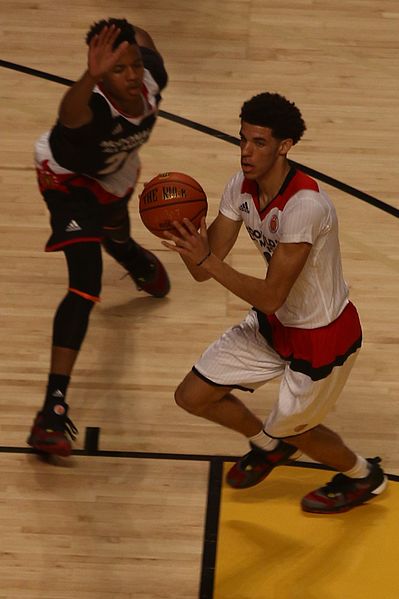
# 1 Philadelphia 76ers: Markelle Fultz
While projections on Fultz’s ceiling range pretty broadly, it’s difficult to find someone (perhaps besides Danny Ainge) who doesn’t think Fultz is clearly the best prospect in this class. He can score in any number of ways and is going to be a monster both in transition and in pick and roll. While there are some slight knocks against him (Washington’s losing record, a defensive intensity that comes and goes) the pros and cons well and truly outweigh the cons here. If Philly can actually get all its young talent on the court at once, they can dream big with the well-rounded, long, athletic, super impressive Fultz.
# 2 Los Angeles Lakers: Lonzo Ball
While the Boston/Philadelphia trade robbed us of the mouth-watering Fultz/Ball cross continent rivalry, LA lived up to their half of the bargain, selecting Ball as widely projected. He is going to change this team and while it’s difficult to quantify how valuable Ball’s selfless, team-first approach is to team culture will be, it will likely prove infectious, instantly giving a floundering franchise a strong identity and a path to success. While there are some questions about whether Ball’s half-court game is as strong as his weaponised transition offence, he is likely to be the kind of special talent worth building a team around.
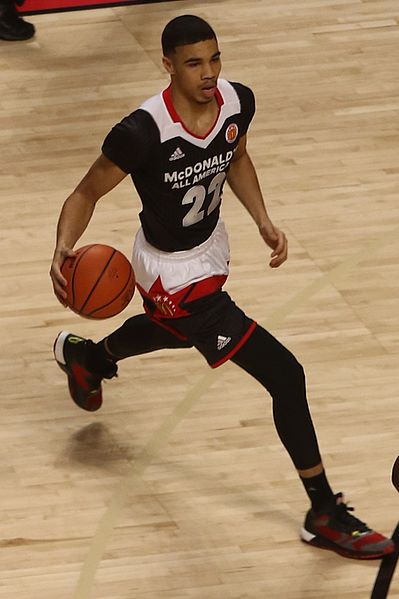
Boston’s Jayson Tatum brings real scoring power, but will he be a long-term Celtic? (Photo: TonyTheTiger)
# 3 Boston Celtics: Jayson Tatum
A versatile offensive weapon who could play multiple positions, Tatum does seem slightly like a player who would have excelled in an earlier version of the NBA given his fondness for iso ball and taking (and to be fair, often making) contested mid-range shots. But he is a fluent mover, an effective post player and good passer.
If he can stay engaged on defence and raise his 3-point shooting slightly (a streaky 34% on 4 attempts per game), he can be a valuable scorer, if not a transcendent star. His game seems to exist in a tier down from Markelle Fultz, meaning Boston’s move to trade down for him is an underwhelming one if it not merely part one of a broader plan.
# 4 Phoenix Suns: Josh Jackson
There are questions about his shooting form, but Jackson has elite athleticism, a manic competitive drive, a long wingspan and all the tools to develop into a genuine two-way threat. If he can play with a little more control and avoid prolonged shooting slumps, he will be worth every bit of this high position as both a top-level scorer and a disruptive defender. Phoenix have swung for the fences in recent years with Chriss and Bender. Neither are productive NBA players yet, but they may really have something if the trio stay together and can build on their natural skill sets.
# 5 Sacramento Kings: DeAaron Fox
An explosive athlete with eye-catching length, Fox really developed well in the back half of the season at Kentucky. His personality may be part of the drawcard here; he was a popular teammate and is known for his competitive nature. For a long-suffering Sacramento franchise, his ability to change the team’s culture is appealing, though he is still learning his craft as a point guard and his shooting numbers will need to improve.
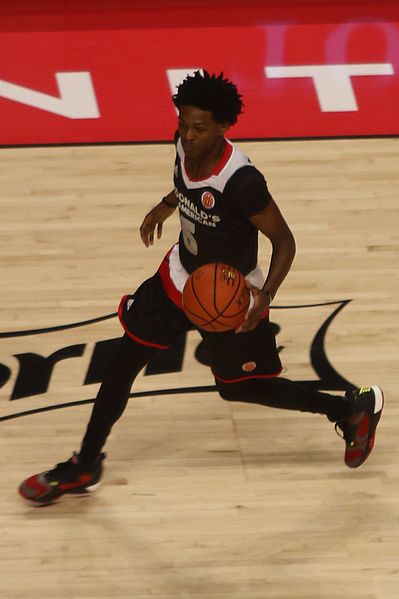
De’Aaron Fox: “an explosive athlete with eye-catching length” (Photo: TonyTheTiger)
# 6 Orlando Magic: Jonathon Isaac
The knock against Isaac is that he is a one-way player, bringing high-level defence with a high block and steal but who offers little more than serviceable offence on the other end. The big plus with Isaac is that he could defend everyone from guards to smaller post-up players, giving the Magic a piece that can be employed a number of ways. He moves well off the ball, however, and is a great cutter. Unlikely to be a star, the speedy, long Isaac nonetheless gives the Magic a quality piece, though he seems something of an awkward fit as both he and Aaron Gordon are best at power forward.
# 7 Chicago Bulls (via Minnesota): Lauri Markannen
One of the more stunning draft-day developments was the Chicago/Minnesota trade which sent the Wolves the 16th pick, reunited Jimmy Butler with Tom Thibodeau and gave Chicago a youthful reboot with Zach LaVine, Kris Dunn and this pick. Markannen is a sweet shooter, easily one of the best shooters at his height (7’0) in recent years. But he doesn’t rebound well for his size and his defence looks to be exploitable at NBA level. Bulls will be hoping he develops into a better version of Nikola Mirotic, which then presumably allows them to trade the Spaniard for a younger player. On balance, Minnesota fans have more cause for optimism.
# 8 New York Knicks: Frank Ntilinkina
Phil Jackson’s insistence on shoehorning his Triangle offence into New York’s struggling team hung heavy over this pick. Yet Ntilinkina was probably around this range no matter who the GM was and the new regime gets a hard-working, energetic, smart player who should be able to guard a range of wings.
He made little impact as a scorer in the French pro league, however, and may be a couple of years off being a rotation player. A safe but fairly unexciting pick.
# 9 Dallas Mavericks: Dennis Smith Jr.
Despite a thoroughly unsuccessful season at NC State, Smith’s upside remains high. He lacks length, his defence was underwhelming and didn’t perform especially well top opposition, but wow does he pass the eye test as a ball-handler and scorer. Rumblings about his character further add to the cloudy picture, but under Rick Carlisle at Dallas he’ll have one of the league’s very best coaches to guide his progress.
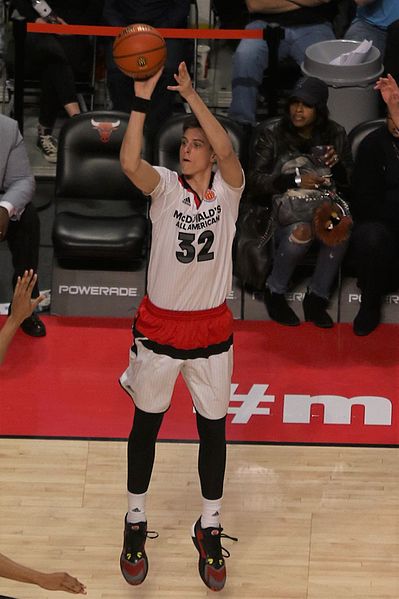
Portland draftee Zach Collins is a 7-footer with real shooting range.
#10 Portland Trailblazers (via Sacramento): Zach Collins
A 7’1 player who moves fairly well, Collins’ underwhelming raw stats (10 ppg, 5.9 rpg) and status as a college bench-warmer belie a player who is projecting in the right direction. He has real shooting range, protects the rim, shows some nice touch in the post and is renowned for his maturity and work ethic. He will want to cut down the fouling to stay on the court, but in Collins the Blazers have picked up a player with significant physical tools who is developing quickly.
#11 Charlotte Hornets: Malik Monk
This is potentially a real steal for Charlotte, who badly needed shooting. In Monk, they get a player with real scorer’s instincts, who can get points in bunches. Importantly for the Hornets, he is someone who can be effective off ball and play alongside Kemba Walker. A point guard in high school, he moved to the two spot in college without complaint.
#12 Detroit Pistons: Luke Kennard
Perennially compared to another dead-eye shooter from Duke, JJ Redick, Kennard is a really high level shot-maker who can nail corner threes and operate as a catch and shoot specialist. While not a plus defender, he seems a decent enough pick for a Detroit team neither bad enough to get a game-changing draft pick or good enough to make a playoff run.
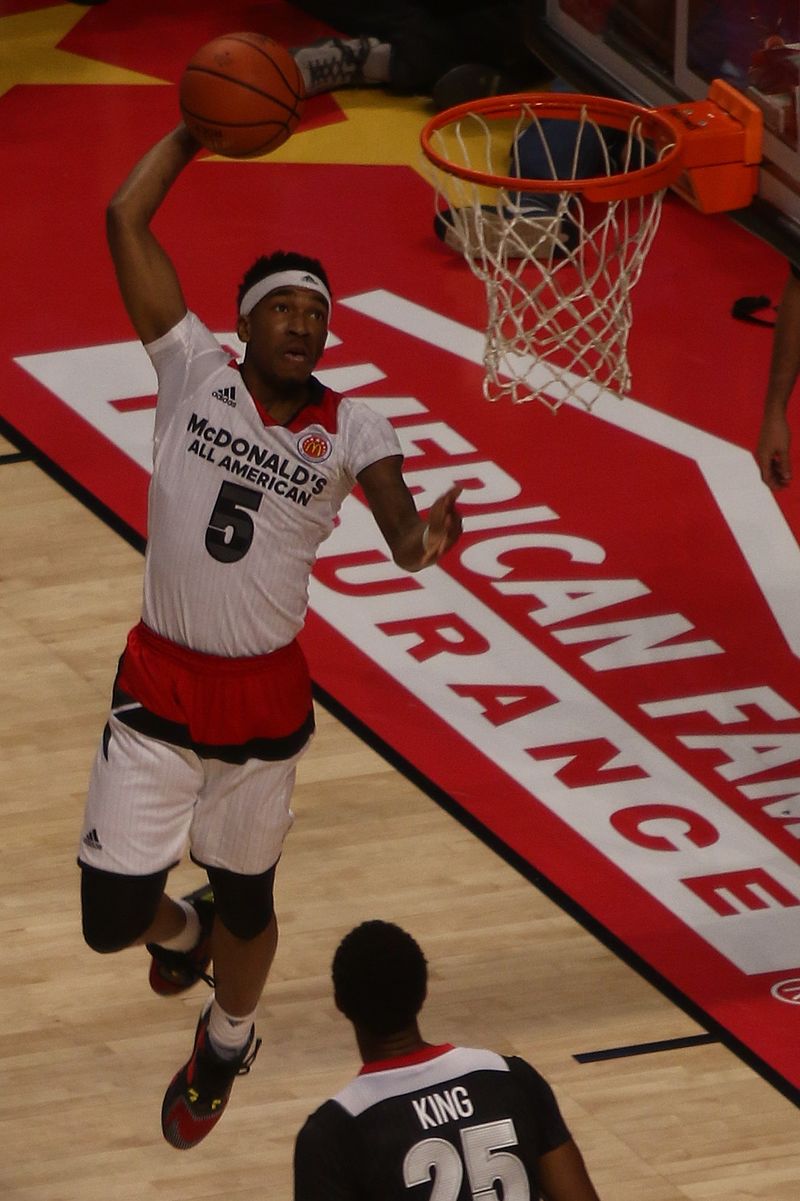
Malik Monk: “a player with real scorer’s instincts” (Photo: TonyTheTiger)
 The Evening Game