The Evening Game’s Modern Classics: Colum McCann’s ‘Transatlanticism’

Spanning three centuries and two continents, Transatlantic is a dazzling meditation on the links across time and place, a series of interwoven stories on how people influence and inspire strangers they only meet fleetingly, the enduring pull of his homeland Ireland and the ongoing fallout of the Northern Ireland peace process.

The first and most action-packed vignette is a vivid imagining of the first non-stop Transatlantic flight in 1919. With the lyricism and economy of a poet, McCann sketches out the personalities of the two men: Alcock a dashing, fearless figure who craves anonymity and the more reserved Brown, who enjoys quantifying things and sees the world in scientific terms. Alcock was a prisoner of war and Brown walks with a stick and already seemed old at thirty-two. Both are aching for a new start and find it in the flight to Ireland.

In faultless, rhythmic prose, the bracing cold, physical exertion and white knuckle fear of the journey are conjured up, as well as the vertiginous possibility and raw excitement their journey generated. Watching the preparations for the flight with interest are Emily, a reporter who asks nothing but writes insightfully about the pair and Lottie, her daughter, who gives Brown a letter to take with him.

In the story’s second narrative, the great social reformer Frederick Douglass arrives in Ireland where he is to give a series of lectures denouncing slavery. His oratory is warmly received, but he initially feels ill at ease with his surrounds and has a tense relationship with Mr. Webb, his publisher and the organiser of his speaking tour. He senses an energy of doom amongst the Irish as the potato famine descends, but nonetheless finds himself fascinated by the country. His speeches have a particularly profound effect on maid Lily, who is so inspired she leaves for a new life in America.

Later, the senator George Mitchell arrives in Northern Ireland to take part in peace talks. This is another remarkable piece of literary ventriloquism, imagining the emotional tumult beneath a seemingly endless shuffle of meetings, hotels, airports and late-night phone calls as the American’s work becomes a whir of formality and politeness. McCann’s focus here is not on the details of the negotiations, but rather Mitchell’s motivation for getting involved in them. Having given up his quiet, semi-retired life with his young child and risked his impeccable reputation, Mitchell found himself drawn into the internecine feud by his “fascination with the impossible” and in quieter moments, finds himself reflecting on the mysteries of Belfast, a place where “all their lovesongs are sad and their warsongs happy”.

In book two, we find Lily now living in America and running a business selling ice. She and her daughter again cross paths with the aging Douglass, now an advocate for womens’ suffrage. The lives of Emily and Lottie also circle back to the past as they travel England on the tenth anniversary of Brown and Alcock’s historic flight, determined to track down the unsent letter. Finally, Hannah finds herself reflecting on her life in Dublin, 2011, as the city readies itself for a visit from Barack Obama.

Those won over by the critical and popular hit Let the Great World Spin will again find much to admire here. McCann displays a finely tuned antenna for the subtle details of life: the mist of morning fog, the lilt of Irish voices, the way New York cabs become a blur of colour in the rain. Collectively, these small details build into something quite overwhelming: a sweeping, symphonic marvel full of life and charm.


The Evening Game’s Modern Classics: ‘Us’ by David Nicholls

At an ungodly hour one morning, Connie tells Douglas the thought of the two of them alone in the house together without their son Albie is “like a Beckett play”. Douglas hasn’t seen any Beckett plays, but senses this is not a good thing.

The pair have been married for 21 years and have planned one last family trip to Europe before Albie leaves to study photography, but Connie’s decision to leave Douglas once the trip is done turns their holiday into an increasingly desperate one.


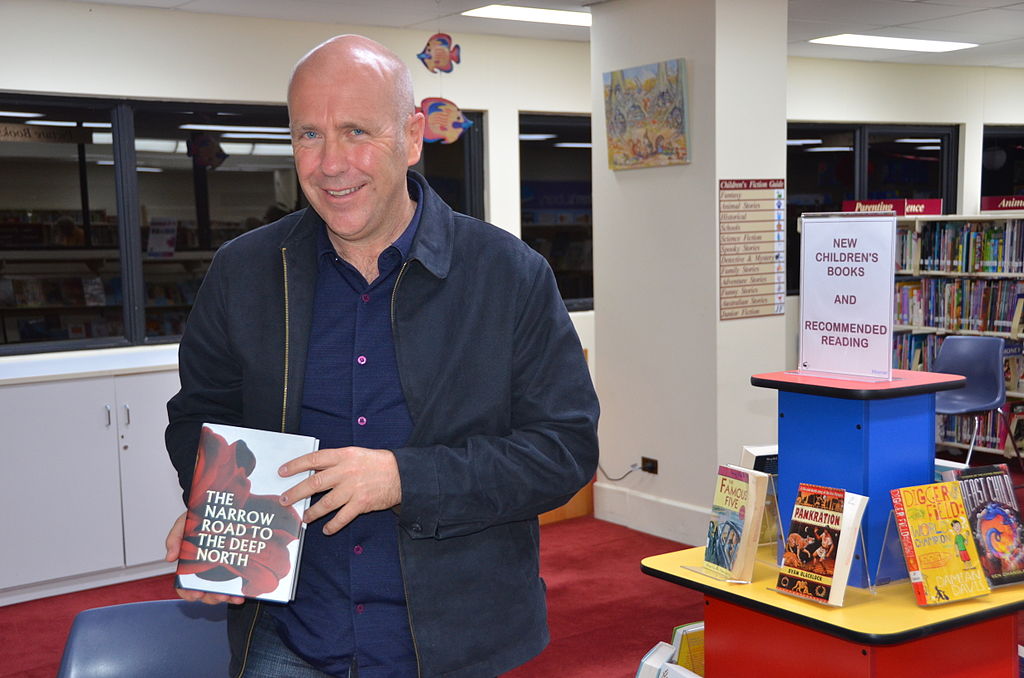
David Nicholls on the book tour for his previous hit, 'One Day'. The European travel formed the backdrop for 'Us'. (Photo: putnik)David Nicholls on the book tour for his previous hit, 'One Day'. The European travel formed the backdrop for 'Us'. (Photo: putnik)

David Nicholls on the book tour for his previous hit, ‘One Day’. The European travel formed the backdrop for ‘Us’. (Photo: putnik)

Nicholls’ previous novel was the 2009 phenomenon One Day, which sold five million copies. Us taps into that same sad/funny vein, though this time there’s a sole narrator, the strait-laced Douglas, an earnest scientist who views dinner parties as “a pitiless form of gladiatorial combat”. When he is corralled into one such event, however, he falls for Connie. She’s completely different from him – cultured, vivacious and charmingly free-spirited, though sometimes intolerant of anyone not charmingly free-spirited in the exact same way she is.

The narrative seamlessly flashes back and forth between the built-up frustrations and petty squabbles of their Grand Tour and the early days of their fumbling, transformative romance. Their beginnings were a heady time, but for Douglas also fraught with a fear he didn’t belong in the exciting new world Connie ushered him into.

Parenthood only exacerbates their divide and Albie grows into an artistically inclined, self-focused character much more comfortable with Connie’s bohemianism than Douglas’ sober approach to life. As Albie communicates with his father mainly through grunts and disdain, Douglas feels Albie and Connie have ganged up on him and have overlooked his better qualities.

The trio’s dynamics form a kind of modern spin on the old odd-couple trope, but the raging insecurity and simmering frustrations wrought by those with vastly different temperaments trying to get along has rarely been so hilarious and so utterly painful.

This is a wildly successful return; barely a page passes without some cringe-inducing flash of humour, some small moment of pathos or a quotable one-liner. All those enraptured by One Day‘s surprising depth, pitch-perfect balance of satire and generosity and its insights into contemporary relationships will find plenty more to love and argue about here.


The Evening Game’s Modern Classics: ‘The Greatest’ by Malcolm Knox

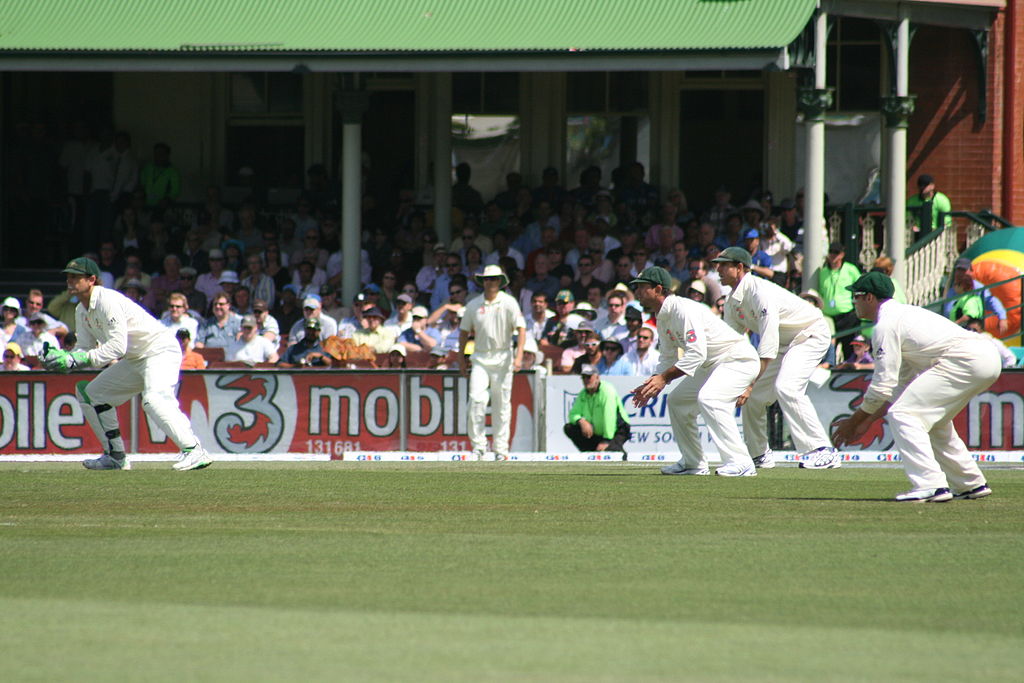
“If miracles didn’t happen” Malcolm Knox suggests, “nobody would watch sport”. In the era ‘The Greatest’ covers, the Australian cricket team didn’t just build up anundefeated record in home Test series and set a new record for most consecutive tests won, they pulled off cricketing miracles on a semi-regular basis. They thought they could beat anyone, from anywhere, and mostly they were right.

          This dominance was not just a result of the team’s unshakable self-belief (“Confidence is God” Knox explains), but some inspired leadership by the respective captains – Border, Taylor, Waugh, Ponting and the oft-maligned new-age approach of coach John Buchanan, who gets a more favourable and thoughtful treatment here than is often the case. Ultimately, each of the teams outgrew their leaders, the group having been moulded in the image of the captain so successfully that eventually their actual presence became almost superfluous.


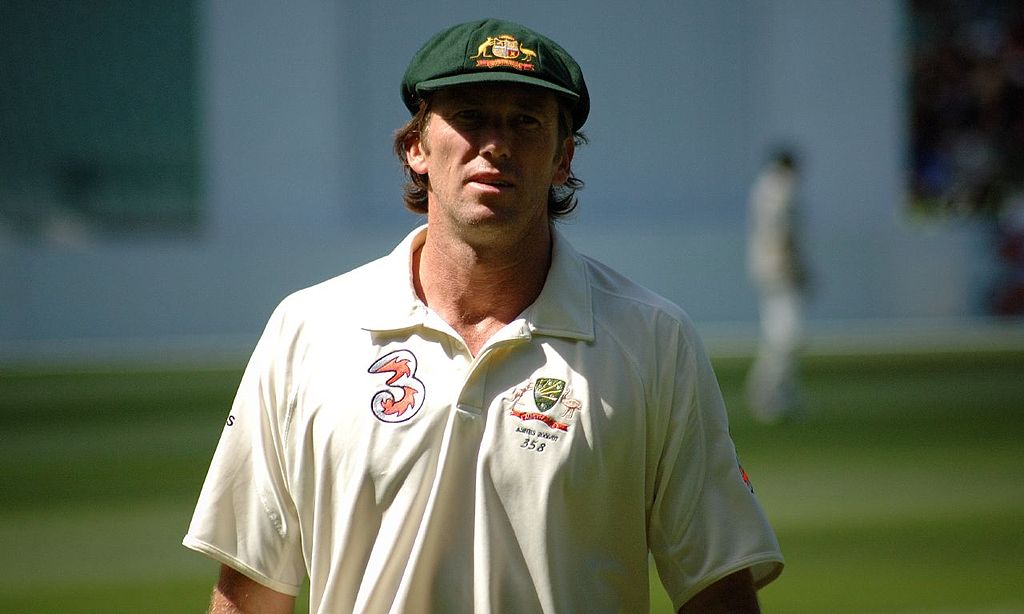
Glenn McGrath was a crucial part of Australia's decade of dominance, taking 944 wickets in Tests and One-Day Internationals. Glenn McGrath was a crucial part of Australia's decade of dominance, taking 944 wickets in Tests and One-Day Internationals. 

Glenn McGrath was a crucial part of Australia’s decade of dominance, taking 944 wickets in Tests and One-Day Internationals. 

          But leadership aside, no team becomes great without champion players and notwithstanding the presence of legendary figures like the Waughs, Hayden and McGrath, Knox is probably on safe ground when asserting “No Warne, no golden era”. Warne stands as the most remarkable character of the period; a frustrating and sometimes disruptive presence off the field but absolutely untouchable on it. He also proved the dictum that opposites attract better than any other cricketer – his favourite captain was the low-key and dour Alan Border, while England’s famously uptight and conservative cricket establishment loved him unconditionally.

          Rather than getting bogged down in the game-by-game grind of the now ludicrously cluttered international cricket schedule, Knox breezily skips over the less memorable series (one-dayers barely get a look in) and only delves into detailed match accounts for the most pivotal encounters. Australia’s victory in Sabina Park, 1995, which shifted the power balance of world cricket is recounted in great detail, as isIndia’s once-in-a-generation comeback at Kolkata, which showed that the Australians at their peak could only be toppled by superhuman efforts from their opposition. 

          Mostly the best thing about these match accounts is the suspense built into them. Every cricket tragic knows that Mark Waugh got Australia out of jail in Port Elizabeth, or that Shane Warne engineered remarkable implosions by the West Indies (Mohali, 1996),  England (Adelaide, 2005) and Daryl Cullinan (pretty much every time he faced Warne), yet reading about them here proves positively nail-biting, Knox extracting maximum drama, cutting back and forth from the action to the larger historical narrative, pacing his accounts like Ricky Ponting paces an innings.


Knox's writing on Adam Gilchrist is strong throughout (Photo: PrivateMusings)Knox's writing on Adam Gilchrist is strong throughout (Photo: PrivateMusings)

Knox’s writing on Adam Gilchrist is strong throughout (Photo: PrivateMusings)

          While clearly a fan and student of the game, and full of admiration for the feats of the Australian team, Knox is also not averse to putting the boot in when he sees the need. His condemnation of Australian sledging as cheating is the most vigorous and well-argued I have read. In contrast, his passionate and perfectly logical defence of Adam Gilchrist’s decision to walk in a World Cup semi-final puts much of what was written about the incident at the time to shame. The writing on Gilchrist is strong throughout, with the emotional turmoil that fuelled his double century against South Africa especially well drawn.

          Shorn of the hysteria and short-sightedness that sports reportage can degenerate into, this is an old-fashioned book in its way, clear-sighted and considered, never shying away from the controversies nor bowing to sensationalism. In a season of first-class cricket books, this ranks with the best, Knox applying the polished phrase-turning skill he showed in his glittering novel ‘Summerland’ to great effect.

          ‘The Greatest’ finishes with the Australian team surrendering to the lionhearted South Africans on home soil, the empire having finally crumbled. The loss to Graham Smith’s men was not the neat punctuation on an era of dominance as was then supposed, however, as Australia pulled off a remarkable series win away to the same opponents just three months later. This triumph was followed by the Ashes loss, another unexpected turn in an utterly compelling, never-ending story. As the next chapters are written, we can only hope to have a chronicler as skilful as this telling the tale.

The Evening Game’s Modern Classics: ‘The Narrow Road to the Deep North’ by Richard Flanagan

”A happy man has no past,” Dorrigo Evans thinks, ”while an unhappy man has nothing else.” The Narrow Road to the Deep North moves like liquid back and forth through his past and present, both of which are dominated by his experience as a prisoner of war on the Thai-Burma Death Railway.

A story that is both harrowing and deeply humanist, The Narrow Road to the Deep North has been billed as Flanagan’s most personal work.

In his youth in Tasmania he plays football, and he finds something transcendent in its mixture of toughness and grace: ”All his life had been journeying to this point when he had for a moment flown into the sun.” He also develops an early love of literature and a reverence for the power of the written word that will echo through his story, which turns on a letter he receives.

His fate, however, lies elsewhere and after signing up to the war as a doctor it is his experiences as a colonel that mark him irrevocably. Being thrust into a position of responsibility, he finds he has courage and an instinctive knack for leadership, which he neither sought nor fully understands. He negotiates on behalf of his men, taking responsibility for the ”terrible arithmetic” as their captors demand more and more hard labour from his ailing men.


Before long, disease sets in – ulcers, scabies, starvation, gangrene, ringworm, lice, cholera. Bodies start piling up. The thought of Australia, which once kept them going, begins to feel increasingly distant, an abstraction, a half-forgotten dream. Struggling to maintain the hygiene that will keep them alive, the men lust after scraps of food and hide morsels in their meagre possessions to devour later. Some learn to barter with their tormenters for small favours, while others toy with the thought that death would come as a relief. Meanwhile, their bodies continue to disintegrate, as Dorrigo observes men with ”eyes that already seemed to be little more than black-shadowed sockets waiting for worms”.

A serial womaniser, he feels out of his depth when he meets Amy in the heady atmosphere of an Adelaide bookstore where Max Harris reads his poetry. Mesmerised by her physicality, which ”made him feel almost drunk with its scent and touch and sweep”, and finding someone whose passion for the written word matches his own, he is consumed by thoughts of her.

But a twist owing a debt to Greek tragedy sees her marry Dorrigo’s uncle, Keith, more out of a sense of duty and circumstance than any great passion. Their affair produces some of the book’s most lyrical writing; Dorrigo thinks, ”her body was a poem beyond memorising”.

In later years, Dorrigo has become feted as a national hero, the public clinging to an image detached from his philandering, uncertain self. He throws himself into a string of affairs and maintains a natural magnetism, but comes to realise, ”the more people I am with … the more alone I feel”. The plot quickens as Australia moves into the second half of the century with a more confident bearing, leading to a classic set piece that loops back to a scene at the Death Railway.

A story that is both harrowing and deeply humanist, The Narrow Road to the Deep North has been billed as Flanagan’s most personal work, inspired by his father’s stories of his POW experience. It is also perhaps his most ambitious, a deeply felt attempt to come to terms with the almost unimaginable horror of the Death Railway. In an already sparkling career (few novels get as close to perfection as Wanting), this might be his biggest, best, most moving work yet.

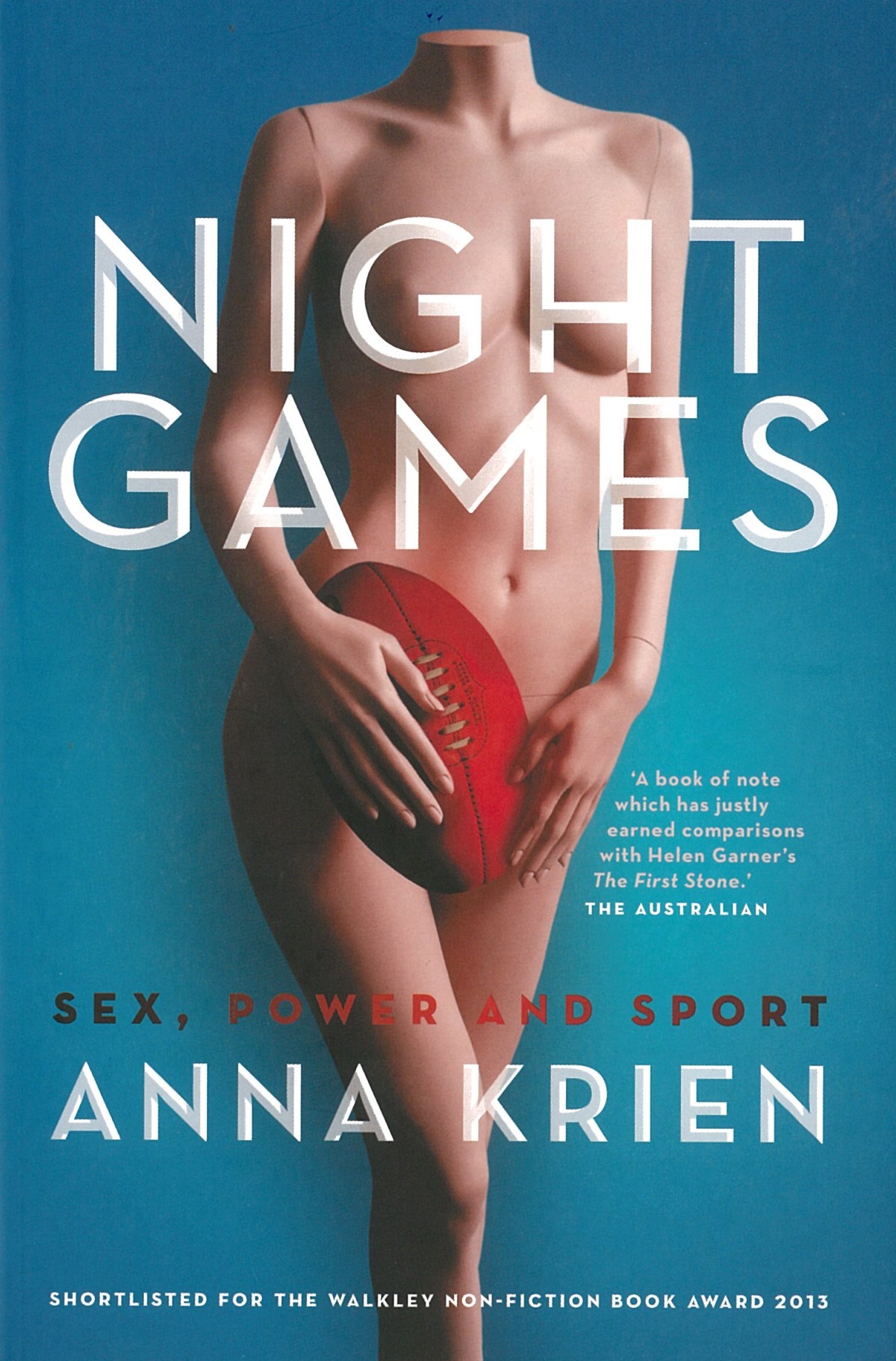
The Evening Game’s Modern Classics: ‘Night Games’ by Anna Krien

In the drunken early hours after Collingwood’s 2011 AFL grand final win, celebrations took a dark turn for Melbourne student Sarah. She had ended up at a house party where she had consensual sex with one man she had recently met at a nightclub, and then “felt compelled” to have sex with Collingwood player Dayne Beams. Another player, John McCarthy, was amongst a group of others also in the room, where Sarah felt “trapped”. After she left the house, she was allegedly raped in the alley next to the townhouse by Justin Dyer, a former VFL player.

By the time the matter went to trial, Dyer (fictitious names are used for both the defendant and complainant in Night Games), already a marginal figure in the Melbourne football world, was further isolated from the players he orbited around. Most of the media scrum materialised when the two Magpies players made fleeting appearances at the directions hearing and then at the trial as witnesses and disappeared when they left.

Krien stays, however, and doggedly follows the story, initially feeling discomfort that the events in the townhouse were not pursued and formed only a peripheral part of the trial. She finds herself surprised by Justin’s “gentle demeanour” and passivity and sees him as an outsider abandoned by the football fraternity. She also worries that she is getting too close to the family of the defendant, that her objectivity is destroyed by the defendant’s grandmother hugs her. As it it becomes clear the story won’t conform to any recognisable narrative about rape, she admits to wishing she had chosen to write about an “easier” rape trial instead.


Also troubling is the absence of Sarah from the trial. Like many jurisdictions, Victoria enables complainants to avoid the trauma of facing the accused in court. This rule, known as the ‘rape shield’, is an important protection for women who lodge complaints but Krien fears her absence means she will project her own experiences onto the complainant.

With skill and borderline cruelty, the defence lawyer has the evidence of a neighbour who possibly heard Sarah’s protests discounted, instead focusing attention on how after the contested incident, Dyer kissed the complainant and sat close with her in a taxi to her house, playing on meaningless but well-entrenched notions of how a rapist would act.

While the trial forms the backbone of Night Games, the story branches off into related tangents like the accusations of gang rape by rugby league players at Coffs Harbour, the St. Kilda schoolgirl scandal and the discrimination and vilification female journalists have faced when venturing into the post-game locker room for their work.

As dark as much of the material is, Night Games is far more complex and probing than a wholesale dismissal of football culture. Krien finds a lot to like in the AFL and there are surprising observations at every turn: “One of the reasons…that so many people watch football is not just for the athleticism and the biffo, but also for the tenderness”.In many ways, the sport is making a concerted effort to turn away from elements once accepted as commonplace, with a stand being taken against unacceptable sledging and racism and education initiatives being put in place to avoid some of the ugly excesses of the recent past.

A darker underside persists however, with a “macho culture of humiliation” regularly raring its head, with ex-player Tony Wilson filling the author in on an alcohol-fuelled culture of pranks, youthful bravado, and forms of humour and acceptance rituals which often seem baffling to an outsider.

The narrative always circles back to the trial though and it speaks volumes of the book’s ability to uncover unexpected nuance that it remains gripping even we know though the result. As the verdict draws near, Krien continues to feel haunted by Dyer’s persistence in following Sarah, instinctively sensing that even in his version of events, there is something “off” and disrespectful about his behaviour that night.

This lingering unease is the enduring feeling from Night Games,which is being promoted as a literary hand-grenade, but often settles into a tone more often thoughtful than incendiary. There are few easy answers here, no redemptive sense of any lesson that has been learned.

Whatever the truth about that party and whatever actually happened in the bedroom crowded with footballers and later in a dark, urine-soaked alley, it seems clear that this incident forms just part of a disturbing broader culture, and that much of what took place probably falls in a large grey area between what is against the law and what should be acceptable behaviour.

Chloe Hooper’s The Tall Man is an obvious antecedent, but this also brings to mind Michelle Schwarz’s undervalued One Split Second, which similarly used a high profile incident (in that case, the death of cricketer David Hookes) as a starting point to explore themes of masculinity, alcohol and violence and the role they play in Australian society.

Krien has a real feel for the tough, scrappy charm of Australian Rules Football, but seems on less certain territory in discussing other codes. Confusing Rugby League and Rugby Union and referring to the NRL as the A-league are simple mistakes that should have been edited out of an otherwise carefully written book.

Minor quibbles aside, the disquieting, fiercely intelligent Night Games instantly feels like an important work, and is certainly a difficult one to shake.