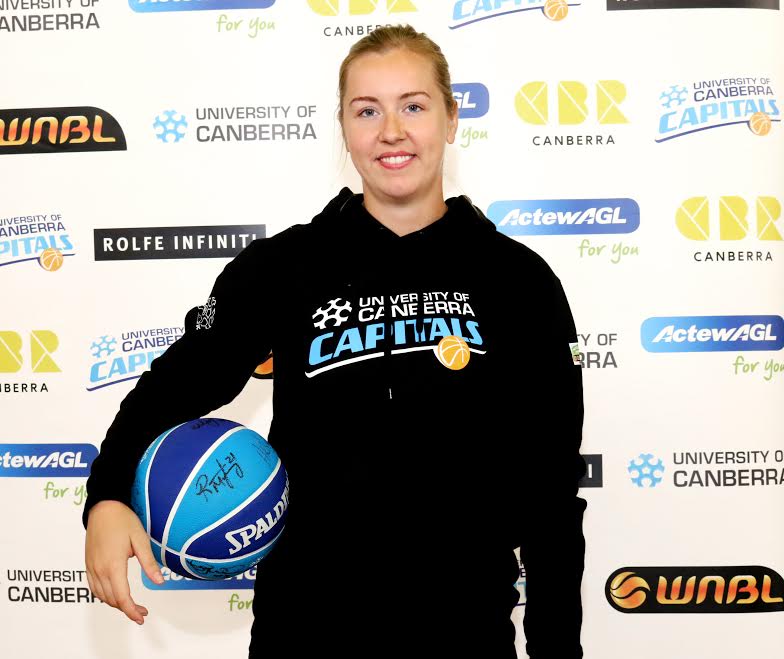
With Opals star Marianna Tolo returning to Europe and champion Carly Wilson retiring, the Capitals needed a genuine star signing to build on their progress this season. They now have that, with two-time Olympian Rachel Jarry agreeing to join the team for next season. It’s a major boost not just for the Canberra team, but for a league competing with lucrative overseas leagues for the best Australian talent.
“It is really exciting” Jarry said of her return. “I love playing in the WNBL. The opportunity to play with the Capitals has worked out really well”.
Briefly back in Australia after a season with French club Lattes Montepelier, Jarry says she kept an eye on the Australian competition from Europe and liked what she saw from her new team. “I thought the (Capitals) brought in some really young girls who showed a lot of improvement, so it’ll definitely be exciting seeing where they’ll go next season”.
““It is really exciting” Jarry says of her return. “I love playing in the WNBL”.”
While still only 25, already has a wealth of high-level experience, with the London and Rio Olympic campaigns, a WNBA championship run with the Minnesota Lynx and a spell with Lattes Montepelier, which included a Supercup win and Euroleague competition. It’s experience that Jarry hopes will translate into a leadership role at the Capitals, where she can mentor young stars like forward Keely Froling.
“I think that’s a strength of mine, that something that just comes naturally to me” she says of being a leader. “If I can help (the young players) out in any way, it’s only going to benefit the team”.
In her last WNBL season, Jarry was a top 20 scorer and rebounder and hit three-pointers at a scorching 47%, good for third best in the league. She gives Canberra a genuine two-way force on the wing.
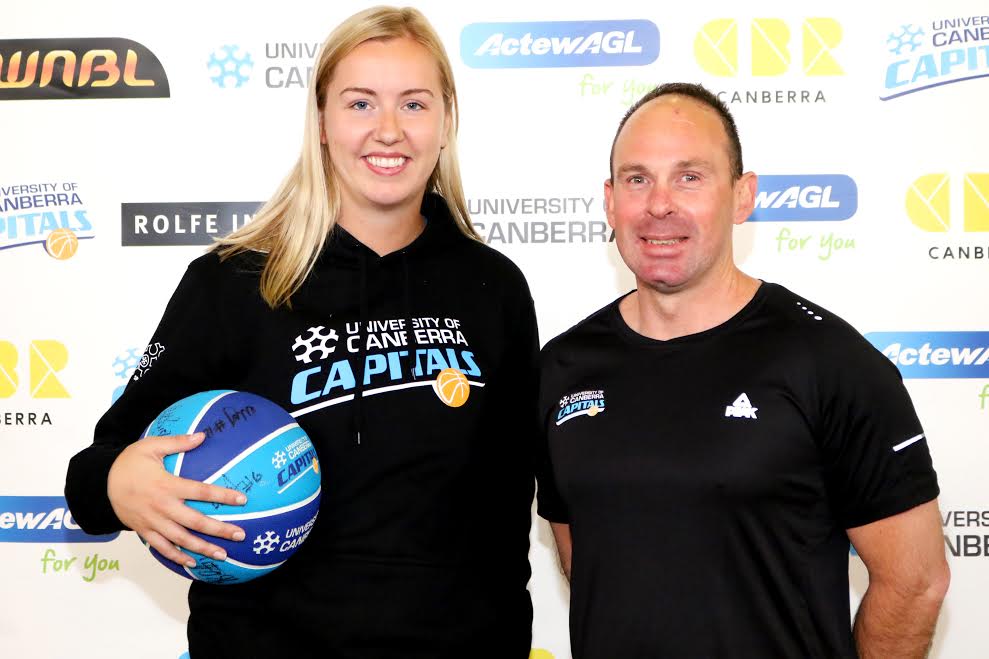
Rachel Jarry with coach Paul Gorriss. “I’ve known ‘Gorrie’ for a long time” she said.
“I think I’ll probably be in that 3 (small forward) spot, maybe moving around positions when needed. I think playing at the 3 gives me that flexibility to play as a guard or if I get a smaller matchup, I can post up as well. It gives me a chance to show my versatility”.
Having seen a range of defensive assignments during her time in France, Jarry will give the Capitals a player capable of defending multiple positions. “I was matching up with some of the great bigs in the world and also guards” she says. “I think that’s another strength of mine, being able to defend different matchups”.
Speaking just before the league’s new TV deal was announced, Jarry feels the league is in a better place now than during her last season here, when she was signed to the now defunct South East Queensland Stars. “The league is always strong, but it’s about being sustainable and making it attractive for Opals to stay here. Hopefully there are exciting things on the horizon…which I think will help attract girls back here”.
Having played in the sport’s top league, the WNBA, Jarry says the experience has improved her attention to detail. “You need to be really on top of your one-percenters” she says of the demands of the WNBA. “Getting enough sleep, eating the right things, everything like that”.
Already an elite WNBL player before joining Minnesota, Jarry has continued to fine-tune her game. “I’ve improved my decision-making and that is something that’s constantly a focus of mine” she says. “I think overall my basketball smarts have improved a lot”
Set to rejoin Canberra after a WNBA season with the Atlanta Dream, Jarry is hopeful there are better days ahead for the league. “We’re doing some good work behind the scenes, hopefully that will come into public knowledge soon and we’ll be able to showcase our sport and make it attractive for young girls to get involved”.
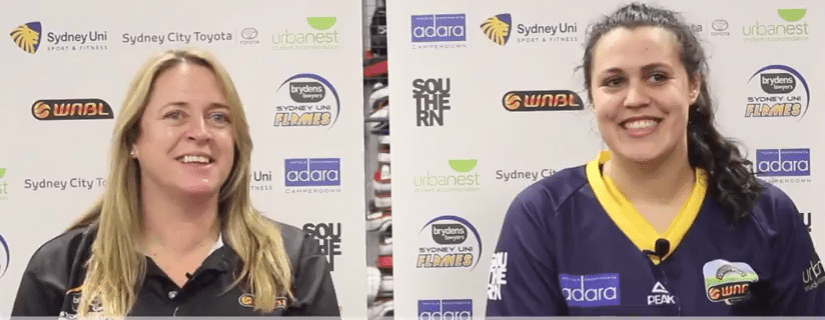
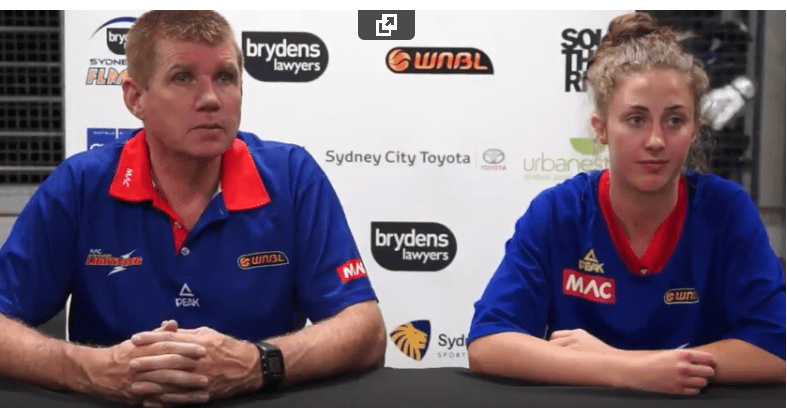
When the questions ended and it was time for coach Cheryl Chambers and Asia Taylor to file out of the championship game press conference, the good-natured banter between the pair showed no signs of wrapping up. They couldn’t help themselves.
This is the kind of chemistry that gets you championships and for the Flames, it was there almost from right from the start. Two games into the season, they had a team meeting to address the defensive lapses which saw them begin the season with a pair of losses. Yet the mood was one of complete confidence.
“We all looked around the room and thought ‘You know, this is a pretty special group’” Chambers says. “We had a mix of old players and young players, introverts and extroverts, but there has always been a pretty good feeling within the group”.
The idea of creating a cohesive unit, that got on off the court and would play for each other, was central to putting the squad together and preparing for the season. “Teams that have won championships and been successful have great chemistry” Chambers says. “We did some weird and wacky things that would connect us”.
““We all looked around the room and thought ‘You know this is a pretty special group’” Chambers says.”
Beyond the chemistry, it was a shrewdly assembled group, both deep and balanced, giving Chambers, returning to WNBL coaching for the first time since 2009, a multi-faceted, shape-shifting team to work with.
The aforementioned Taylor ended up fitting the team like a tailor-made glove, but Chambers says signing the Louisville alum was a difficult process. “It was quite nerve-wracking” she says. “I always find it hard to recruit someone I haven’t physically seen so I kept saying to her agent ‘Can I see some more film?’ I wanted more and more film…but we were really keen to get an X-factor”
Asia Taylor had a quick first step that made her a handful; here she blows past Adelaide’s Coleen Planeta.
Taylor was all that and more, giving the Flames points in bunches and proving a nightmare matchup for every team with her explosiveness and deceptive strength. While Taylor was the team’s heat check wildcard, heady veterans Leilani Mitchell and Belinda Snell were invaluable steadying presences.
Snell was entering her nineteenth season in top-flight basketball, but her game has always relied more on excellent fundamentals, high-level shooting and basketball smarts than raw athleticism and she remained mightily effective, ranking high in assists per game (5th), points per game (17th), and steals (13th).
Snell’s ability to cover multiple positions was a key facet of a Flames team that could go big with strong rebounders like Shanae Graeves and Carly Boag teaming with Taylor and the imposing Jen Hamson in the frontcourt, and using Snell at shooting guard. They could also go small, playing multiple guards.
Most of the backcourt players rebounded well above their height, with Snell, Lauren Nicholson and Tahlia Tupaea all coming up with enough boards that teams couldn’t really punish their shorter lineups. Even the tiny Mitchell collected her share of long rebounds. Chambers said Snell ended up playing much more power forward than the team expected, but the team’s malleable nature proved a real asset.
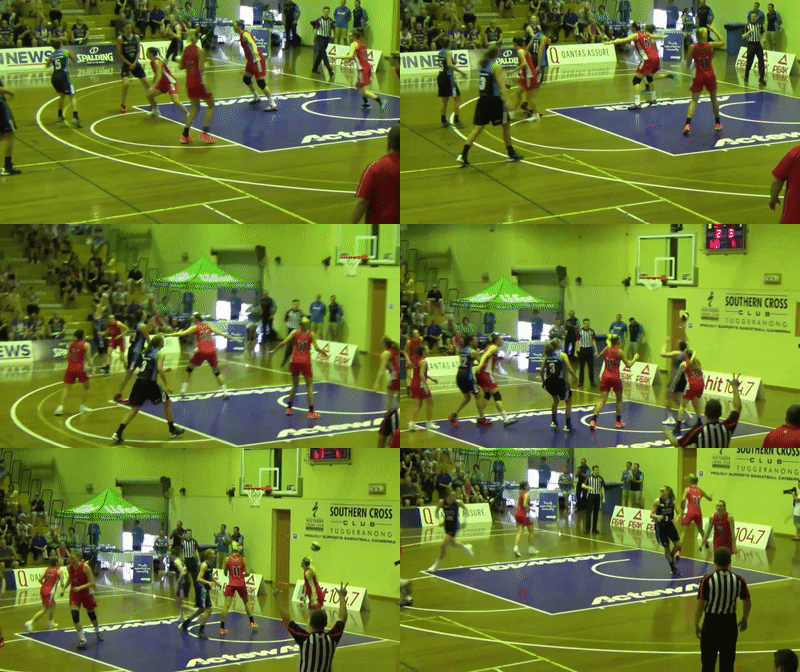
Belinda Snell had more assists than any non point guard in the league. Here, she spots a Leilani Mitchell backdoor cut before anyone else and throws an exquisite pass.
This off-season, Snell will be one of the assistant coaches for Sydney’s new SEABL team, the Sparks, and Chambers says she has the basketball knowledge to succeed in this new role. “If something’s not working on court, she’s always got an idea to fix it and it’s not always about her, she’s very selfless”.
Leilani Mitchell was also invaluable, playing the most minutes of any player in the league (1042). While every other team had a swoon at some point of the season which led to a run of losses, in the back half of the season Sydney started to do that thing all champion teams do: win games without coming close to playing their best. In matches against Melbourne, Canberra and Adelaide, they struggled for rhythm, but on each occasion Sydney had Leilani Mitchell and the opposition didn’t, so Sydney won.
Chambers particularly remembers Mitchell’s nerveless approach as she hit the game-winner against Canberra: “She just coolly looked up and saw what he had in front of her and decided to run a closeout play”. The run of close wins gave the team irresistible momentum and by the grand final series they had won ten in a row and looked inevitable champions.
Leilani Mitchell consistently made big clutch plays. Here, she hits a game-winning jumper against Canberra. “She just coolly looked up and saw what she had in front of her” remembers Chambers.
Ranking first in assists and second in steals, Mitchell was the ideal point guard: always thinking team-first, but more than capable creating her own shot or scoring herself. Perth coach Andy Stewart suggested Mitchell wouldn’t have been far off the league MVP. “She was a very, very difficult cover for us, not just with her scoring, but her ability to play-make and find the open shooter”.
Sarah Graham led the league in three-point percentage with 54%.
Those open shooters represented yet another strength for the Flames, who shot 38.90% from distance, the best of any team. Snell, Mitchell, Wilson all made more than 50 three-pointers at a good clip, while Tupaea and Nicholson were effective at lower volume. As if this wasn’t enough to torment teams, they could throw in Sarah Graham, who had the competition’s highest three-point percentage (54%).
On the defensive end, the Flames protected the rim ferociously and comfortably had the most blocked shots of any squad. Jen Hamson used every inch of her 6’9 wingspan to tally 63 blocks, first in the league. When Hamson was able to avoid foul trouble, she was a real handful, piling up rebounds as well as setting good picks and rolling hard to the rim. “One night (the players) came off and I said, ‘Wow, you’re defending well’” Chambers recalls. “Someone said ‘Yeah, that’s because Jen is out there changing every single shot’.
“Jen is out there changing every single shot”. Jen Hamson was the competition’s leading shot-blocker.
Ally Wilson was one of the most improved players in the competition and came up huge in the post-season, rampaging towards 27 points against Townsville. Chambers had coached Wilson previously in junior teams and considered her “a great athlete” who was ready to contribute more at WNBL level. “In the pre-season I said to her ‘I think that there can be huge improvement in you’” Chambers says. The season saw Wilson expand her game significantly, increasingly showing an ability to break defenders down off the triple and cut to the rim for easy baskets. She also handled some huge defensive assignments with aplomb, restricting Perth phenom Sami Whitcomb to 4/17 shooting in an important home win.
Ally Wilson had her best WNBL season, showing new dimensions to her game.
Lauren Nicholson was another strong addition, making some big threes late in the season and playing low turnover basketball. Despite the enviable depth that players like Nicholson gave them, the Flames were tested by injuries at times, with Snell, Taylor and Nicholson herself all missing games, while Tahlia Tupaea sat out half the regular season with a foot injury and Hayley Moffatt had the wretched luck of sustaining an ACL injury in the opening game.
Tupaea contributed steadily at both ends after returning, giving Sydney a starting calibre guard off the bench and chipping in 18 points and 10 rebounds in the series-clinching victory over Townsville. Tupaea seems to have been around for a while, but at just 19 she is easily one of the top prospects in Australian basketball and on track to be a future Opal.
Joining Tupaea in the youth department were Cassidy McLean and Lara McSpadden, who had both been members of Australia’s all-conquering under 17s team. Chambers says McLean has “unlimited potential” and the nimble guard impressed the team with her competitive nature. “At training, she certainly didn’t take a backwards step” Chambers says of McLean. “She always wanted to match up with Leilani”.
The Flames have some great young prospects alongside their experienced core. Here, Cassidy McLean assists on a Tahlia Tupaea basket.
The team’s other rookie, centre Lara McSpadden, projects as a good rebounder and shot-blocker and moves well for a big. Chambers likes her fundamentals (“She’s pretty tenacious, she can find the ball”) and was won over by her work ethic. “She’s really motivated, I never had to go and find her to do individuals, she was also into me first to do them”.
So far, Wilson, Snell, Graeves and McSpadden are contracted for next year and Chambers is not underestimating the difficulty of keeping this stacked squad together, noting that as the Flames were playing in the semi-finals, other eliminated teams were already at work on identifying talent and planning for next year.
“There will be big budgets coming after our girls” she says. “But it was a wonderful year, and anyone who wants to come back, we’d absolutely love to have them”.
Asked whether the grand final win has sunk in yet, Chambers says “The enormity of it is probably still to come”. It may take a while to adjust to their new status as champions, but the Flames made a little bit of history this year. It’s a victory that will longer long; as Chambers told her players after the final siren sounded: “We’re bonded forever”
Coming off a run to the grand final which stunned many observers and helped secure Andy Stewart coach of the year last season, the Perth Lynx again hovered around the upper reaches of the ladder for much of 2016/17, before succumbing to Dandenong in a semi-final series.
The Rangers had been a difficult matchup for them all year, with Dandenong winning three of their four regular season fixtures. Stewart agrees Dandenong’s greater depth was crucial in the 2-1 defeat. “I think we were one or two players light” he says. Dropping the last two games of the regular season may have also been costly, with Perth losing the chance to host the semi-finals.
The Lynx again wholeheartedly embraced pace and space in 2016/17 and it made for entertaining basketball, with whippet-like point guard Tessa Lavey pushing the tempo and gun shooters like Sami Whitcomb, Carley Mijovic and Brianna Butler providing plenty of floor spacing.
Whitcomb in particular was prolific from beyond the arc, taking more than half her shots from outside and making 105 three-pointers for the year. Remarkably, she had more three-pointers than two entire WNBL rosters, Bendigo (102) and Adelaide (101).
Yet Whitcomb was more than a long-range gunner, showing phenomenal ability as both a shooter and shot creator, scoring from anywhere and everywhere on her way to the highest points tally ever recorded in the competition. “We saw glimpses of it the year before, but some of her exhibitions were quite outstanding” Stewart says. “It’s a shame she didn’t get (the MVP award), though there were two or three girls that were exceptional, with Suzy Batkovic and Leilani Mitchell”.
Stewart says that every facet of Whitcomb’s offensive arsenal, including those crazy step-backs from well outside the three-point line, are all the result of diligent and persistent practice. “I don’t know of a person that works harder” he says. “She puts in an enormous amount of practice. Everything you see on court is the result of hours and hours and hours of time”.
No player came close to Sami Whitcomb’s tally of 70 steals. “She is extremely disruptive” Stewart says.
While some prolific scorers get away with taking a breather on the defensive end, Whitcomb was a blur of action, continually turning up right where opponents didn’t want her, often successfully gambling for steals or using her explosive speed to get into passing lanes. She led the league for steals by some distance (with 70, Leilani Mitchell was second with 49) and picked up the club’s defensive player of the year award.
“She is certainly a unique defender” Stewart says. “She’s not your classic ‘lock a player down’ kind of defender, but she is extremely disruptive. Her steals often ignited us into very positive periods of play”.
“Andy Stewart on Carley Mijovic: “There’s not much in world basketball that is beyond her””
Perth took the most three-point attempts of any team by far, doubling the tally of some rivals and attempting 300 more three-pointers than semi-final opponents Dandenong. Forward Carley Mijovic was a major part of their outside-heavy game, hitting 64 threes at 36%.
It was another season of progress for Mijovic, who again claimed the club’s most improved player award. Stewart says she has the physical tools to be anything. “She’s a 6’6 three-point shooter who can run the floor really well” he says. “If she tackles it with tenacity, there’s not much in world basketball that is beyond her. She has a WNBA body and she’s just got better and better”.
Ruth Hamblin and Carley Mijovic reject shots against the Bendigo Spirit. The pair had 98 blocks between them, the most of any two teammates in the league.
The club was also well-served by Canadian import Ruth Hamblin, who provided shot-blocking and tough screens and showed a high basketball IQ on defence. Asked whether his approach on imports is to bring in the best available player or to recruit to a specific need, Stewart says his method is a bit of both. “You want a unique player, someone who will change the way opponents see you, but you also want a player that can plug holes which can’t be plugged by an Australian player”
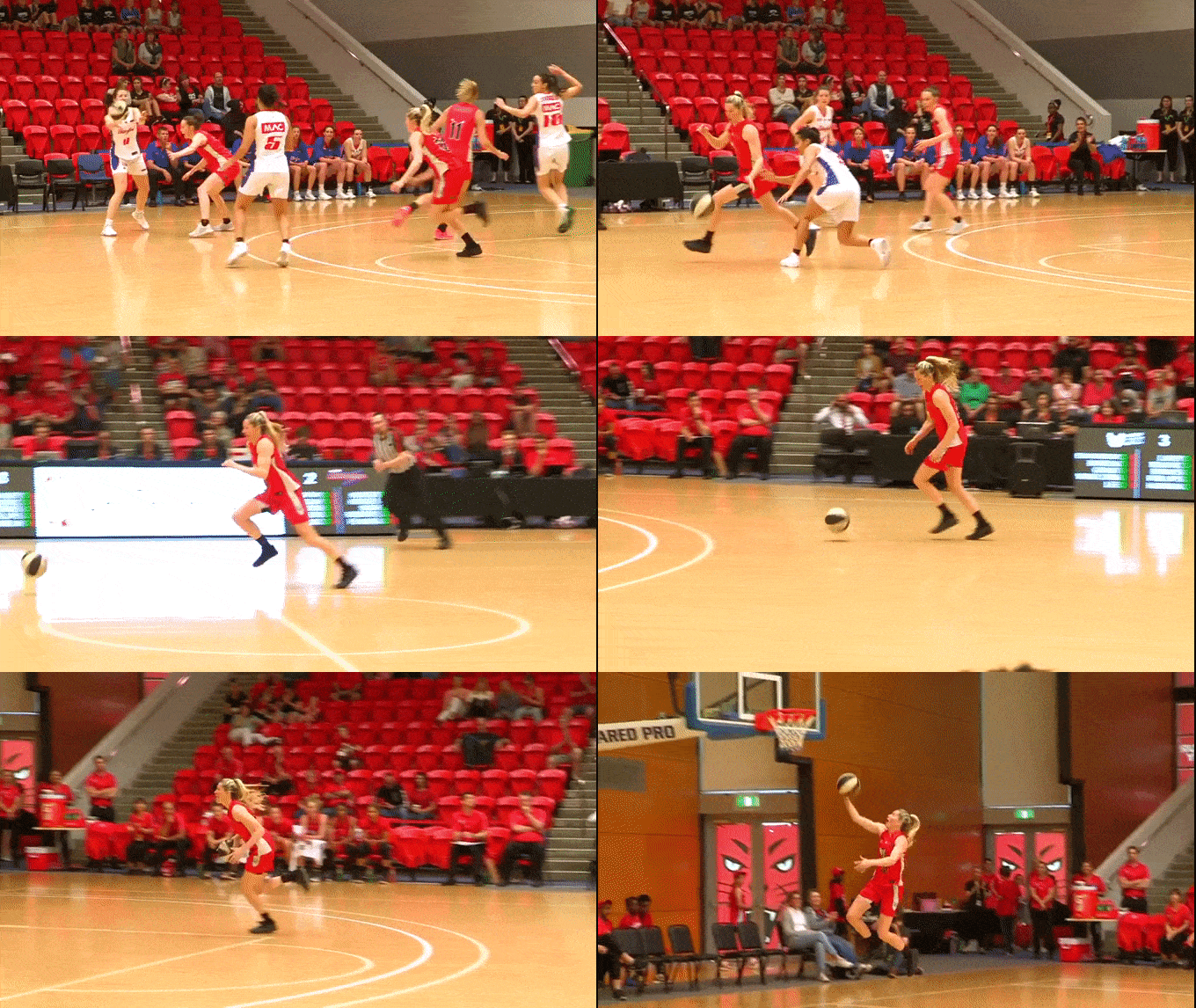
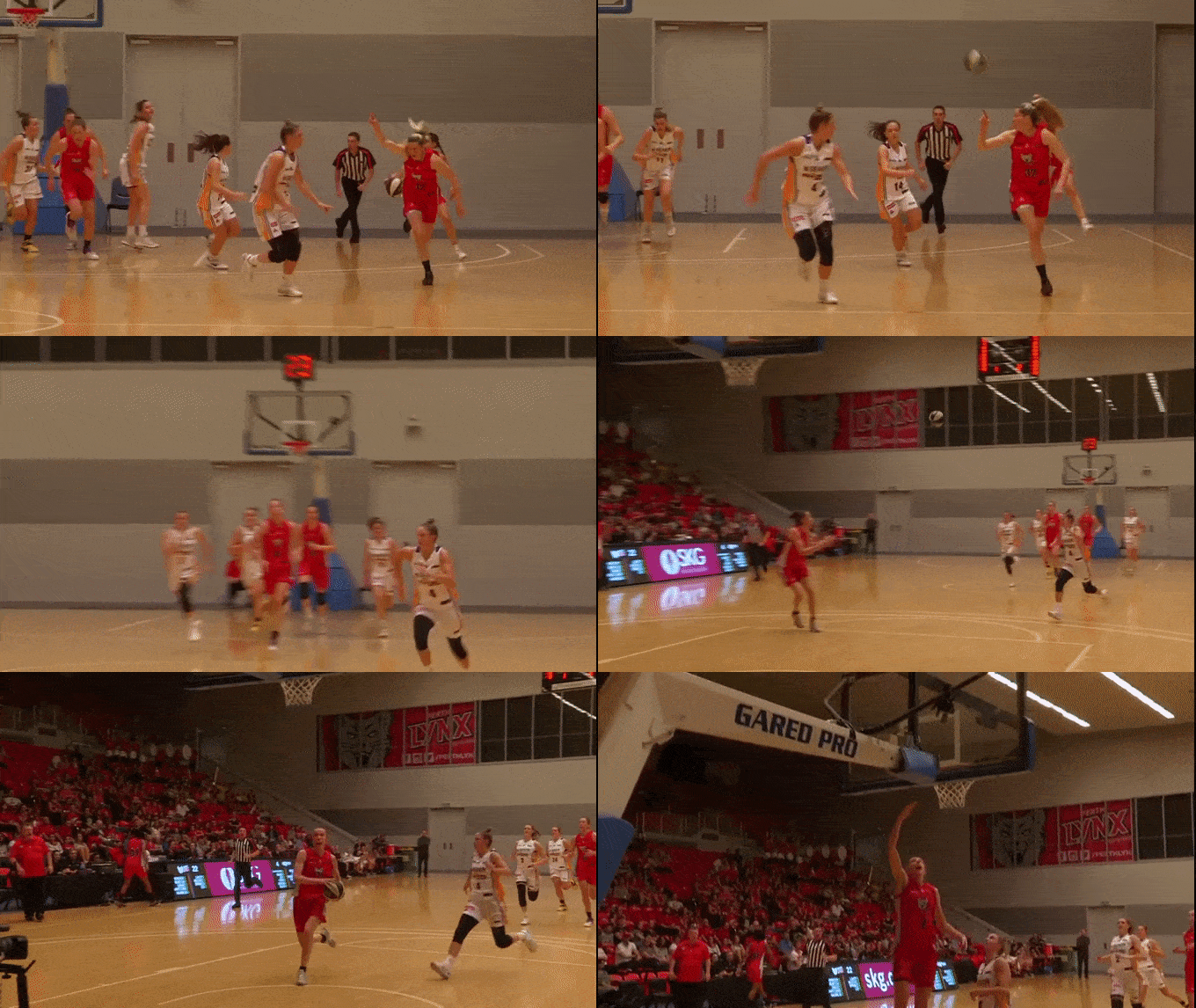
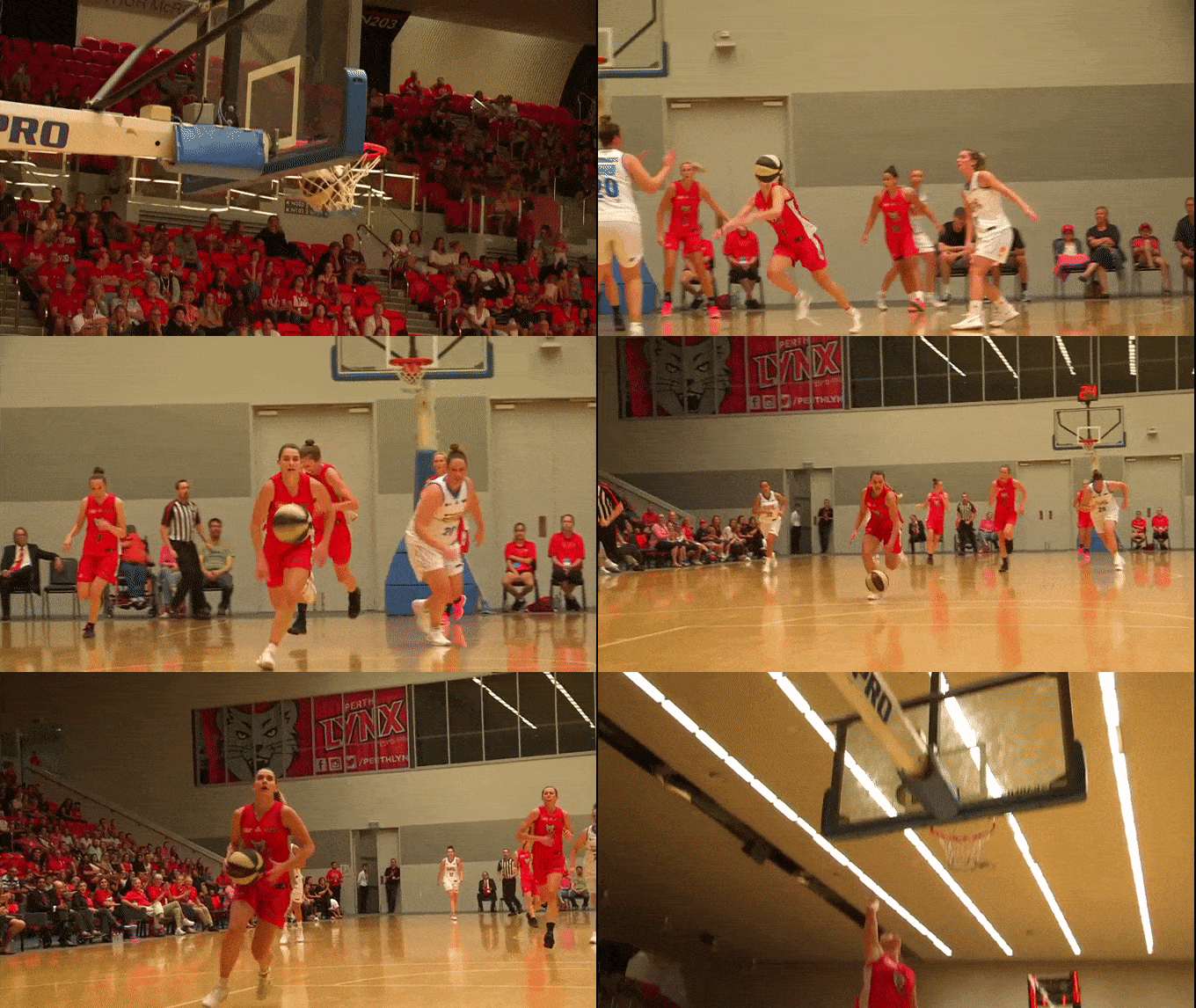
Perth were always looking to run. Here, Antonia Edmonson gets a fast break layup.
Antonia Edmonson chipped in with some massive games, including six of six three-point shooting in a huge win over Adelaide. Stewart says he thought it was her best WNBL campaign and believes the Tall Ferns representative will continue to have some monster outings. “She won’t dominate every single game, but she’ll be a presence”.
One of Edmonson’s back-court partners, Opal Tessa Lavey, saw her three-point shooting decline somewhat on previous years (26% in 2016/17), but she remained the driver of the Lynx’s high-octane offence and her ability to collect steals (36, equal 6th in league) was a big part of Perth collecting the most steals of any WNBL team.
Lavey missed four games with an ankle injury early in the season, an absence Stewart says was one of the two major disruptions Perth faced, along with the injury-enforced replacement of their WNBA import Monica Wright, a popular figure amongst the playing group, with the sweet-shooting Brianna Butler.
Tessa Lavey’s quick hands led to 36 steals, good for equal sixth in the league.
Elsewhere, Opals member Nat Burton finished the year with averages of 3.9 points and 3.4 rebounds and seemed custom-built for Perth’s transition game. Her Olympic experience, however, meant she had a long and emotionally taxing off-season. “I don’t think it did benefit her” Stewart says. “I would suggest she went through a flat period after coming back, but how could you not?”
At the other end of the experience scale was development player Tahlia Fejo, who saw limited minutes, but is seen as a long-term prospect for the club. “She’s a project” Stewart says. “It will be a while before she’s dominant”. Stewart says Fejo initially found the demands of being in a WNBL squad difficult, though notes “she certainly got a lot better at all that” as the season progressed.
Speaking shortly before the team announced the key re-signing of Whitcomb, Stewart was hopeful of bringing most of the squad back but mindful that some players have families thousands of kilometres away and resigned to the fact that some retention decision would be out of the team’s control.
Similarly, he is resigned to the greater travel demands Perth sides will always face, but is determined to see their isolated location as a positive rather than complaining about it. “It’s something you become really used to when you live in Perth…I think it’s become quite useful really, you bond on those long trips and you learn to make the most of it”.
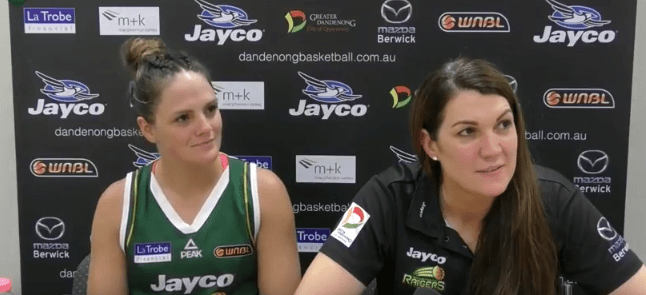
“It was a phenomenal effort to make the grand final” coach Larissa Anderson says. They eventually fell to a Sydney outfit who were not so much a team with momentum as a full-on basketball avalanche, entering the finals on a 12-game winning streak and coming off a comprehensive slaying of defending champions Townsville.
Still, Dandenong weren’t satisfied with being runners up and Anderson feels they had more to give. “I don’t think we put our best foot forward in that series” she says of the 2-0 grand final loss. “We all know we could have done better, but you learn a great deal from the experience”.
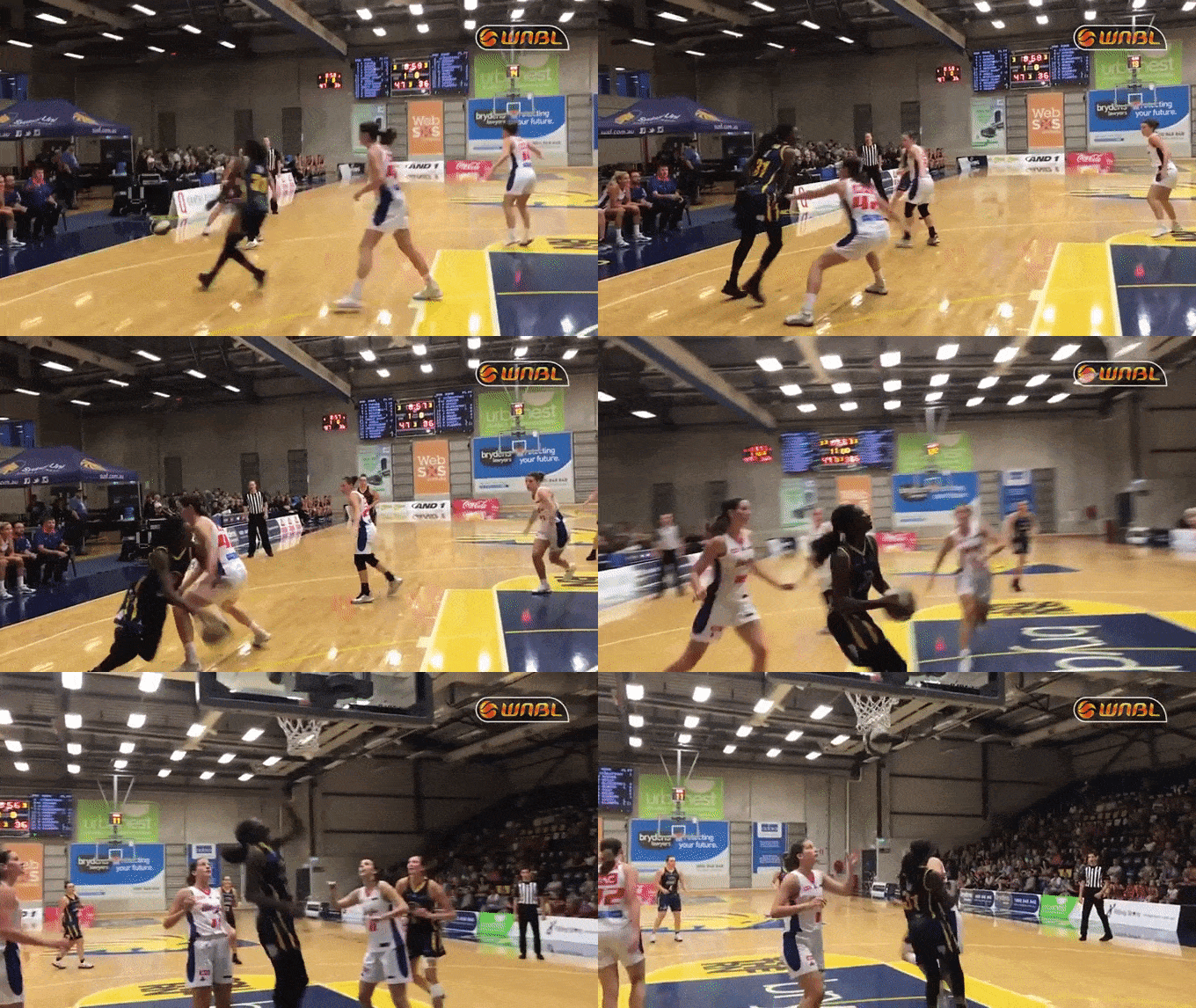
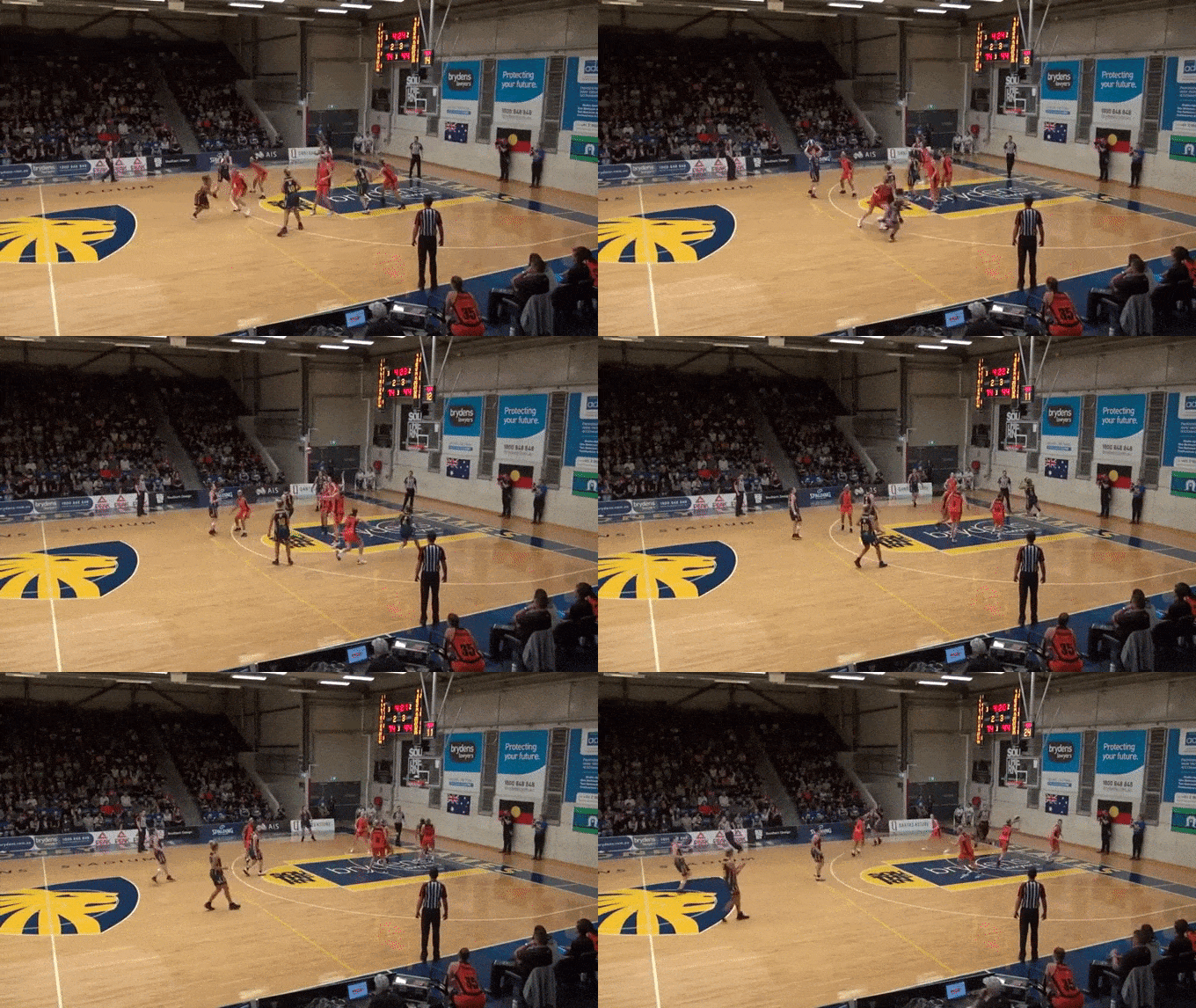
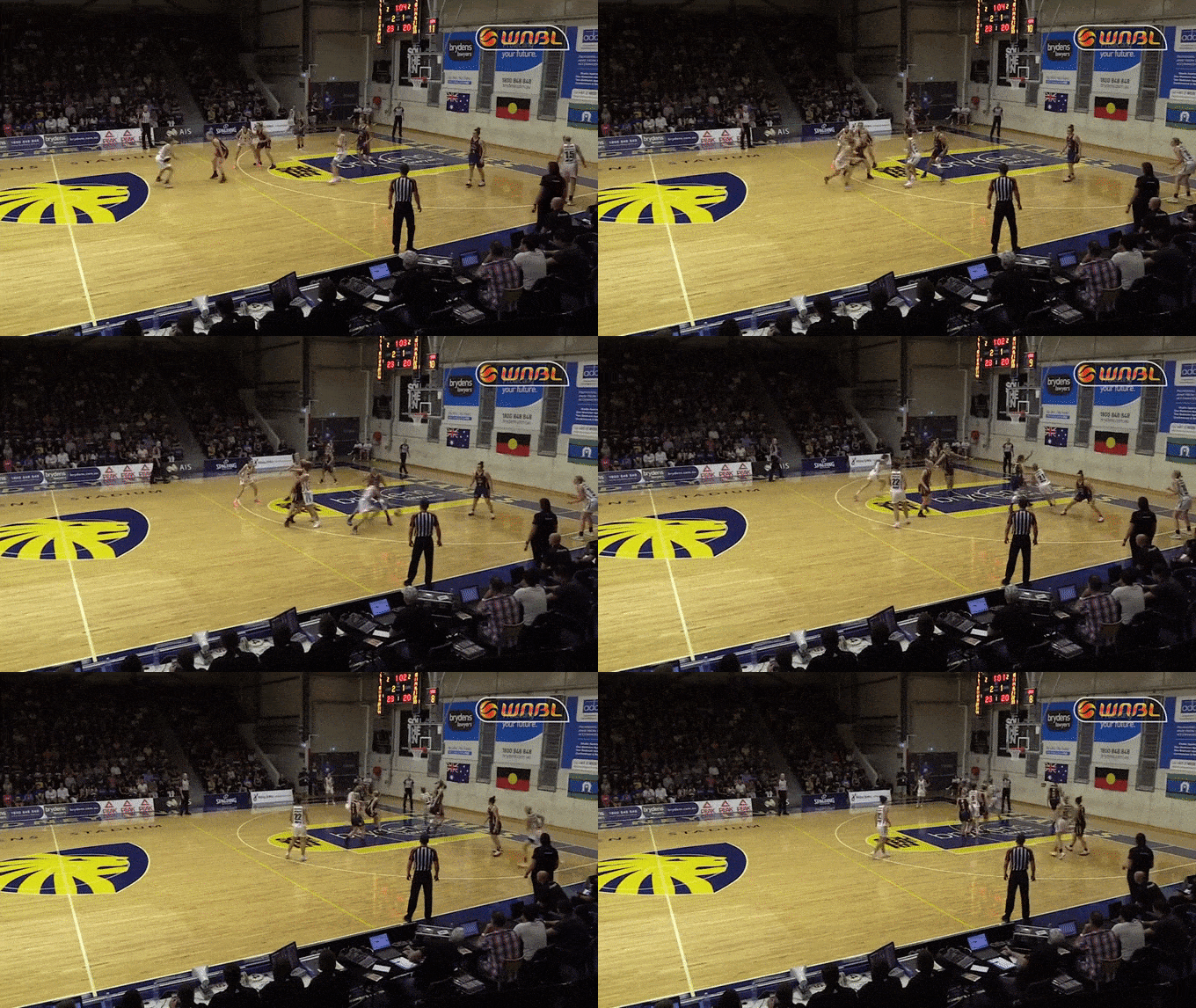
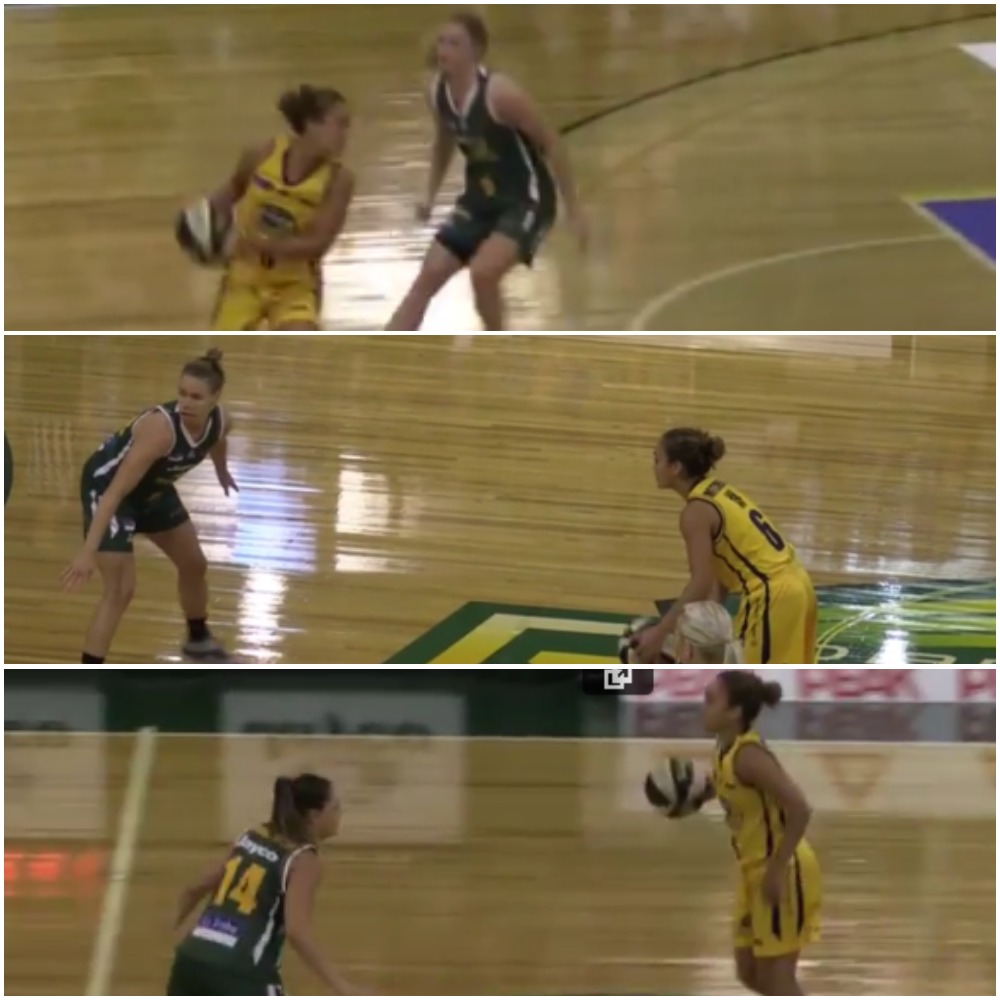
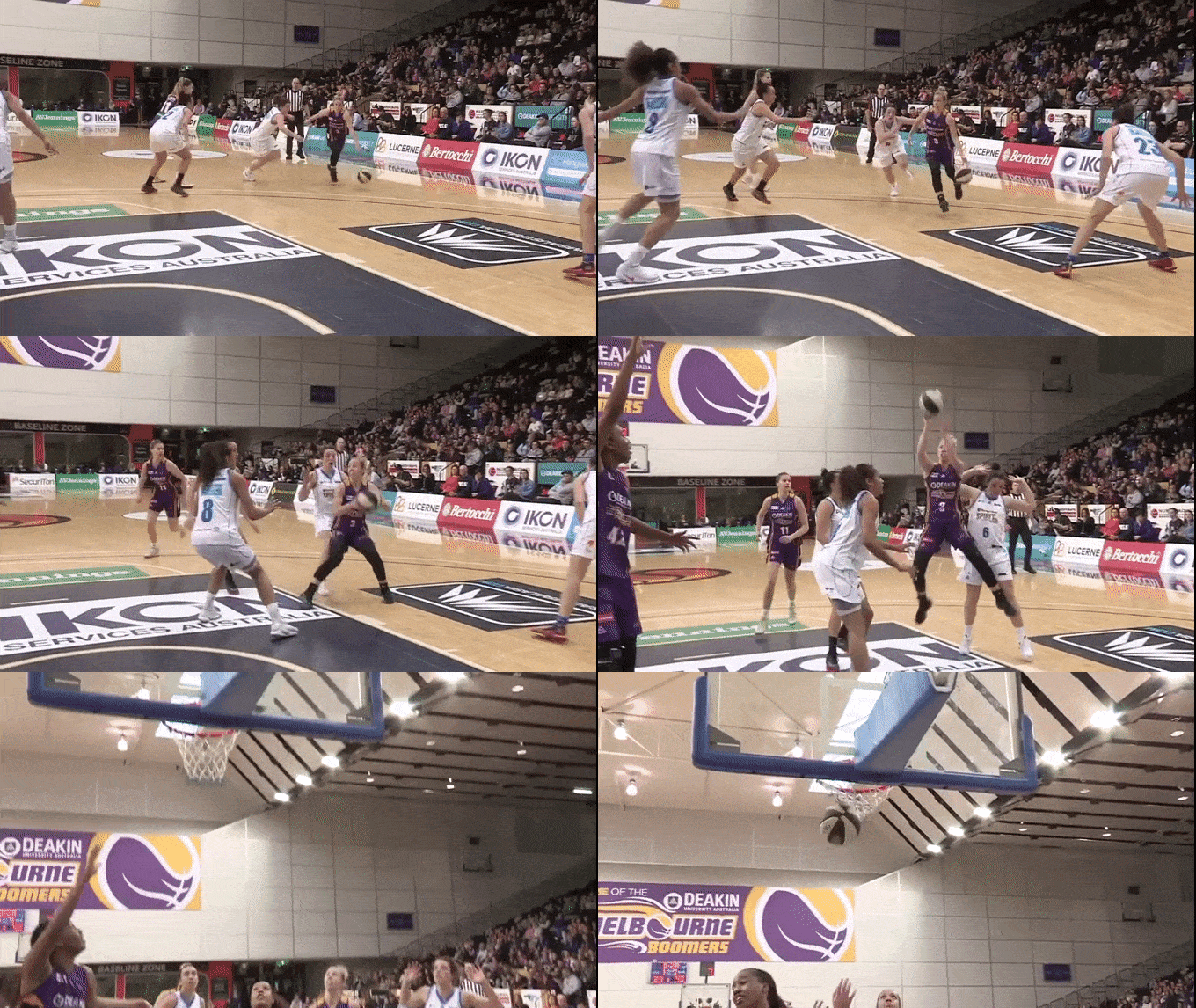
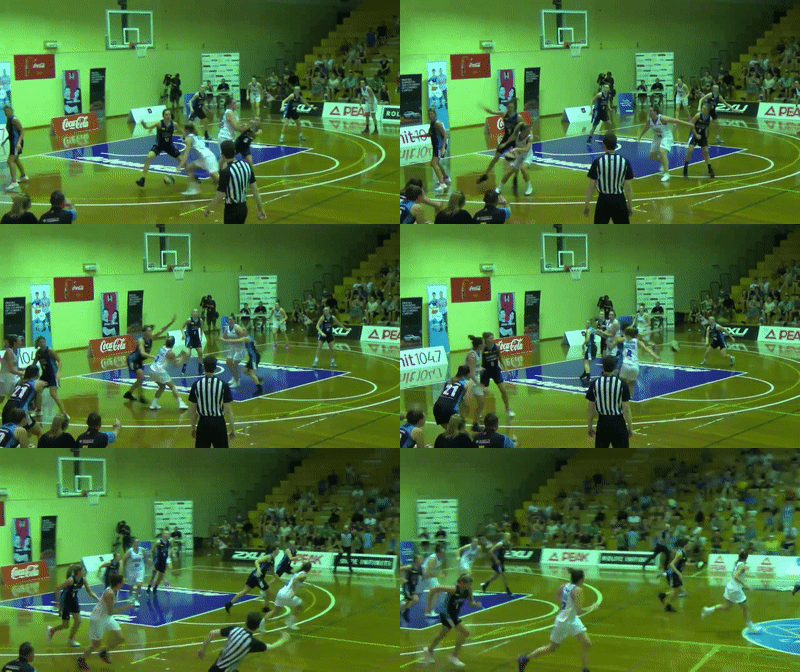
Dandenong had a switchy, versatile defence. In these stills from game 2 of the grand final series, Leilani Mitchell is guarded by (from top to bottom) Aimie Clydesdale, Natalie Novosel and Amelia Todhunter.
Injuries had been a subplot for Dandenong all year and raised their head during the finals. The team kept this quiet at the time, but import Ally Malott was again playing through significant injuries, having previously suffered ankle and foot problems and been on a minutes restriction earlier in the season. Before the grand final series, she had suffered a new knee injury which meant she couldn’t push off or get any power.“I really felt for Al” Anderson says. “She had injury after injury. She was in quite a bit of pain, and losing her for that series was a big loss for us, she is a quality player that made a large impact when she was fully fit”.
Steph Cumming continued to be an all-round contributor and tough bucket maker for the team. “She is Dandenong through and through” says Anderson.
If opponents didn’t like playing against Dandenong, one of the main reasons why was the all-round play of Steph Cumming, who finished in the league’s top 20 for points, rebounds, assists, steals, blocks, three-point percentage and free throw percentage. Perhaps unsurprisingly, she was the only player to appear in every one of these lists.
Cumming shared the team’s MVP award with Sara Blicavs, who enjoyed her best WLBL season yet. A self-described “coffee coinnosseur”, Blicavs was like a human triple espresso shot for the Rangers this year, forever energising the team with her all action inside/outside game.
Sara Blicavs takes it to the hoop against finals opponent Asia Taylor. “Her playing ability is endless”.
Asked whether Blicavs could one day be MVP of the league, Anderson has no hesitation. “Absolutely” she says. “Her playing ability is endless and she’s only just now realising the damage she can do”. Anderson says Blicavs’ energy and personality were also keys to the team’s success. “She’s always happy, and always happy for her teammates. She’s a phenomenal team player”
“Larissa Anderson on Sara Blicavs: “Her playing ability is endless. She’s only just now realising the damage she can do””
The Rangers firepower went well beyond their two leading scorers; apart from Sydney there was no deeper team in the league. Perth coach Andy Stewart felt the greater scoring power of the Rangers bench was the key factor in his team’s semi-final loss to Dandenong. They were a stacked and versatile unit, able to go big or small and bring match-winners off the bench depending on the matchup.
Anderson says the team’s depth made it hard to get rotations right at times, but she notes she would always take a deep squad over a top-heavy one. “We were deep, but at the same time still very young, so different players contributed in different ways each week”.
Two things that worked well for Dandenong in season 2016/17: crisp ball movement and Natalie Novosel shooting threes.
Natalie Novosel was one of the players who gave them such enviable depth, and although knee injuries affected her season, the new acquisition was again one of the competition’s sharpest three-point shooters (44%), made smart passes and consistently drew contact and got to the foul line. Anderson is quick to point out that Novosel was an excellent addition to the squad. “We knew Nat would fit really well with this group and she settled in very quickly. She brings a great deal on and off the floor”
Another beastly defender off the bench was Rosie Fadljevic, who hustled hard and could be used to defend multiple positions. “Every minute she played, she made the most of” Anderson says of Fadljevic. “She constantly made a big basket and came up with a great stop”.
Co-captain Aimie Clydesdale fit the “young” and “speedy” parts of the team’s identity and was easily amongst the most improved players in the competition. Her field goal percentage jumped from 31% to 39% and her assists per game exactly doubled. She also showed signs of developing into a three-point threat, hitting twice as many three-pointers this season as in her previous two years combined.
AImie Clydesdale, pictured here in Dandenong’s SEABL team back in 2013, had her best ever year for the Rangers.
“I could not be more proud of Aimie’s improvement” Anderson says. “When I first came in, I knew Aimie had it in her to be one of the most prominent point guards in the league, the way she holds the team together and thinks on her feet”.
At the other end of the positional chart were bigs Jacinta Kennedy and Lauren Scherf. Still only 21, Scherf proved a good shot blocker and rates as one of Australia’s most promising centres. She could not have hoped for a better mentor than Jacinta Kennedy, who was again a revelation in her final year of a decorated career.
For anyone outside the Dandenong setup, the continued productivity of Kennedy, who returned to top-level basketball in 2015/16 after a break of nine years, was remarkable, but it was no surprise to those who knew her well. “I had no doubts she would have an impact, she’s just an amazing person” Anderson says. “She just picked up where she left off”.
Having coached Kennedy in the Dandenong Rangers SEABL team, Anderson convinced her to return to the top flight WNBL again. “I was sure she was up to it physically, it was more about the commitment it would take having a family and at the time her husband was still overseas. Thankfully she was able to make it work”.
Another player Anderson coached at SEABL level, Amelia Todhunter, certainly did her share of annoying opponents and was a huge part of the grand final run, routinely being given major defensive assignments, picking up steals (46, third in league) and generally harassing opposing scorers and point guards.
Todhunter was one of many former Dandenong Rangers Anderson has brought back into the fold. She also helped recruit Rosie Fadljevic, Sara Blicavs and Steph Cumming, who she describes as “Dandenong through and through” back to the club. Thrown in mainstay Aimie Clydesdale, who has never played a minute for a rival club at Big V, SEABL or WNBL level, and the Rangers have remarkable continuity.
Dandenong have made a point of bringing juniors and former players back to the club. This includes Steph Cumming, pictured here with Aimie Clydesdale, after the team’s 2011/2012 grand final win.
“I’ve got a lot of history with those players” Anderson says of the returning group. “They know exactly what I want from them. It’s really special to have that connection, but it’s also about creating an exciting new journey with a great group we have assembled ”.
Similarly, Jacinta Kennedy, a revered figure at the club, will not be lost to the program as she moves into a new career as a teacher. She will be in around in some capacity, perhaps just as the team’s most high-profile fan. “We’re not letting her go anywhere” Anderson laughs.
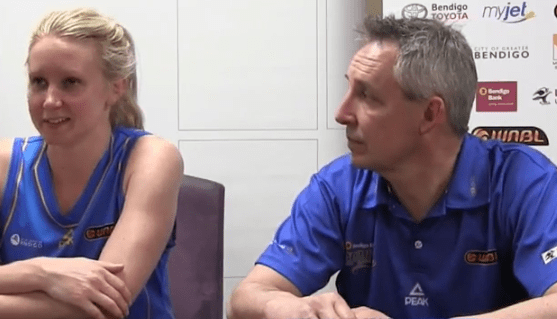
“The thing that stands out to me is that we conceded the least points of any team” Bendigo Spirit coach Simon Pritchard says of the team’s 2016/17 campaign. “But at key points, our defence broke down”.
The anomaly of the team’s greatest strength deserting them at times summed up a puzzling season which saw the team produce some masterful defensive performances, but also endure some extremely costly lulls which resulted in a sixth place finish.
In the first half of the competition, the Spirit were downright miserly, grudging only 66.08 points per game, In the back half, they allowed a far less imposing 76.25 a game.
Kerryn Harrington with the steal and fast break points. Her injury-enforced absence would prove costly for Bendigo.
Along the way, the hard-nosed team had managed to completely shut down grand finalists Dandenong, who could only manage a miserable 44 points and hassled eventual champions Sydney into a 55-point outing. Oddly, the team also seemed to do better when on the second leg of a back-to-back, compiling a 4-1 record in these games.
Boasting a 10-5 record at one stage, the Spirit went into a major swoon in January, losing four games straight. This stretch included a 41-point shellacking at the hands of Perth, where both Sami Whitcomb and Ruth Hamblin ran riot. “Emotionally, it shocked the hell out of us” Pritchard says of the loss to the Lynx.
Pritchard believes a big part of this dip can be explained by the lengthy break the players were given around Christmas. It’s a mistake he takes responsibility for and one Bendigo won’t be making again. “That was a really poor decision on my part” he says. “The long break allowed some deconditioning. Ideally, we would have brought them back five days earlier”.
Major injuries also hampered Bendigo’s campaign, with veteran guards Jane Chalmers and Kerryn Harrington both going down after the former played through a thumb injury in 2016. After the Spirit had already lost Kelly Wilson to Townsville, their loss hit particularly hard. “We had two injuries in the same position” Pritchard says. “To lose both of them and to have to shuffle a heap of players, it had a compound effect down the line”.
Pritchard on Kelsey Griffin: “a match winner”
The silver lining of this injury cloud was that it allowed Kara Tessari to gain valuable exposure to WNBL level competition, and the 17-year-old, one of the team’s many juniors from regional Victoria, thrived. “She’s a great defender and controlled the team really well” Pritchard says. Having been elevated from a development player spot to the senior list during the season, the team sees Tessari as very much on the ascent. “She’ll be an important piece going forward. We’ll certainly look to give her more of a role”.
Long-term, Tessari may be able to help with an area where Bendigo struggled this year, namely perimeter shooting. The Spirit made just 102 three-pointers, only one ahead of last-placed Adelaide and, remarkably, behind the individual three-pointer tally of Sami Whitcomb (105). Their overall three-point percentage was 26.42%, again only good for seventh. “That was a personnel thing” Pritchard notes. “We need to recruit into that spot next year”.
The Spirit had sought to bring in more long-range shooting by signing Seattle Storm player Blake Dietrick, but she couldn’t recapture the shooting form she previously showed at Princeton. “We thought we were recruiting a better shooter than we did” Pritchard laments. “We did expect Blake Dietrick to do a bit better job than what she did, offensively and defensively”.
Kelsey Griffin and Nayo Raincock-Ekunwe were the team’s star players. Here, Griffin throws a bullet pass inside for Raincock-Ekunwe.
The club’s other import, super athletic Canadian Nayo Raincock-Ekunwe, proved a revelation at both ends of the court. Scoring mainly around the basket (she had only 11 three-point attempts, for one make), she ranked amongst the competition’s most efficient players. She put up 15.88 points per game (good for eighth in the league), collected 8.38 rebounds (fourth in WNBL) and ended up earning an invite to training camp with WNBA team New York Liberty.
The club are hopeful of getting Raincock-Ekunwe back next year. Although they have secured their financial future, they do have budgetary restrictions to contend with which mean Raincock-Ekunwe may play as the team’s sole import.
Kelsey Griffin, who started as an import before becoming an Australian citizen, is another player who the team are desperate to retain. The thought of Griffin, who has won two championships with Bendigo, playing for another team just seems wrong. “Kelsey is a match-winner, she’s proven that over a long period” Pritchard says. “It’s just a matter of whether we can keep her”.
With Raincock-Ekunwe and Griffin, the team’s strength was in their frontcourt, where Griffin also chipped in with scoring (15.13 a game), typically outstanding defence and rim protection (27 blocks). Popular centre Gabe Richards was again hard to keep off the boards, though her scoring was somewhat down from past all-star five efforts, slipping from 15.50 in 2015/16 to 7.58 this season.
Gabrielle Richards muscles to the hoop against the Flames. “She’s a really smart basketballer” Pritchard says.
Pritchard suggests there are a number of reasons for Richards’ lower numbers. “We changed our offensive structure this year, so she wasn’t getting as many of those baseline looks” he says. “Though she also had some good looks that she missed, she was maybe a bit unlucky there”. He backs Richards to continue to be a high-level contributor. “She’s a really smart basketballer. We need to find a role that maximises what she can do”.
The team finished on a strong note, with Nadeen Payne coming off the bench to hit 14 and then 16 points in consecutive one-point victories against Melbourne and finals-bound Perth. Underrated guard Heather Oliver also had strong all-round performances in both games, while Raincock-Ekunwe hit a long two to seal the game against Perth. In many ways, the closing stretch summed up the Spirit at their best: tough, intense and confident that Raincock-Ekunwe and Griffin would make the clutch plays to get them over the line in a dogfight.
Nayo Raincock-Ekunwe hits the game-winner against Perth.
Those last two wins meant the team finished with a 13-11 win/loss record, which Pritchard agrees would normally be enough for a playoff berth. But the Spirit have zero interest in settling for consolation prizes. “We’re all about championships” Pritchard says. “There’s only first”.
“I’ll be honest, it was bloody brutal” Melbourne Boomers coach Guy Molloy says of the team’s 2016/17 campaign, which saw them record just five wins. For a team that could have easily become extinct, however, on-court results were secondary to survival.
For their fans, who continued to turn out in healthy numbers despite an early exit from finals contention, the good news is that the team is in a much more stable place and is planning a quick return to contention rather than an extended rebuild. “We’ve come out the other end” Molloy says of the dark days.
One thing that hampered Molloy’s side all season was a real lack of frontcourt size, which saw them place ahead of only one team for rebounds collected as well as rebounds allowed. Molloy says this deficiency was a direct consequence of the uncertainty about the club’s future which dominated the Boomers off-season.
““We’ve come out the other end” Molloy says of the dark days.”
“We were in limbo for a long time” he explains. “There was a really tenuous stretch there…we weren’t able to take part in free agency, we couldn’t sign players until very late in the piece”.
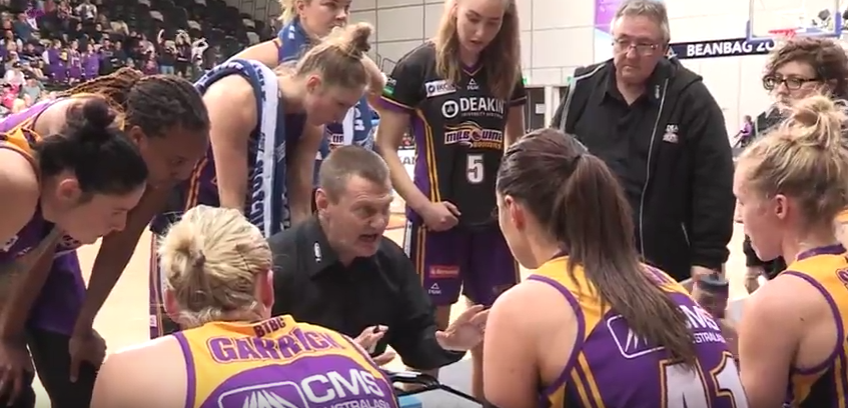
The team’s lack of size was compounded by a serious knee injury which ruled club co-captain and Opals squad member Elyse Penaluna out for the entire 2016/17 campaign. Adding to their snake-bitten season was a shoulder injury to star wing Maddie Garrick. “She got crunched badly really early on” Molloy says. She continued playing, but the injury “really impacted on her shooting for about a month”.
Brittany Smart takes it to the hoop.
Still, the undermanned team refused to throw in the towel and had several agonising defeats, including a one point loss to Bendigo and two point margins against Dandenong and Townsville. The team finished with eight losses of five points or less. “I really felt for the team” Molloy reflects. “We worked really hard and there just wasn’t the reward. We battled valiantly”.
Help, however, is well and truly on the way. Having sat out free agency last off-season, the Boomers will now be aggressive free agency players. The team has already pulled off one major coup with the signing of Opals mainstay Jenna O’Hea, with more big-name signings soon to be announced. O’Hea’s scoring ability promises to make life much easier for Smart and Garrick, who have both already re-signed, and can settle into more natural roles as complementary scorers.
Jenna O’Hea in WNBA action for the Seattle Storm.
O’Hea rejoins the team (she previously played for Bulleen Boomers) after stints in the WNBA and a championship-winning sojourn in France. “I’m excited” Molloy says of her impending arrival. “She’s a truly elite player in this league… she works so hard and she’s a ‘lead by example’ player. That will soak into our culture”.
Many players on last season’s roster also showed enough to suggest better times are ahead. Young forward Olivia Thompson continued to develop as a physical presence and showed real resilience. “Through the difficult part of the season, she just found a way” Molloy says of Thompson. “She gained consistency and confidence”.
Olivia Thompson: “She gained consistency and confidence”
Molloy credits Thompson and point guard Brittany Smart with driving the team forward in the barren weeks of late 2016 when the team was ravaged by injuries. Smart continued to be a crafty point guard and reliable outside scorer, while Maddie Garrick also added new facets to her already potent game, improving her ability to slash to the basket and taking her defence up a gear.
Another positive for the Boomers was the play of rookie of the year Monique Conti, who joined the team after winning the world championship with Australia’s under 17 team. “I copped a bit of criticism for playing her” Molloy says of Conti’s initial appearances, which saw the then 16-year-old was fast-tracked into court time due to the injury toll. “She turned the ball over and lacked confidence”.
But the pint-sized point guard improved at warp speed in the surrounds of a professional team. “By December, we found she was really taking it to the older players at training. She’s a terrific talent and a hell of a good kid. She is legit”.
Known as a prolific scorer and silky ball-handler at junior level, Conti also showed real skill as a ball hawk, collecting a steal every 18.86 minutes, a rate that compares favourably to even the league’s best one guard Leilani Mitchell (who had a steal every 21.27 minutes).
Monique Conti “She’s a terrific talent and a hell of a good kid”.
Molloy agrees Conti has all the tools to become a disruptive defender. “She definitely plays both ends and has…real speed in a basketball sense. She is built quite low to the ground, has great balance and quick hands”.
Off the court, the new Boomers ownership consortium have shown a willingness to recruit top front-office staff, including Lauren Jackson, who joined the club as a commercial operations executive last year. “Lauren’s been awesome” Molloy says. “Through a really, really hard year, she’s been a great help to me”. Jackson brought valuable networks and winning experience to her role and Molloy says her instincts on players are a huge asset. “Her read on players is really good, she knows how they are as competitors”.
One player everyone is confident is a great competitor is club veteran Bec Cole, who returned from injury and after taking a while to shrug off its lingering effects, enjoyed a strong end to the season. She brought intangibles to the team and even involved Molloy in some pre-game dap. “I’ve coached Bec a long time and she knew it was a stressful time and figured I needed to lighten up a little before games” he laughs. “I’m not much of a dancer, but she thought she’d give me some rhythm. It’s a good bit of fun”.
“A good bit of fun”: Molloy and Bec Cole dance it out.
For a team that has stared down basketball extinction and is now eyeing a return to the finals, the fun is only just beginning.
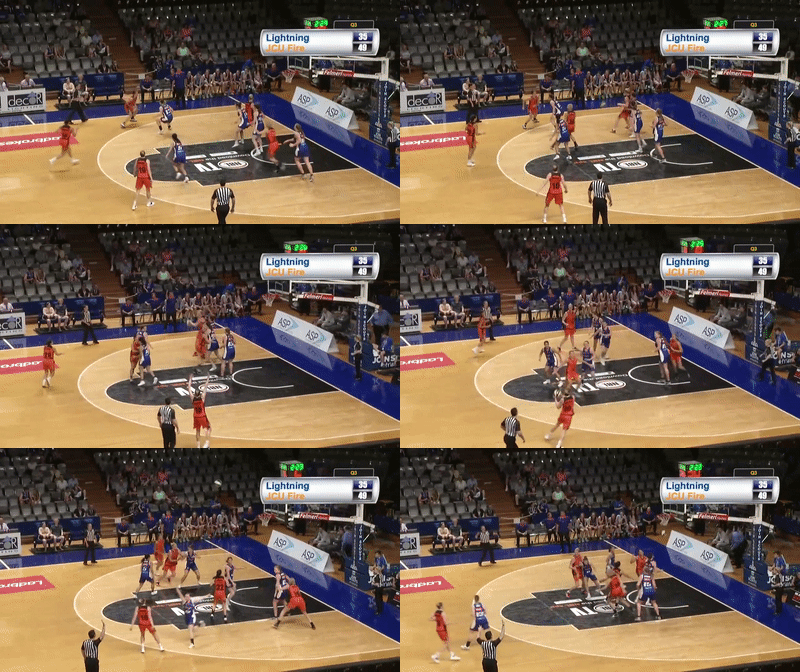
2016/17 was always going to be a development year for the Adelaide Lightning, but the team’s improvement over the last couple of months of the season suggest green shoots are already appearing.
Having slumped to a 0-14 record in December, the team was much more competitive in 2017 and finished with three wins from their last ten games. Coach Chris Lucas, joining the club straight from back to back titles in Townsville, placed second in coach of the year voting, a testament to how much the team exceeded expectations given their lack of experience.
“Considering the team was thrown together so late, it was encouraging” Lucas says. “Post-Christmas we only had only one blowout. We’re trying to rebuild the program and hopefully next year we can move up a couple of spots”.
Part of this rebuild has been a renewed focus on local players. These included combo guard Sarah Elsworthy, who played the most minutes of the rookie class and improved at warp speed. In the Lightning’s final game, she roamed free against Sydney, connecting on 6/7 field goals for 12 points.
Sarah Elsworthy: “I thought she handled the situation very maturely”
The Lightning recently announced she had re-signed with the team. “Sarah has earned the right to be re-signed” Lucas says. “I thought for an 18 year-old she handled the situation very maturely”. She placed second in rookie of the year voting and her committed work on the defensive end saw her named the club’s defensive player of the year.
Hotly-tipped youngster Anneli Maley joined the team mid-season and also looked the part, having a particularly promising outing against grand finalists Dandenong, where she scored 16 points and claimed 9 rebounds. Described as a “wonderful athlete and real star of the future” by Lucas, Maley tallied a rebound every 3.5 minutes. For context, Marianna Tolo, who had the third most rebounds in the league, averaged a rebound every 4 minutes. Maley’s efforts represent a small sample size, but suggested that scouting reports describing her as a potentially elite rebounder were accurate.
Anneli Maley on her way to a season-high 16 points against Dandenong.
Maley was just one of several locals to appear in the red, white and blue. Norwood product Jessica Good exemplified the team’s commitment to playing hard even in trying circumstances while Alex Ciabatoni built on her rookie of the year campaign, most notably being a thorn in Canberra’s side, dropping 17 then 20 points against the Capitals, the latter in a rousing victory.
Complementing this youthful group were a couple of veterans, like Coleen Planeta, who joined the team from the V League. Lucas says Planeta was chosen not just for her ability to contribute on-court, but her general personality. “I don’t sign anybody unless I’ve checked on their background” he says. “In the teams I’ve coached, chemistry and cohesion has been paramount and we’ve had a fair amount success with that”.
Nobody was more important to the Lightning’s chemistry was four-time Olympian Laura Hodges, who was a top ten scorer and rebounder, hustled hard and barely turned over the ball over. Lucas is effusive about her impact on the young players. “In Rachel McCully and Jess Foley, I’ve been lucky to have some great leaders, but Laura Hodges is one of the best captains I’ve ever had” he says. “She’s a great player and an exemplary leader, just a delight to have around”.
Laura Hodges: “A great player and exemplary leader”
While Hodges gave the Lightning a much-needed inside scorer, they struggled from the perimeter at both ends. Opponents shot 35% on 3 pointers to Adelaide’s 25%, a trend Lucas puts down to their youthfulness. “It’s inexperience defensively. Some players did well and some need to do better. It’s an area we need to improve on”.
The team fared better in terms of forcing turnovers, but Lucas says this wasn’t something that resulted from their defensive schemes. “It wasn’t something we were overly focused on, I think that comes down to the individual skills of the players”. Import guard Samantha Logic had 42 steals, good for fifth in the competition, while Sarah Elsworthy claimed 21 steals; only one player who played fewer minutes (Dandenong’s Natalie Novosel) had more.
Lucas says next year’s team will again have a youthful flavour with two or three 18 year-olds being given roster spots. The team has made bringing South Australian players home their long-term goal. They have previously been linked with former Lightning star Stephanie Talbot, and remain interested, but believe her to be well settled at Polish club Gorzow Wielkopolski.
Regardless of who ends up on next year’s roster, Adelaide fans can take heart from the team’s renewed focus on local youth, not to mention the stunning success Lucas had revitalising an ailing program in his previous coaching gig at the Townsville Fire. Adelaide’s rebuild will take time, but they’re committed to doing it the right way.
When Suzy Batkovic bid an emotional farewell to Townsville’s 2016/17 campaign, it marked the end of an era of lofty success and the first time in four years the Fire hadn’t progressed to the grand final. It was a season which swung from brilliant to frustrating several times, perhaps peaking and plateauing in the same game, a thrilling overtime win against Sydney which also saw Kelly Wilson sidelined with a costly ankle injury.
Again, the central figure in the Fire’s campaign was the three-time Olympian Batkovic, who terrorised opponents inside the key, powering and finessing her way to a record fifth league MVP win. Batkovic finished second in points per game (20.92), second in rebounds per game (10.85) and sixth in total blocks (30).
Claudia Brassard, who moved into the head coach role this season after previously playing for the club and serving as assistant coach during the back to back championships, says that the intangibles Batkovic brought to the table were just as important. “Her captaincy and leadership skills are something she works on constantly”.
Indeed, Batkovic’s forthright leadership style was something that gave the team a real identity. “If you want someone to have your back, you could not have someone better than Suzy. If she thinks something isn’t right, or one of her teammates is missing out on something, she’ll go straight to the source”.
Brassard suggests Batkovic, a great teacher and mentor, was particularly beneficial for young power forward Darcee Garbin, who was a shining light against Sydney as the team went down to the white-hot Flames side in the semi-finals. “(Darcee) is a really good, promising player” Brassard says. “She would normally come off the bench and get us a couple of boards right away. But her greatest asset is her personality. She has a great work ethic and she wants to learn”.
Darcee Garbin had a strong year and learned plenty from Suzy Batkovic.
Players from last year’s championship side like Micaela Cocks, Batkovic and Garbin were joined by livewire point guard Kelly Wilson, though the Fire’s prized acquisition was dogged by injury at the start of the season and later missed games with an ankle fracture. “I think she’d say it was the most frustrating season she’s had” Brassard says. “I think we’ll see a much better Kelly Wilson next year”.
Instead of playing in the SEABL competition during the off-season like she normally does, Wilson plans to sit it out, but Brassard suggests that the high-energy guard, who was regularly doing extra work in the gym and video room, will be doing anything but enjoying some rest and relaxation. “She won’t be sitting on her bum, she’ll be keeping very active in some way”.
Kelly Wilson: unlikely to be found “sitting on her bum”
While WNBA player Natasha Cloud and Kiwi international Micaela Cocks looked set to give the Fire flexibility and valuable injury cover at the one when Wilson was injured, Brassard says the point guard logjam was both a blessing and a curse. “Honestly it’s something we struggled with throughout the season, that question of ‘who is the point guard?’ We would have liked some more stability there, but that’s the hand we were dealt”.
Elsewhere, the team’s strength was inside the paint, where they collected a league-leading 36.8 rebounds a game, again led by Suzy Batkovic, the competition’s most prolific defensive rebounder. The Fire also ranked high on assists, with Cloud, Wilson, Batkovic and Murray all recording plenty of dimes. As Brassard explains, the team’s ball movement flowed from the defensive attention Batkovic drew in the low post.
A bread and butter play for Townsville Fire: Batkovic draws a double team and passes to Murray for an open three.
“Suzy was always seeing double and triple teams and I think we did a reasonable job of finding the outside shooters from that”. Yet the team’s unselfishness had a downside at times. “Sometimes that (approach) was to our detriment, there were times when we could have been a bit more selfish”.
In particular, coaching staff encouraged sweet-shooting forward Kayla Standish to look for her own shot. “We’ve been working with her on not fading away, on going inside” Brassard says. Standish still led the squad in true shooting percentage and added range to her game, connecting on 19 threes after only making six the previous season.
Kayla Standish was an efficient scorer for the Fire.
Another willing passer, Mia Murray, had a nice season as a canny second-option scorer and good decision maker, while star junior guard Haylee Andrews joined the team as a development player. Brassard had previously coached Andrews in youth teams and has high hopes for the youngster. “I see her as a Tess Madgen type, with those really strong legs, she can get into the key and finish over bigger players”.
Currently in the midst of recruiting and retaining players, the Fire are aware that like every WNBL team, they have to compete with the lure of bigger money on offer in Europe. They’re confident, however, that the environment they have created and the support from the community will be powerful incentives to entice players to sign up for another tilt at the title. “I’m proud of the culture we’ve built here” Brassard says.
With seven premierships to their name, the University of Canberra Capitals are the most successful club in WNBL history, but after losing the iconic likes of Lauren Jackson, Jess Bibby and coach Carrie Graf to retirement, had endured two barren years. Under new coach Paul Goriss, who joined the team from Basketball Australia’s Centre of Excellence, their primary aim was to restore a winning culture to the club and identify young players who can form the core of the team for years to come.
Coaching staff identified 14 wins as the magic number to qualify for the semis before the season, but felt the finals would just be the “icing on the cake”. After only recording two wins last year, the Capitals tallied 13, with a couple of heartbreaking losses and badly-timed injuries seeing them just miss the playoffs. They beat every other WNBL team, but also lost to every other opponent. Overall, their improvement was dramatic, with the team increasing their points per game from 60.8 last year to a far healthier 72.
One of many blocks by Marianna Tolo.
A huge part of this resurgence was down to the return of Marianna Tolo, who was utterly dominant at both ends. After being encouraged to subdue her selfless instincts and be a key scorer, she ranked third in the league in total points, while her elite rim protection made her a no-brainer choice for defensive player of the year. Sadly for the Caps, Tolo will return overseas next season, though it is not goodbye for good. “She goes to Europe with our blessing” Goriss says, “knowing that one day she’ll be back as a Canberra Capital”.
Goriss is under no illusions as to the difficulty of replacing such a player, however. “To be quite honest, Tolo is irreplaceable” he says. As influential as the Opals star was on the court, her impact on the club went well beyond her prolific shot-blocking and low post scoring. “She was great with sponsors, great with fans, great with kids and just amazing with the playing group. She played through injury for a lot of the year, and when she couldn’t play, she was getting ice for people, running water bottles for the other girls, that’s the sort of person she is. She’s a consummate player and professional. She’ll talk to anyone and gives everyone the time of day”.
Among Tolo’s frontcourt partners was Keely Froling, a long, athletic forward who has been a fixture in elite junior squads. Already signed for next season, she enjoyed a successful rookie year, particularly after her college career was marred by knee injuries described as “really horrific”. Froling brought real intensity to her court time and projects as a top rebounder; she collected a rebound every 4.86 minutes, a rate comparable to elite rebounders like Carley Mijovic (4.25) and Laura Hodges (4.48). More generally, she soaked up knowledge from the seasoned pros in the squad. “She really did a commendable job” Goriss says. “For her, training with people like Carly Wilson and Jazmon (Gwathmey) really expedited her learning”.
The team is also keeping an eye on the progress of Froling’s twin sister, Alicia, who is currently smashing rebounding and scoring records for Division 1 school Southern Methodist University, though it’s far from a given the pair will once again play together. “She’s part of our recruiting plans for sure, we’d love to have her” Goriss says of Alicia. “But we’re also aware that (the sisters) don’t necessarily come as a package deal”.
Capitals already have one set of sisters, local juniors Callie and Issie Bourne, who joined the team as development players and earned some valuable exposure to WNBL level. Callie is a waterbug point guard while Issie, one of the youngest players to get court time in the recent years, could potentially play at multiple positions. Both reflect the team’s focus on providing a pathway for talented locals.
Abbey Wehrung was a much improved 3 point shooter.
The youth movement also includes third year guard Abbey Wehrung. While Goriss initially told Wehrung that he wasn’t that sure she was an WNBL player, the 21-year-old soon overcame his initial scepticism and was arguably amongst the competition’s most improved players, upping her numbers across the board. She was also more efficient, raising her field goal percentage from 34% to 41%, and seeing her outside shooting percentage jump from 28% to 40%. It’s an improvement Goriss puts down to her work ethic. “She is one of the hardest working young players I’ve seen. She lives the game, she loves the game, and she really proved she belongs”. Her late absence due to an ankle injury proved telling: “We were much better when she was on the court”.
More experienced players also had strong campaigns for the resurgent team. Mikaela Ruef joined from Adelaide and continued to be a monster on the boards; she led the competition in rebounds and earned a training camp invite from WNBA champions Los Angeles Sparks. Point guard Lauren Mansfield continued to push her case for Opals selection as a high level pick and roll orchestrator, while Kate Gaze was an elite catch and shoot player in her best games, most memorably sinking six of six three-pointers to help inflict a rare loss on Sydney. Gaze struggled with back problems at times and Goriss says her best form directly correlated with her health. “When she had that time on the court and practise time, that’s when she was really shooting well”.
As much as possible, the Capitals plan to keep this core together. Goriss is an avowed admirer of the San Antonio Spurs, who are widely regarded as basketball’s smartest organisation and place a high value on continuity. Just as that team gave retiring legend Tim Duncan the opportunity to be “assistant coach of whatever he likes”, the Caps have every intention of keeping beloved retiree Carly Wilson involved in a yet to be determined role.
“We’ve had a brief discussion (about her future), but I also want to give her some time and space, it was an emotional time with her retiring and how we went out” Goriss says of Wilson. “She’s very keen to get into coaching, but she’s also always telling me she hasn’t had an off-season or a summer off in 18 years. So she needs some time away from the game, but definitely wants to help in any way she can, so she’ll be around, whether that is doing individuals or in some other capacity”.
Carly Wilson brought leadership and outside shooting.
As the team continues to rebuild, the passionate Goriss has become a strong advocate for the club’s links with the University of Canberra and believes such affiliations can be key to the league successfully competing for talent with the US college system. “I think it’s just a case of educating the players on how we can develop them here, because I think we can do it better than the colleges”.
He is full of praise for the current Capitals setup. “I may be biased, but the facilities and support staff…it really couldn’t have been better. We have something special here”. For Canberra fans who have been heartened by the team’s vastly improved on court fortunes, such an endorsement for their off-court setup is a huge positive as they look to return to their glory days.
Dandenong go into this series with home court advantage (where they hold a 8-4 record) and the confidence of a 3-1 series result against Perth this year. The Lynx, however, are the leading offensive unit in the WNBL and in Sami Whitcomb boasts the overwhelming MVP and a player explosive enough to throw the most meticulous game plans into disarray.
Perth are particularly strong from three point range, though their strength in this area is somewhat eroded against Dandenong who have a pair of elite perimeter defenders in Blicavs and Cumming. Whitcomb averages 18.75 against Dandenong this year, down on her historically good season average of 23.6. Expect Dandenong to start the dogged, steal-happy Amelia Todhunter on Whitcomb, where she has had some success. Rangers are also like to employ reigning defensive player of the year Steph Cumming on Whitcomb at times as well. The Perth star’s remarkable ability to create her own shot means she is unlikely to be neutralised, but if Dandenong can stop her from going crazy (as when she scored 12 last quarter points in Perth’s win over the Rangers) it will go a long way towards victory.
Perth’s advantage in outside shooting becomes clear when you consider Whitcomb and Mijovic alone have made only one less made 3 pointer than the entire Dandenong team. In fact, Perth have almost 100 more 3 pointers than Dandenong over the course of the season (252-154). The disparity is particularly surprising as it’s not like Dandenong don’t have capable long-range shooter themselves, with Cumming (42% this year), Blicavs (40%) and Novosel (48% on a small sample size) all well above average. Novosel particularly likes to work from mid-range.
6’4 forward Malott is also hitting three-pointers at a good clip (39%) and could be the key to Dandenong going small, as they did with some success against Sydney before the fatigue of an unfriendly schedule and early flights caught up with them. If Dandenong do give Malott minutes at centre, Perth would likely counter with their own stretch four, Carley Mijovic. Mijovic is obviously a tough cover in her own right, but given that Hamblin was pivotal in Perth’s lone win over Dandenong this season, claiming 4 blocks, Rangers may prefer her role being minimised. Perth have also been a better rebounding team than Dandenong, but even winning the battle of the boards in their most recent meeting didn’t prevent the Lynx slumping to a 22 point loss.
Perhaps the biggest advantage for Dandenong lies in their enviably deep bench. In their four meetings this year, the Dandenong second unit has outscored Perth’s reserves by a total of 44 points. Former Opal Jacinta Kennedy is an absolute luxury to bring off the bench, while imports Novosel and Malott have had nice seasons and Rosie Fadljevic can contribute energetic defence at multiple positions.
Ultimately the Rangers seem equipped to neutralise Perth strengths and though the freewheeling scoring of Whitcomb and Mijovic should net Perth one win, Rangers in three seems the most likely result.
















 The Evening Game